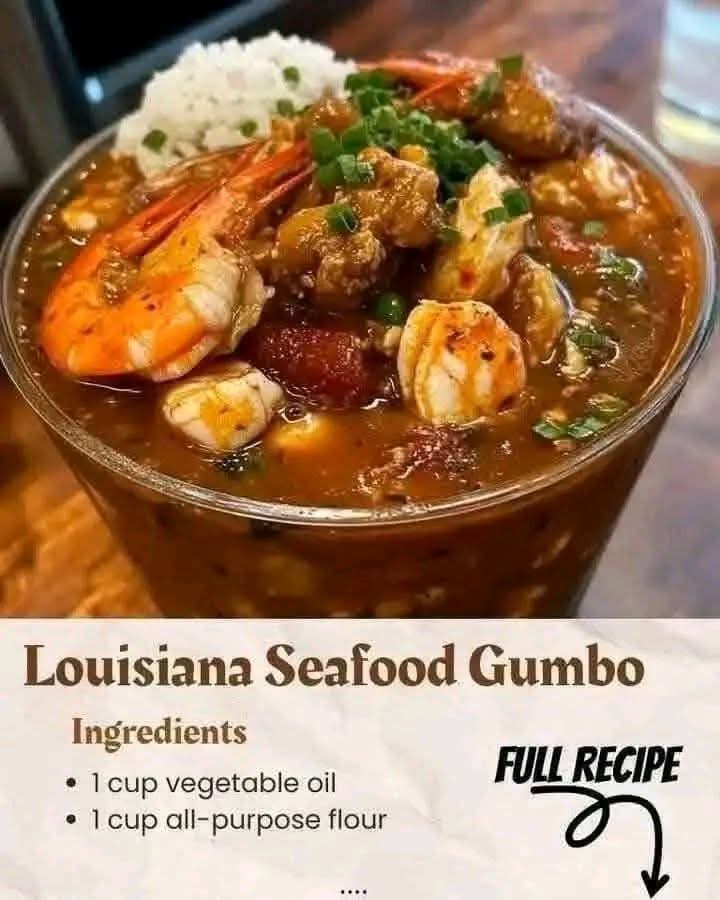
Here is a comprehensive, big recipe for Louisiana Seafood Gumbo, structured with all the elements you requested.
—
Louisiana Seafood Gumbo: A Taste of the Bayou
Introduction
Gumbo is more than just a soup; it is the official state cuisine of Louisiana and a cultural melting pot in a bowl. This rich, flavorful stew is a testament to the state’s diverse heritage, blending African, French, Spanish, German, and Native American culinary traditions. Unlike its cousin, jambalaya, gumbo is defined by its slow-cooked roux and the “holy trinity” of vegetables. This Seafood Gumbo variant is particularly beloved along the Gulf Coast, utilizing the bounty of the bayou—fresh shrimp, crab, and oysters—to create a deeply savory, slightly smoky, and utterly comforting dish. It is a labor of love, often simmered for hours and always best enjoyed the next day, served over a mound of fluffy white rice.
—
History
The origins of gumbo trace back to the 18th century. The name derives from the West African word for okra, ki ngombo, a key thickening agent used in early versions. French settlers contributed the technique of the dark roux (a mixture of flour and fat), while the Choctaw Native Americans introduced file powder (ground sassafras leaves), used to thicken and flavor the gumbo at the end of cooking. As the dish evolved in the port city of New Orleans, it absorbed influences from German immigrants (who introduced sausage) and Spanish settlers (who added peppers and tomatoes, though tomatoes remain a point of contention in traditional Creole vs. Cajun gumbo). Seafood gumbo emerged as a staple in coastal communities, a practical way to utilize the day’s fresh catch.
—
Benefits
· High in Protein: Packed with shrimp, crab, and oysters, this gumbo provides a substantial amount of lean protein essential for muscle repair and satiety.
· Rich in Omega-3 Fatty Acids: Seafood, particularly oysters and crab, are excellent sources of Omega-3s, which support heart and brain health.
· Nutrient-Dense Vegetables: The “holy trinity” (onions, celery, bell peppers) provides a base rich in vitamins A, C, and antioxidants.
· Comfort Food: Beyond nutrition, gumbo is celebrated for its emotional benefits—it’s a communal dish designed to bring families and friends together.
—
Formation (Key Components)
A great seafood gumbo is built in five distinct layers:
1. The Roux: The foundation. A dark, chocolate-colored roux of oil and flour provides the deep, nutty flavor and slight thickening.
2. The Trinity: Onions, celery, and bell peppers, sautéed in the roux to form the aromatic base.
3. The Liquid: Seafood stock (or a combination of stock and water) forms the broth.
4. The Seasoning: A balance of garlic, bay leaves, thyme, cayenne pepper, and paprika.
5. The Seafood: Delicate additions added at the very end to prevent overcooking.
—
Ingredients
Yields: 10-12 servings | Prep time: 45 mins | Cook time: 2.5 hours
For the Roux:
· 1 cup vegetable oil (or neutral oil)
· 1 cup all-purpose flour
The Holy Trinity & Aromatics:
· 2 large yellow onions, finely chopped
· 2 green bell peppers, finely chopped
· 4 celery stalks, finely chopped
· 8 cloves garlic, minced
· 2 tablespoons tomato paste
The Broth & Seasoning:
· 3 quarts (12 cups) high-quality seafood stock
· 2 bay leaves
· 2 teaspoons dried thyme
· 1 teaspoon cayenne pepper (adjust to taste)
· 1 tablespoon smoked paprika
· 1 teaspoon freshly ground black pepper
· 1 tablespoon kosher salt (adjust to taste)
· 1/2 cup chopped fresh parsley
· 1/2 cup chopped green onions
The Seafood:
· 2 pounds large shrimp, peeled and deveined (shells reserved for stock)
· 2 pounds lump crabmeat (or blue crab claws), picked over for shells
· 1 pint shucked oysters, with their liquor
· 1 pound okra, sliced (fresh or frozen, optional but traditional)
For Serving:
· Cooked white rice
· Filé powder (ground sassafras, for thickening and garnish)
—
Instructions / Methods
Step 1: Make the Roux (The Foundation)
In a large, heavy-bottomed Dutch oven or cast-iron pot, combine the oil and flour over medium heat. Stir continuously with a wooden spoon or whisk. This is the most critical step. Cook the roux, stirring constantly, until it turns the color of dark peanut butter or milk chocolate. This will take 20-30 minutes. Do not walk away—if it burns, you must start over.
Step 2: Sauté the Vegetables
Once the roux reaches the desired dark color, immediately add the chopped onions, bell peppers, and celery. The vegetables will sizzle and steam, stopping the roux from cooking further. Stir for 8-10 minutes until the vegetables soften. Add the garlic and tomato paste, cooking for another 2 minutes until fragrant.
Step 3: Build the Broth
Slowly pour in the seafood stock while whisking constantly to ensure the roux incorporates smoothly without lumps. Add the bay leaves, thyme, cayenne, smoked paprika, black pepper, and salt. Bring the mixture to a boil, then reduce the heat to low. Cover and simmer for 1 hour, stirring occasionally.
Step 4: Add Okra (Optional)
If using okra, add it to the pot during the last 30 minutes of the simmer. This allows it to thicken the gumbo naturally.
Step 5: Add the Seafood
Gumbo is gentle with delicate seafood. About 10 minutes before serving, bring the broth back to a gentle simmer. Add the shrimp, crabmeat, and oysters along with their liquor. Cook for 5-7 minutes, or just until the shrimp turn pink and opaque and the oysters curl at the edges. Do not boil vigorously, or the shrimp will become rubbery.
Step 6: Finish and Rest
Remove the pot from the heat. Stir in the fresh parsley and green onions. Taste and adjust seasoning. Allow the gumbo to rest for 10 minutes. If desired, sprinkle filé powder into the pot (or add it to individual bowls) for additional thickening and a subtle earthy flavor. Note: Never boil gumbo after adding filé powder, as it can become stringy.
—
Nutrition (Per Serving, approx., without rice)
· Calories: 410
· Protein: 38g
· Fat: 22g
· Carbohydrates: 18g
· Fiber: 3g
· Sodium: 980mg
· Key Vitamins: Vitamin A, Vitamin C, Iron, Selenium
—
Lovers
This recipe is beloved by:
· Cajun and Creole Purists: Those who appreciate the deep, complex flavor achieved only through a patiently-made dark roux.
· Seafood Enthusiasts: Anyone who adores the sweet, briny taste of fresh Gulf shrimp, crab, and oysters.
· Comfort Food Seekers: People looking for a hearty, soul-warming meal that feels like a warm hug on a cool evening.
· Home Chefs: Cooks who enjoy the meditative process of stirring a roux and layering flavors over several hours for a spectacular result.
—
Conclusion
Louisiana Seafood Gumbo is a symphony of flavor, patience, and culture. While it requires time and attention—particularly when coaxing the roux to its perfect chocolate hue—the result is a deeply rewarding dish that captures the spirit of Louisiana. It is a meal meant to be shared, ladled generously over rice, and enjoyed with family and friends. Whether you are celebrating Mardi Gras or simply seeking the ultimate comfort food, this gumbo delivers a rich, authentic taste of the bayou that will transport your senses to the heart of New Orleans with every spoonful. Laissez les bons temps rouler! (Let the good times roll!)