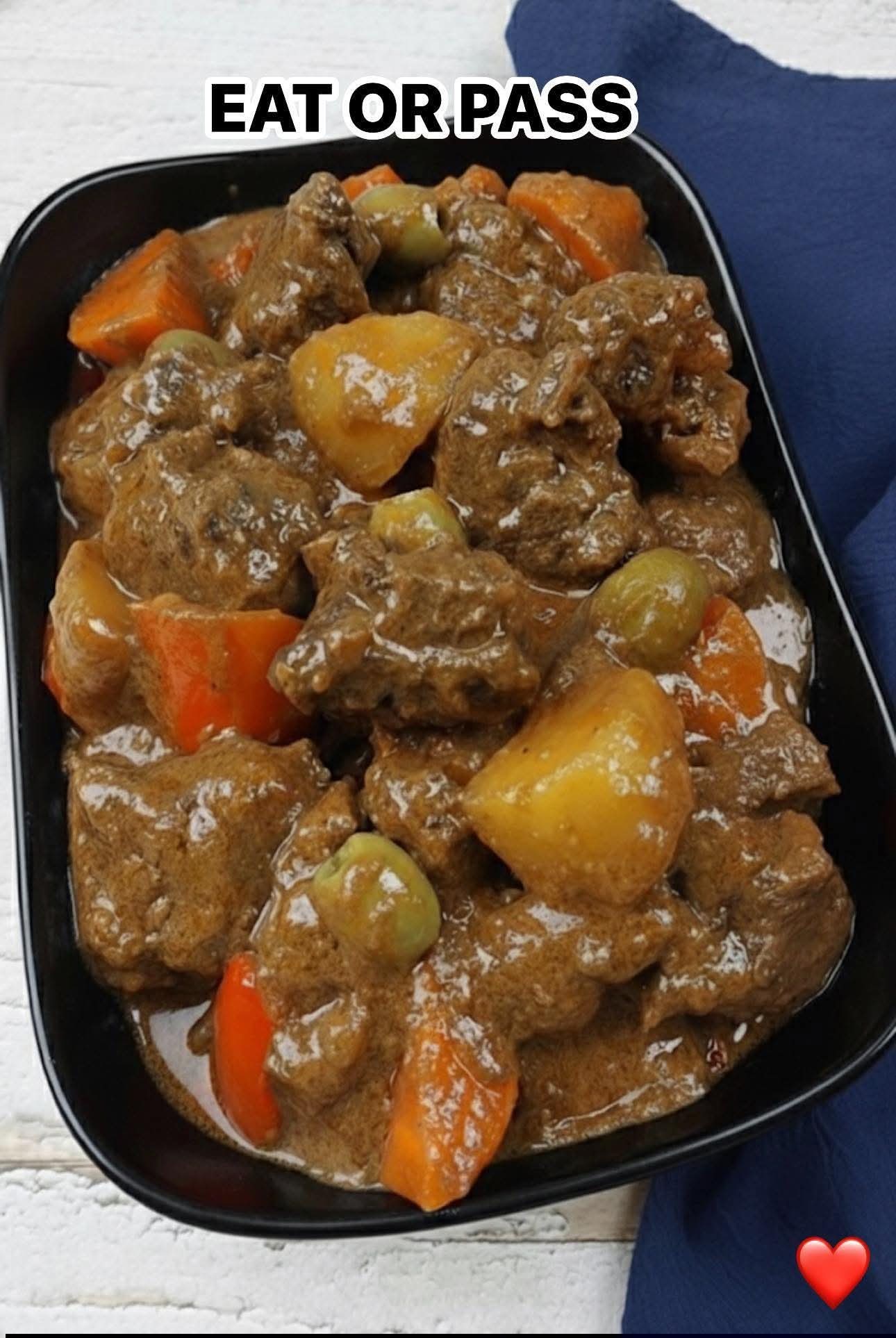
Here is a comprehensive recipe for Classic Beef Caldereta, structured with all the elements you requested.
—
Classic Beef Caldereta: A Filipino Fiesta Staple
Introduction
Beef Caldereta is more than just a stew; it is the heart of Filipino celebration. Known for its rich, smoky, and deeply savory flavor, this dish is a mandatory centerpiece at town fiestas, Christmas gatherings, and family reunions. Originally influenced by Spanish cuisine (the name derives from “caldero,” meaning cooking pot), the Filipino version has evolved into a unique masterpiece. What sets Caldereta apart from other stews is its signature ingredient: liver spread. This addition gives the sauce an unparalleled creamy texture and a depth of umami that makes it irresistibly decadent. Served with steaming white rice, this dish is a testament to the Filipino love for bold, complex, and comforting flavors.
—
History
The history of Caldereta traces back to the Spanish colonial period in the Philippines (1565-1898). The Spanish brought with them their tradition of “estofado” (stews) cooked in a “caldero”—a thick, heavy-bottomed clay or cast-iron pot. While the Spanish version often featured goat meat (Cabrito), Filipinos adapted the recipe using readily available ingredients. As beef became more common, it replaced goat meat as the protein of choice.
Over time, the dish underwent a culinary revolution. The Filipino palate, which favors sweetness, saltiness, and richness, introduced ingredients not found in the original Spanish recipe. The inclusion of tomato sauce, soy sauce (a Chinese influence), and most notably, liver spread or liver pâté, transformed it from a simple stew into the thick, luxurious, and slightly spicy dish we know today. It became a symbol of status and festivity, representing the family’s ability to host a lavish feast.
—
Benefits
While Beef Caldereta is a celebratory dish best enjoyed in moderation, it does offer nutritional benefits:
1. High-Quality Protein: Beef is a fantastic source of complete protein, essential for muscle growth, tissue repair, and overall body function.
2. Iron-Rich: Red meat is one of the best sources of heme iron, which is easily absorbed by the body to help prevent anemia and boost energy levels.
3. Rich in Vitamins: The beef provides B-vitamins, particularly B12, which is crucial for nerve health and red blood cell formation. The liver spread, despite being used in small amounts, is concentrated with Vitamin A and iron.
4. Vegetable Intake: The dish is loaded with bell peppers and potatoes (and often carrots or olives), contributing dietary fiber, Vitamin C from the peppers, and complex carbohydrates for sustained energy.
—
Formation (How the Flavors Develop)
The magic of Caldereta lies in its layered formation of flavors:
1. The Base (Searing): The process begins by searing the beef. This Maillard reaction creates a deep, savory crust that forms the foundational flavor of the dish.
2. The Umami Bomb (Simmering): As the beef simmers in soy sauce, Worcestershire sauce, and tomato sauce, it breaks down. The meat fibers relax, absorbing the salty and tangy liquids while releasing collagen, which adds body to the broth.
3. The Transformation (Liver Spread): This is the critical moment. The liver spread is dissolved into the sauce. It acts as a natural thickener and adds a distinct, savory richness (umami) that binds all the other flavors together, creating the signature creamy, non-grainy texture.
4. The Finish (Vegetables & Spice): Potatoes and bell peppers are added at the end to retain their shape and texture. The bell peppers release a subtle sweetness and aroma, while the chili (if used) cuts through the richness, balancing the stew perfectly.
—
Ingredients
Main:
· 1.2 kg beef chuck or brisket, cut into 2-inch chunks (well-marbled cuts are best)
· 3 tbsp cooking oil
· 1 large onion, finely chopped
· 6 cloves garlic, minced
· 2 tbsp Worcestershire sauce
· ⅓ cup soy sauce (use ¼ cup for less salt, ⅓ for deeper flavor)
· 2 packs (90g each) tomato sauce (or 1 cup tomato puree)
· 1 small can (approx. 100g) liver spread
· 4 cups beef broth (or water)
· 2 large potatoes, peeled and quartered
· 2 large carrots, peeled and cut into chunks (optional, for sweetness)
· 1 red bell pepper, sliced into strips
· 1 green bell pepper, sliced into strips
· ½ cup green olives (optional, but traditional for a “Spanish” flair)
· 2-3 bird’s eye chilies (siling labuyo) or 1 large red bell pepper for mild heat
· Salt and freshly ground black pepper, to taste
· 1 tbsp brown sugar (optional, to balance acidity)
—
Instructions
1. Prepare and Sear the Beef: Pat the beef chunks dry with a paper towel. Season generously with salt and pepper. Heat oil in a large, heavy-bottomed pot (like a Dutch oven) over medium-high heat. Sear the beef in batches until deeply browned on all sides. Do not overcrowd the pot. Remove the beef and set aside.
2. Sauté Aromatics: In the same pot, reduce heat to medium. Sauté the onion until softened (about 3 minutes). Add the garlic and cook until fragrant (30 seconds).
3. Deglaze and Simmer: Return the beef to the pot. Pour in the Worcestershire sauce, soy sauce, and tomato sauce. Stir to coat. Add the beef broth. Bring to a boil, then reduce heat to low. Cover and simmer for 1.5 to 2 hours, or until the beef is fork-tender.
4. Incorporate Liver Spread: Once the beef is tender, add the liver spread. Stir vigorously until it is fully dissolved into the sauce. The sauce will begin to thicken immediately.
5. Add Vegetables: Add the potatoes and carrots (if using). Cover and cook for 10 minutes.
6. Add Peppers and Olives: Add the bell peppers, green olives, and chilies. Cook for another 5-7 minutes until the potatoes are soft and the peppers are slightly tender but still vibrant. Taste the sauce. If it tastes too acidic, add 1 tbsp of brown sugar.
7. Final Adjustments: Adjust seasoning with salt and pepper as needed. If the sauce is too thick, add a splash of broth or water. If too thin, let it simmer uncovered for a few more minutes.
8. Rest and Serve: Remove from heat. Let the Caldereta rest for 10-15 minutes to allow the flavors to meld. Serve hot with a mountain of steamed jasmine or white rice.
—
Nutrition (Approximate per serving, based on 6 servings)
· Calories: ~550-650 kcal
· Protein: 45g
· Fat: 30g
· Carbohydrates: 25g
· Fiber: 4g
· Sodium: 900-1100mg (varies based on soy sauce and broth used)
Note: This is a rich dish; pairing it with plain rice helps balance the sodium and richness.
—
Conclusion
Classic Beef Caldereta is a labor of love that yields a spectacular reward. It is a dish that tells a story—of cultural fusion, of family gatherings, and of the simple joy of sharing a hearty meal. The journey from tough chunks of beef to tender, melt-in-your-mouth morsels coated in a velvety, spicy-savory sauce is a culinary triumph. Whether it is for a special occasion or a comforting weekend meal, Caldereta never fails to impress. It is a dish that fills the home with an irresistible aroma and fills the stomach with pure satisfaction.
—
Lovers
Beef Caldereta is universally loved, but it holds a special place in the hearts of:
· The Fiesta Goer: For whom Caldereta is synonymous with celebration, community, and the vibrant energy of a provincial festival.
· The Family Cook (Nanay or Lola): It is their signature dish, a recipe passed down through generations, cooked with patience and pride to gather the family around the table.
· The Comfort Food Enthusiast: Anyone who appreciates bold, hearty, and deeply flavorful stews. It is particularly beloved by those who enjoy the unique, savory depth that liver spread brings to a dish—a flavor profile that distinguishes Filipino cuisine.
· The Adventurous Eater: International food lovers who try Caldereta are often captivated by its complex layers of flavor, which are more robust and creamy than standard Western beef stews.