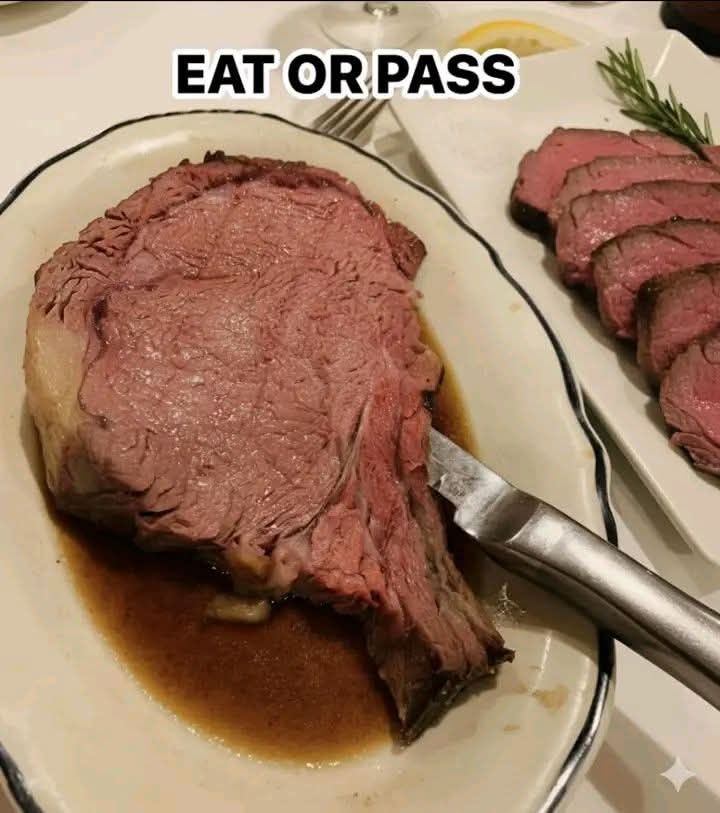
Here is a comprehensive guide to the Ultimate Prime Rib Roast, structured as you requested.
—
The Ultimate Prime Rib Roast: A Symphony of Beef
Introduction
There are few culinary experiences that command a room quite like a Prime Rib Roast. Often called the “King of Roasts,” this centerpiece is more than just a meal; it is a ceremony. This recipe is dedicated to achieving the holy grail of roasting: a steakhouse-quality, melt-in-your-mouth tender interior, incredibly juicy from edge to center, all crowned with a perfectly crisp, peppery crust.
Whether it’s for a Christmas feast, a New Year’s celebration, or a Sunday dinner that demands reverence, this method—utilizing a low-and-slow start followed by a high-heat sear—eliminates the guesswork. By following this guide, you will serve a roast that is uniformly medium-rare from the center to the edge, with a glorious browned exterior that shatters with each slice.
Ingredients
The beauty of prime rib lies in its simplicity. Quality beef needs little adornment.
· 1 (4–6 lb / 2–3 kg) prime rib roast (bone-in or boneless): Bone-in is traditional; the ribs act as a natural roasting rack and insulate the meat, adding flavor. If going boneless, ensure it is tied with butcher’s twine for even cooking.
· 2 tbsp olive oil or softened butter: Acts as a binder for the seasoning and encourages browning. Butter adds a richer flavor.
· 1 tbsp kosher salt: Kosher salt is essential here; its larger crystals dissolve slower and season the meat more evenly than table salt.
· 2 tsp black pepper: Freshly ground coarse black pepper is non-negotiable for that signature crust.
History
The history of prime rib is intrinsically linked to the British tradition of the Sunday Roast. Originating in England during the industrial revolution, the Sunday Roast was a meal enjoyed after church, often featuring beef—a symbol of wealth and prosperity. When British colonists settled in America, they brought this tradition with them. However, it was in the 19th century, with the rise of the American cattle industry and the opening of grand steakhouses in cities like New York and Chicago, that the “Prime Rib” became an icon. The term “prime” originally referred to the grade of meat (USDA Prime), but it has since become synonymous with the specific cut—the standing rib roast—regardless of grade, representing the pinnacle of beef dining.
Benefits
Beyond its undeniable deliciousness, prime rib offers surprising benefits:
1. Nutrient Density: Beef is one of the most protein-rich foods available, essential for muscle repair and satiety. It is also packed with Vitamin B12, zinc, and iron—nutrients crucial for energy production and immune function.
2. Feeds a Crowd Efficiently: Despite the high upfront cost, a 5-pound roast can feed 6-8 people generously, making it cost-effective for large gatherings compared to preparing individual steaks.
3. Leftover Versatility: The leftovers are legendary. They transform into French dip sandwiches, hearty beef stews, or shaved beef for tacos, extending the value of the meal.
4. Culinary Confidence: Successfully roasting a prime rib is a rite of passage in the kitchen that builds immense culinary confidence.
Formation (Step-by-Step Instructions)
Method 1: The Low & Slow Method (Most Reliable)
This method yields the most even cooking from edge to edge.
Step 1: Preparation & Salting
Remove the roast from the refrigerator 2 to 3 hours before cooking. This is critical; a cold roast will seize up in the oven. Pat the surface bone-dry with paper towels. Rub the olive oil or butter all over. Mix the salt and pepper and coat the roast thoroughly. If time allows, salt the roast 24 hours in advance and leave uncovered in the fridge to dry-brine.
Step 2: The Low Heat
Preheat your oven to 250°F (120°C) . Place the roast on a rack in a roasting pan, fat-side up. Roast until the internal temperature reaches 120°F (49°C) for rare, or 130°F (54°C) for medium-rare. This will take approximately 15-20 minutes per pound.
Step 3: The Rest
Remove the roast from the oven. Tent it loosely with foil. Let it rest for 30 to 45 minutes. The internal temperature will rise by 5-10 degrees (carryover cooking). Do not skip this step; it allows the juices to redistribute so they don’t spill out when sliced.
Step 4: The Sear (The Crust)
Increase the oven temperature to 500°F (260°C) or as high as it will go. Uncover the roast and return it to the oven for 6 to 10 minutes, watching carefully, until the crust is deep brown and crispy. Remove, carve, and serve immediately.
Method 2: The Reverse Sear (Modern & Foolproof)
This is a variation of the above but is widely considered the best method.
1. Follow Step 1 (salting and resting).
2. Place the roast in the oven at 200°F (95°C) .
3. Roast until the center hits 115°F (46°C) for rare or 125°F (52°C) for medium-rare (about 25-30 minutes per pound).
4. Remove and rest for 30 minutes.
5. Sear: Just before serving, heat a cast-iron skillet or use a blowtorch, or place the roast in a 550°F oven for 8-10 minutes to blast the crust.
Nutrition
(Note: Approximate values per 4-ounce (112g) serving of trimmed, roasted prime rib)
· Calories: 380-450
· Protein: 32g
· Fat: 28g (Saturated Fat: 12g)
· Iron: 15% DV
· Zinc: 30% DV
Prime rib is a rich, high-fat cut. The fat marbling is what provides the “melt-in-your-mouth” texture and flavor. While indulgent, opting for grass-fed beef can increase the ratio of omega-3 fatty acids and conjugated linoleic acid (CLA).
Lovers
This recipe is adored by:
· Steak Connoisseurs: Those who appreciate the difference between a strip loin and a ribeye cap will love the intense marbling.
· Holiday Hosts: It is the ultimate stress-free showstopper that frees up the oven (since it cooks at low heat) for side dishes.
· Leftover Enthusiasts: The sandwiches the next day are often considered better than the original meal.
· Purists: People who believe that with high-quality meat, salt, pepper, and fire are all you need to achieve culinary perfection.
Formation (Serving & Carving)
To properly “form” your serving:
1. Carving: If bone-in, slice between the ribs to separate the bone from the meat in one solid piece. Then, turn the boneless roast cut-side down and slice against the grain into ¾-inch thick slabs.
2. The Au Jus: While the roast rests, pour the drippings from the pan into a fat separator. Deglaze the pan with 1 cup of beef stock and a splash of red wine, scraping up the browned bits. Add the skimmed drippings back in and season. Serve the jus on the side—never pour it over the crispy crust until it hits the plate.
Conclusion
The Ultimate Prime Rib Roast is more than a recipe; it is a tradition passed down through generations of home cooks and professional chefs. By respecting the fundamentals—starting with a quality cut, salting in advance, utilizing low-temperature cooking, and resting the meat—you bypass the anxiety often associated with large roasts. The result is not just dinner, but a spectacle of flavor, texture, and aroma. It is a dish that says “celebration” without uttering a word, ensuring that every slice is as juicy, tender, and flavorful as the last. Whether you are feeding two or twenty, mastering this roast puts a timeless classic in your culinary repertoire.
—
Lovers (Expanded)
The love for prime rib spans diverse groups. Food historians love it for its connection to Victorian-era opulence. Meat purists admire the cut for needing no marinades or complicated sauces to shine. Holiday cooks appreciate that the “reverse sear” method allows them to cook the roast while preparing other dishes without fear of overcooking. Leftover lovers know that cold prime rib sliced thin rivals any deli meat. Finally, the novice cook loves this recipe because, despite the impressive result, the method (low and slow) is incredibly forgiving and difficult to mess up.