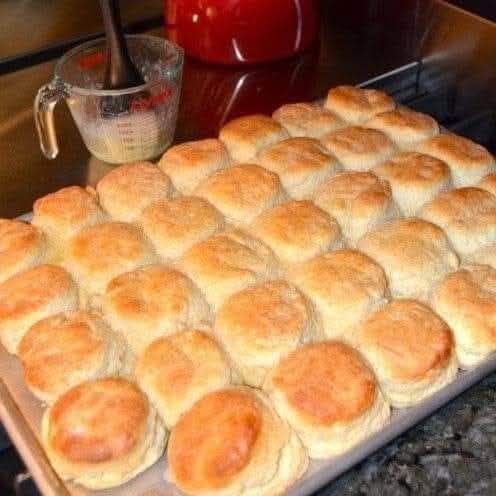
Here is a complete, detailed recipe for Homemade KFC-Style Buttermilk Biscuits, structured with all the elements you requested.
—
Introduction
The Kentucky Fried Chicken (KFC) buttermilk biscuit is more than just a side dish; it is a cultural icon. For decades, these golden, buttery domes have been the comforting constant in the red-and-white striped bucket. Unlike flaky, layered biscuits, the KFC biscuit is known for its “short” texture—a tender, almost cake-like crumb that melts in the mouth, with a signature crispy top and a soft, steamy interior. The secret lies in the technique: handling the dough just enough to bring it together, using cold fat, and the unmistakable brush of melted butter the moment they emerge from the oven. This recipe replicates that magic, allowing you to bring the aroma of a Southern-style bakery into your kitchen.
—
History
The biscuit is a cornerstone of Southern American cuisine, dating back to the 19th century when resourceful cooks used baking soda and buttermilk to create a quick bread without yeast. When Colonel Harland Sanders began franchising KFC in the 1950s, biscuits were not originally part of the menu. It wasn’t until the 1980s, under new management, that the buttermilk biscuit was introduced as a permanent fixture to compete with home-style Southern cooking. It quickly became a fan favorite, transforming from a simple carbohydrate into a “must-have” item. Today, the KFC biscuit is one of the most replicated fast-food recipes in the world, symbolizing comfort, nostalgia, and the perfect balance of salty and buttery goodness.
—
Nutrition (Per Biscuit – Approximate)
Calories: 280–320
Fat: 16g
Saturated Fat: 10g
Carbohydrates: 32g
Protein: 5g
Sodium: 680mg
Sugar: 2g
(Note: These values vary based on the specific brand of buttermilk and butter used.)
—
Ingredients
To achieve the authentic “active member” taste, precision is key.
· 250 g (2 cups) All-Purpose Flour: Provides the structure. Do not use bread flour, as it will make the biscuit tough.
· 2 ½ teaspoons Baking Powder: The primary leavening agent for that signature rise.
· ½ teaspoon Baking Soda: Neutralizes the acidity of the buttermilk and aids in browning.
· 1 teaspoon Salt: Essential for flavor balance.
· 85 g (6 tablespoons) Unsalted Butter, frozen: Cold fat creates steam pockets. Freezing the butter is crucial for that tender crumb.
· 180 ml (¾ cup) Cold Buttermilk: The acid in buttermilk reacts with the leavening agents and ensures a tangy, moist interior.
· 2 tablespoons Butter, melted: For brushing the tops immediately after baking—this creates the iconic shiny, salty top.
—
Methods & Instructions
1. Preparation: Preheat your oven to 220°C (425°F) . Line a baking sheet with parchment paper. Place the flour in the freezer for 10 minutes to keep everything cold.
2. Dry Ingredients: In a large bowl, whisk together the cold flour, baking powder, baking soda, and salt.
3. Cut the Fat: Take the frozen butter and grate it using a box grater. This is the trick to getting those tiny, even butter flecks without overworking the dough. Add the grated butter to the flour mixture. Toss gently to coat.
4. Combine: Make a well in the center. Pour in the cold buttermilk. Stir with a wooden spoon or rubber spatula just until the dough comes together. The dough will look shaggy. Do not overmix.
5. Forming: Turn the dough out onto a lightly floured surface. Gently pat it into a rectangle about 1-inch thick. Fold the dough in half, then pat it down again to 1 inch. Repeat this “lamination” 3 to 4 times. This creates those subtle horizontal layers without making the biscuit flaky.
6. Cutting: Pat the dough to a uniform 1-inch thickness. Use a sharp 2.5-inch round cutter. Press straight down—do not twist the cutter. Twisting seals the edges and prevents the biscuit from rising evenly.
7. Baking: Place the biscuits close together (touching) on the baking sheet. This forces them to rise upwards rather than spread outwards. Bake for 12 to 15 minutes, or until the tops are golden brown.
8. The Finish: As soon as they come out of the oven, brush the tops generously with the melted butter. This adds flavor and gives them that “KFC glow.”
—
Formation & Science
The formation of the perfect biscuit is a chemical symphony. The combination of baking powder and baking soda creates a double-action rise—once when the cold buttermilk hits the acid (baking soda), and again when heat activates the baking powder in the oven. The frozen butter is critical; as it melts in the hot oven, it releases steam, creating small air pockets that result in a tender, rather than tough, structure. The decision to pat and fold rather than knead ensures that gluten development is kept to a minimum, guaranteeing that signature “short” texture that distinguishes a KFC biscuit from a flaky croissant.
—
Lovers
This biscuit is beloved by:
· The Comfort Food Enthusiast: Those who crave the nostalgic taste of a Sunday dinner.
· The DIY Foodie: Home cooks who enjoy the challenge of replicating iconic fast food with higher-quality ingredients.
· The Gravy Connoisseur: Biscuits are the ideal vehicle for sausage gravy, honey, or butter.
· The “Swiper”: The person who claims they don’t want a full meal but will happily eat three biscuits before the chicken is served.
—
Benefits
While biscuits are often seen as an indulgence, this homemade version offers benefits over the fast-food original:
· No Preservatives: You control what goes in—no hydrogenated oils or artificial preservatives.
· Customizable: You can reduce the salt, use grass-fed butter, or add herbs like rosemary or cheddar cheese to the dough.
· Mindful Cooking: The process of making biscuits from scratch is a therapeutic act of creation that yields immediate, warm gratification.
· Versatility: Beyond a side dish, these biscuits make excellent bases for breakfast sandwiches, strawberry shortcake, or bread pudding.
—
Conclusion
Making KFC-style biscuits at home is an act of culinary love. It respects the tradition of Southern baking while satisfying a universal craving for something warm, buttery, and utterly comforting. The difference between a dry, dense hockey puck and a golden, tender cloud is just a few degrees of temperature and a gentle touch. By keeping your ingredients cold, handling the dough minimally, and never twisting that cutter, you achieve biscuit perfection.
—
Must express something to keep getting my recipes….
If you enjoyed this breakdown, drop a “YUMMY” in the comments to let me know you’re an active member! Don’t forget to save this recipe and tag me when you pull those golden beauties out of the oven. Happy baking!
👇 Recipe in comments 👇