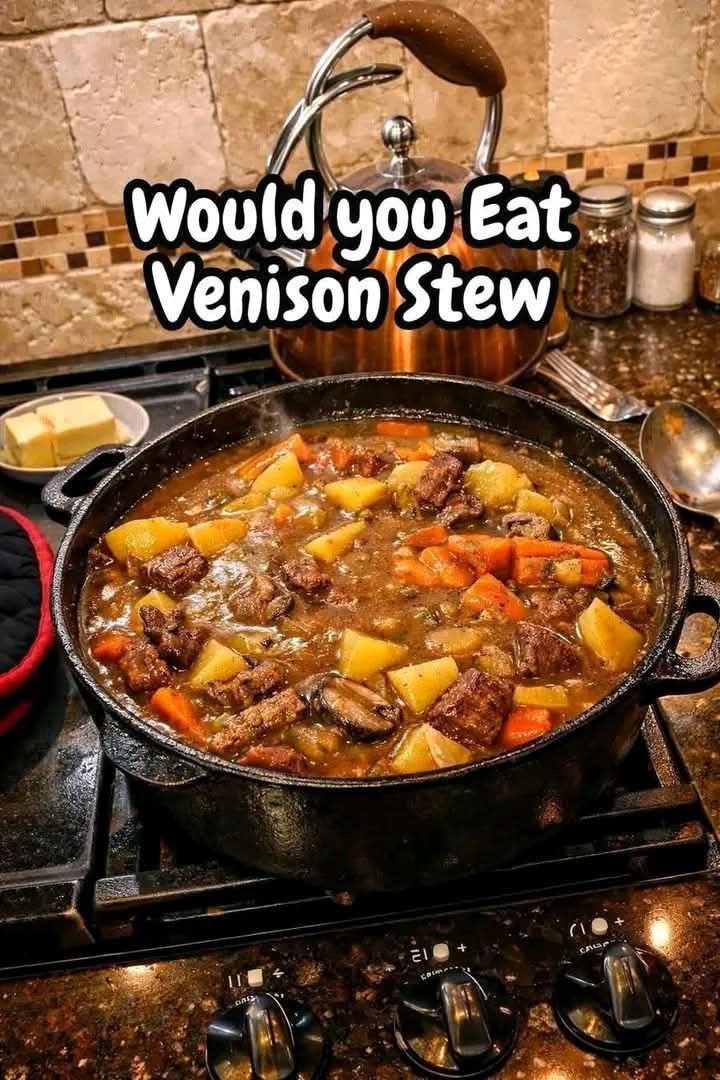
Here is a comprehensive guide to creating a rich and hearty Venison Stew, structured as you requested, from its historical roots to the final, satisfying bowl.
—
The Hunter’s Pot: A Complete Guide to Venison Stew
Introduction
Venison stew is more than just a meal; it’s a culinary tradition that speaks to the heart of rustic, resource-based cooking. For centuries, it has been the centerpiece of the hunter’s table, a way to transform a prized cut of wild game into a tender, flavorful, and nourishing feast. This dish embodies patience and skill, slowly coaxing deep, earthy flavors from lean meat, aromatic vegetables, and a rich, herbed broth. It’s a celebration of the hunt, a connection to the land, and a comforting embrace on a cold evening. This guide will walk you through every step, ensuring you create a venison stew that is both historically resonant and deeply satisfying.
A Brief History of Venison Stew
The history of venison stew is as old as the act of hunting itself. “Venison” originally derived from the Latin word venari, meaning “to hunt,” and historically referred to the meat of any wild game. In medieval Europe, it was the food of the nobility, with vast forests reserved for royal hunts. For commoners, it was a precious and rare source of protein, often poached and cooked in a single pot over an open fire to make the toughest cuts palatable.
As European settlers arrived in North America, they adapted their old-world stew-making techniques to the abundant game they found, particularly whitetail deer. The dish evolved from a simple survival food into a cherished part of regional cuisine, passed down through generations of hunters and cooks. Today, it represents a commitment to sustainable, organic eating and a direct connection to the source of our food.
The Benefits of Cooking with Venison
· Lean and Healthy: Venison is significantly leaner than beef, with less fat and cholesterol, making it a heart-healthy choice. It’s a fantastic source of high-quality protein, iron, and B vitamins.
· Rich, Unique Flavor: It offers a deep, earthy, and slightly sweet flavor that is distinct from domesticated meats, providing a more complex and rewarding eating experience.
· Sustainable and Ethical: For hunters, it represents the pinnacle of ethical, farm-to-table (or forest-to-table) eating. For those who buy it, it supports local agriculture and game management.
· Culinary Challenge: Mastering venison teaches valuable cooking skills, particularly in braising and slow-cooking to tenderize lean meat and balance its robust flavor.
—
The Big Recipe: Classic Hunter’s Venison Stew
This recipe is designed to be the definitive guide, yielding a deeply flavorful and tender stew.
Yields: 6-8 servings
Prep time: 30 minutes
Cook time: 2.5 – 3 hours
Ingredients
· For Browning the Meat:
· 2 pounds venison stew meat (from the shoulder or leg), cut into 1-inch cubes
· 3 tablespoons all-purpose flour
· 2 teaspoons kosher salt, divided
· 1 teaspoon freshly ground black pepper, divided
· 3-4 tablespoons olive oil or bacon fat, for browning
· For Sautéing the Aromatics:
· 1 large yellow onion, chopped
· 3 large carrots, peeled and cut into 1-inch chunks
· 2 celery stalks, chopped
· 3 cloves garlic, minced
· For the Braising Liquid & Herbs:
· 1 cup dry red wine (like Merlot or Cabernet Sauvignon)
· 4 cups beef or venison stock, preferably low-sodium
· 2 tablespoons tomato paste
· 2 bay leaves
· 2-3 sprigs fresh thyme (or 1 teaspoon dried thyme)
· 1 sprig fresh rosemary (or ½ teaspoon dried rosemary)
· For the Final Additions:
· 1 pound Yukon Gold or red potatoes, washed and cut into 1-inch chunks
· 8 ounces cremini mushrooms, halved or quartered
· 2 tablespoons chopped fresh parsley, for garnish
Instructions / Methods
Step 1: Prepare and Dredge the Venison
Pat the venison cubes completely dry with paper towels. This is crucial for a good sear. In a large bowl, combine the flour, 1 teaspoon of salt, and ½ teaspoon of pepper. Add the venison cubes and toss until they are evenly coated. Shake off any excess flour.
Step 2: Brown the Meat (The Foundation of Flavor)
Heat 2 tablespoons of oil or fat in a large Dutch oven or heavy-bottomed pot over medium-high heat. Once the oil is shimmering, add the venison in a single layer, being careful not to overcrowd the pot. (Work in batches if necessary). Brown the meat on all sides for 2-3 minutes per side, until a deep, dark crust forms. Use a slotted spoon to transfer the browned venison to a plate and set aside.
Step 3: Sauté the Vegetables
Reduce the heat to medium. If the pot seems dry, add another tablespoon of oil. Add the chopped onion, carrots, and celery. Sauté for 5-7 minutes, stirring occasionally, until the vegetables begin to soften and the onions become translucent. Add the minced garlic and cook for another minute until fragrant.
Step 4: Deglaze and Deepen
Pour in the red wine, using a wooden spoon to scrape up all the browned bits (fond) from the bottom of the pot. This is where immense flavor lives. Let the wine simmer for 2-3 minutes, reducing slightly. Stir in the tomato paste and cook for another minute.
Step 5: The Long, Slow Braise
Return the browned venison and any accumulated juices to the pot. Add the beef stock, bay leaves, thyme, and rosemary. Bring the stew to a gentle simmer, then reduce the heat to low. Cover the pot and let it cook slowly for 1.5 hours. The liquid should be at a bare simmer, with just a few bubbles breaking the surface.
Step 6: Add the Root Vegetables
After 1.5 hours, add the potato chunks and the remaining 1 teaspoon of salt and ½ teaspoon of pepper. Stir to combine. Re-cover the pot and continue to simmer for another 30 minutes.
Step 7: Add Mushrooms and Finish
Add the mushrooms and continue to cook, uncovered, for the final 30-45 minutes. Cooking uncovered allows the liquid to reduce and thicken slightly. The stew is done when the venison is fork-tender and the vegetables are soft. Remove the bay leaves and herb sprigs.
Step 8: Rest and Serve
Let the stew stand, off the heat, for at least 10-15 minutes before serving. This allows the flavors to meld together beautifully. Ladle into deep bowls, garnish generously with fresh chopped parsley, and serve with a chunk of crusty bread for sopping up the glorious broth.
Serving and Presentation
Serve the stew as the main event. A simple green salad with a sharp vinaigrette provides a wonderful contrast to the stew’s richness. A glass of the same red wine used in the cooking process makes for a perfect pairing. For a heartier meal, serve it over buttered egg noodles, creamy polenta, or mashed potatoes.
A Final Word for Lovers of the Dish
For those who love venison stew, it is never just “stew.” It is a memory of a successful hunt, a taste of a wild landscape, or the warmth of a family gathered around a table. It is the embodiment of terroir—the taste of a place. The key to its magic lies in patience: the patient browning of the meat, the patient hours of simmering, and the patient anticipation as the aromas fill your home.
Conclusion
Mastering venison stew is a rite of passage for any cook interested in the deeper traditions of food. By following this guide, you transform a lean, wild meat into a dish of profound comfort and complexity. From its ancient roots as a hunter’s meal to its place on the modern table, venison stew remains a timeless classic—a delicious and nourishing connection to the past and a satisfying meal for the present. Enjoy the fruits of your labor, and the warm, rich story in every single bite.