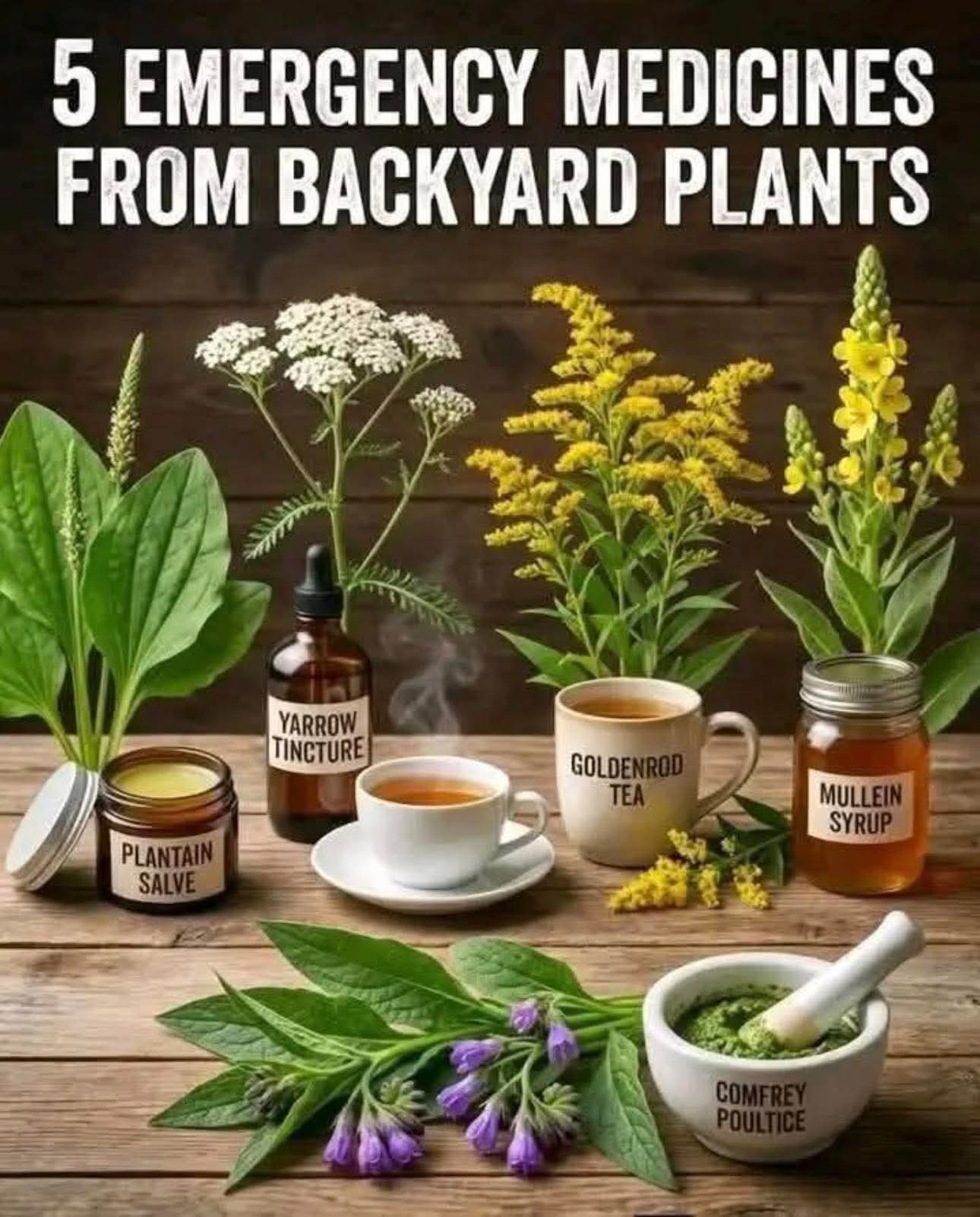
🌿 5 Emergency Medicines You Can Make From Backyard Plants
Natural remedies have been used for centuries by families, healers, and herbalists around the world. Long before modern pharmacies existed, people relied on the healing power of plants growing right outside their homes. Many common backyard herbs contain powerful compounds that can help soothe wounds, calm inflammation, support the lungs, and fight infection.
Learning how to prepare simple herbal remedies can be useful in everyday life or in situations when store-bought medicine is not available. These traditional preparations are easy to make, affordable, and rely on natural ingredients. Below are five classic herbal medicines made from well-known healing plants.
🌿 5 Emergency Herbal Medicines from Backyard Plants
1. 🌱 Plantain Salve – For Cuts, Bites & Skin Irritation
Introduction
Plantain (the wild herb, not the banana) has been used for centuries as a natural skin healer. It contains compounds that reduce inflammation, soothe itching, and support wound healing.
Ingredients
- 1 cup fresh plantain leaves
- ½ cup coconut oil or olive oil
- Clean cloth or cheesecloth
- Small jar for storage
Instructions
- Wash the fresh plantain leaves thoroughly.
- Pat them dry with a clean towel.
- Crush the leaves using a mortar and pestle or blend them into a thick green paste.
- Warm the coconut oil or olive oil slightly.
- Mix the crushed plantain leaves with the warm oil.
- Let the mixture sit for about 20 minutes so the plant releases its healing compounds.
- Strain the mixture through a cloth to remove the plant material.
- Pour the infused oil into a small jar and allow it to cool and thicken into a salve.
Method of Use
Apply a small amount directly on:
- Cuts and scrapes
- Mosquito or insect bites
- Minor burns
- Irritated or itchy skin
2. 🌼 Yarrow Tincture – Natural First Aid Antiseptic
Introduction
Yarrow has been famous in herbal medicine since ancient times. According to tradition, warriors used it on the battlefield to stop bleeding and protect wounds from infection.
Ingredients
- Fresh yarrow leaves and flowers
- Vodka or high-proof alcohol
- Glass jar with lid
- Dark glass dropper bottle
Instructions
- Fill a clean jar with fresh yarrow leaves and flowers.
- Pour vodka over the herbs until completely covered.
- Seal the jar tightly.
- Store in a cool, dark place for two weeks.
- Shake the jar gently every few days.
- After two weeks, strain the liquid through cloth or a fine sieve.
- Store the tincture in a dark bottle.
Method of Use
- Apply a few drops to minor cuts to help stop bleeding.
- Traditionally used in very small diluted amounts to support fever and cramps.
3. 🌾 Goldenrod Tea – Anti-Inflammatory Herbal Drink
Introduction
Goldenrod has long been valued as a comforting herbal tea that supports the immune system and soothes inflammation during seasonal illness.
Ingredients
- 1 tablespoon dried goldenrod flowers
- 1 cup hot water
- Honey or lemon (optional)
Instructions
- Place dried goldenrod flowers into a cup.
- Pour hot water over the herbs.
- Cover and let the tea steep for 10 minutes.
- Strain the tea.
- Add honey or lemon if desired.
Method of Use
Drink warm to help support:
- Cold and flu discomfort
- Sore throat
- Seasonal allergies
- General immune health
4. 🌿 Mullein Syrup – Lung & Chest Support
Introduction
Mullein is a well-known herb used traditionally to calm coughs and support the respiratory system. Its soft leaves contain soothing compounds helpful during chest congestion.
Ingredients
- 1 handful mullein leaves
- 2 cups water
- 1–2 tablespoons honey
- Fine cloth for straining
Instructions
- Place mullein leaves in a pot with water.
- Simmer gently for about 20 minutes.
- Strain the liquid carefully through cloth to remove the tiny hairs from the leaves.
- While the liquid is still warm, stir in honey.
- Store in a sealed jar in the refrigerator.
Method of Use
Take a spoonful when needed to help soothe:
- Cough
- Chest congestion
- Throat irritation
5. 🌱 Comfrey Poultice – Powerful Wound Healer
Introduction
Comfrey has been called “knitbone” in traditional herbal medicine because it was believed to support the healing of bruises and sprains.
Ingredients
- Fresh comfrey leaves
- Mortar and pestle or blender
- Clean cloth or gauze
Instructions
- Wash the comfrey leaves.
- Crush or blend them into a thick paste.
- Spread the paste onto a clean cloth or gauze.
- Apply the cloth directly onto the affected area.
Method of Use
Leave the poultice on the skin for 20–30 minutes to help soothe:
- Bruises
- Sprains
- Swelling
- Sore muscles
🌿 History of Herbal First Aid
For thousands of years, herbal medicine has been part of human survival. Ancient civilizations in Egypt, Greece, China, and Indigenous cultures across the world relied on plants for healing. Many of today’s modern medicines were originally discovered through these traditional herbal practices.
Backyard herbs like plantain, yarrow, and mullein were especially valued because they were easy to find and simple to prepare. Knowledge of these plants was often passed down from grandparents, healers, and herbalists.
🌱 Formation of Herbal Remedies
Herbal medicines usually come in several forms:
- Salves and oils – for skin treatment
- Tinctures – concentrated liquid extracts
- Teas and infusions – gentle internal remedies
- Syrups – soothing treatments for coughs
- Poultices – fresh plant pastes applied to the skin
Each method helps extract different beneficial compounds from the plants.
❤️ Why Herbal Lovers Appreciate These Remedies
People who enjoy herbal medicine love these remedies because they are:
🌿 Natural and simple
🌿 Affordable and accessible
🌿 Rooted in traditional wisdom
🌿 Easy to prepare at home
🌿 Gentle for everyday wellness
Herbal enthusiasts often keep small jars of homemade salves, tinctures, and teas ready for common health needs.
🌿 Conclusion
Backyard plants are more powerful than many people realize. With simple preparation methods, everyday herbs can become useful natural remedies for minor health issues. While they should not replace professional medical care in serious situations, these traditional herbal preparations can be helpful additions to a natural home remedy toolkit.
By learning the basics of herbal medicine, you reconnect with centuries of plant wisdom and gain practical skills that can support health and wellness naturally. 🌱