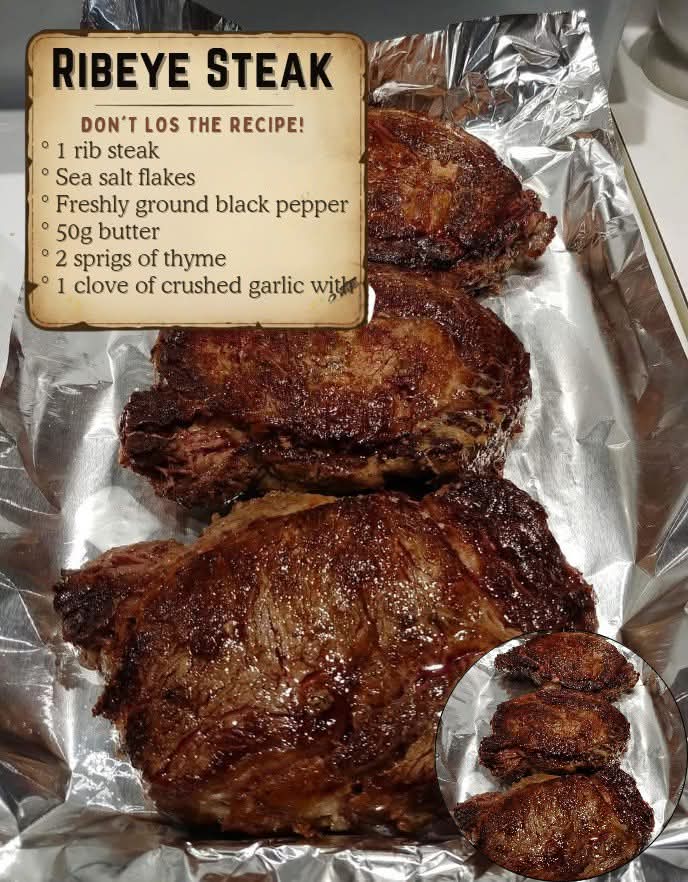
Here is the comprehensive, big recipe for Ribeye Steak you requested, complete with a detailed introduction, history, nutritional information, and a passionate conclusion for steak lovers.
—
The Perfect Ribeye Steak: A Carnivore’s Guide to the King of Steaks
Introduction
If there is one cut of beef that reigns supreme in the world of grilling and pan-searing, it is the magnificent Ribeye. Known as the “king of steaks,” the Ribeye is celebrated for its unparalleled marbling—those beautiful white veins of fat that run through the meat. This intramuscular fat renders down during cooking, basting the steak from within and creating a level of flavor, juiciness, and tenderness that is simply unmatched. Whether you prefer it boneless for ease or bone-in for added flavor (sometimes called a “Cowboy Steak” or “Prime Rib” when left whole), mastering the art of cooking a ribeye is a rite of passage for any home cook. This recipe strips away the complexity and focuses on the fundamentals: high heat, quality ingredients, and perfect timing. Get ready to create a restaurant-quality meal in the comfort of your own kitchen.
The History & Origins of the Ribeye
The history of the ribeye is as rich as its flavor. The cut comes from the “rib” section of the cow, specifically the longissimus dorsi muscle, which runs along the animal’s back from the shoulder to the hip. Because this muscle is not heavily exercised, it remains exceptionally tender.
The term “ribeye” likely derives from the two parts of the cut: the “rib” refers to the primal section it comes from, and the “eye” refers to the shape of the main muscle when sliced. Historically, this cut was part of larger roasts served in English and European taverns and noble houses. As butchery evolved, particularly in the United States, butchers realized that slicing the roasted rib section into individual steaks created a premium portion that was perfect for individual servings. The post-World War II era, with its rise in prosperity and the culture of steakhouses, cemented the Ribeye’s status as a luxury item for the masses.
The Benefits of Choosing Ribeye
Why choose a ribeye over other cuts like sirloin or filet mignon?
1. Superior Flavor: The high fat content is the primary source of flavor. Fat carries taste, and as it melts, it creates a buttery, rich, and beefy flavor that is more pronounced than leaner cuts.
2. For Tenderness: While not as buttery-soft as a filet mignon (which comes from a less-used muscle), the abundant marbling makes the ribeye exceptionally tender and juicy.
3. Forgiving to Cook: The fat content acts as a buffer against overcooking. While you should always aim for the perfect temperature, a ribeye has a wider window of deliciousness than a super-lean cut.
4. Satiety: A well-cooked ribeye is deeply satisfying. Its richness means a standard 8-12 oz portion is often the perfect serving size, leaving you feeling full and content.
Ingredients
· 2 Ribeye Steaks (Approximately 1 to 1.5 inches thick, boneless or bone-in. Look for “Prime” or “Choice” grade for the best marbling).
· 2 tablespoons Olive Oil (A high-heat cooking oil like avocado or canola can also be used, but olive oil adds a subtle flavor).
· 1 teaspoon Garlic Powder (Not garlic salt. This provides a savory base without burning like fresh garlic).
· 1 teaspoon Onion Powder (Adds depth and sweetness).
· 1 tablespoon Fresh Thyme or Rosemary (Optional, but highly recommended for an aromatic finish).
· 2 tablespoons Unsalted Butter (For basting).
· 2 cloves Garlic (Peeled and smashed, for basting).
· Kosher Salt (Generous amount. Use a coarse salt like Morton or Diamond Crystal).
· Freshly Cracked Black Pepper (Generous amount).
Methods & Step-by-Step Instructions
This method focuses on the “Reverse Sear” for thick steaks or a classic Pan-Sear. We’ll detail the most reliable method: The Cast Iron Sear with Butter Basting.
Step 1: Preparation (The 45-Minute Rule)
Remove the steaks from the refrigerator 45 minutes to 1 hour before cooking. Pat them completely dry with paper towels (moisture is the enemy of a good sear). Season them liberally on all sides with kosher salt and freshly cracked black pepper. This is called “dry brining”—the salt will dissolve and be reabsorbed, seasoning the meat deeply and helping it retain moisture. Wait until just before cooking to add the garlic and onion powder, as the heat can make them bitter if left on too long.
Step 2: Preheat and Pat Dry
About 10 minutes before cooking, place a heavy-bottomed pan (cast iron is ideal) over medium-high to high heat. Add the 2 tablespoons of olive oil and let it heat until it shimmers and is just about to smoke. Just before the steaks go in, pat them dry with a paper towel again.
Step 3: The Initial Sear
Carefully lay the steaks in the hot pan, laying them away from you to avoid splattering oil. You should hear a vigorous sizzle. Press down gently to ensure full contact with the pan. Sear for 2-3 minutes without moving them. You are looking for a deep, golden-brown crust. Sprinkle the tops with the garlic and onion powder as the first side cooks.
Step 4: Flip and Baste
Flip the steaks using tongs. Sear the second side for 2 minutes. Reduce the heat to medium-low. Add the 2 tablespoons of butter, the smashed garlic cloves, and the fresh herbs to the pan. Tilt the pan slightly and use a large spoon to continuously scoop the melting butter up and over the steak. This “basting” action cooks the top gently while infusing the steak with the garlic and herb flavors. Continue basting for another 1-2 minutes, depending on your desired doneness.
Step 5: Check for Doneness
The most accurate way to check is with an instant-read thermometer.
· Rare: 120-125°F (49-52°C) – Cool red center
· Medium-Rare: 130-135°F (54-57°C) – Warm red center (The Gold Standard for Ribeye)
· Medium: 140-145°F (60-63°C) – Hot pink center
Step 6: The Crucial Rest
Remove the steaks from the pan and place them on a cutting board or wire rack. Do not skip this step. Tent them loosely with foil and let them rest for at least 5-10 minutes. This allows the juices, which have been driven to the center by the heat, to redistribute evenly throughout the steak. If you cut it immediately, all those flavorful juices will end up on your plate instead of in your mouth.
Step 7: Slice and Serve
After resting, place the steak on a board. If you like, you can slice it against the grain into thick strips to serve, or serve the whole steak. Pour any accumulated juices from the board over the top.
Formation of the Perfect Crust
The beautiful brown crust on a perfectly cooked steak is the result of the Maillard reaction. This is a chemical reaction between amino acids and reducing sugars that occurs when food is heated above 285°F (140°C). It creates hundreds of new flavor and aroma compounds, giving the steak its complex, savory, and deeply “beefy” taste. The combination of high heat, dry surface, and fat (oil) in the pan is essential to triggering this reaction quickly without overcooking the interior.
Nutritional Information (Approximate per 8oz / 227g serving, cooked)
· Calories: 550-700 (depending on fat rendering)
· Protein: 45-50g
· Fat: 45-55g (Saturated Fat: ~18-22g)
· Cholesterol: ~150mg
· Sodium: Varies greatly based on seasoning.
· Iron: Excellent source (approx. 20-25% DV)
· Vitamin B12: Excellent source
· Zinc: Excellent source
Note: Ribeye is a nutrient-dense food, rich in protein, iron, and B vitamins, but it is also high in saturated fat and should be enjoyed as part of a balanced diet.
A Conclusion for Steak Lovers
To the true steak lover, the ribeye is not just a meal; it’s an experience. It is the sound of the sizzle, the intoxicating aroma of browning butter and beef, and that first moment when your knife glides through the tender meat. It is the pursuit of the perfect crust giving way to a succulent, flavorful center. This recipe is more than just instructions—it’s an invitation to connect with a primal, satisfying culinary art. Mastering the ribeye is mastering the confidence to create joy with fire, salt, and time.
For the Steak Lovers
This recipe is dedicated to you—the ones who believe that a great steak needs no fancy sauce, only respect. You understand that the best conversations happen around a sizzling pan, and that the mark of a good day is a hot skillet and a cold glass of something delicious. Go forth, create that crust, and enjoy every single bite of the king of steaks.