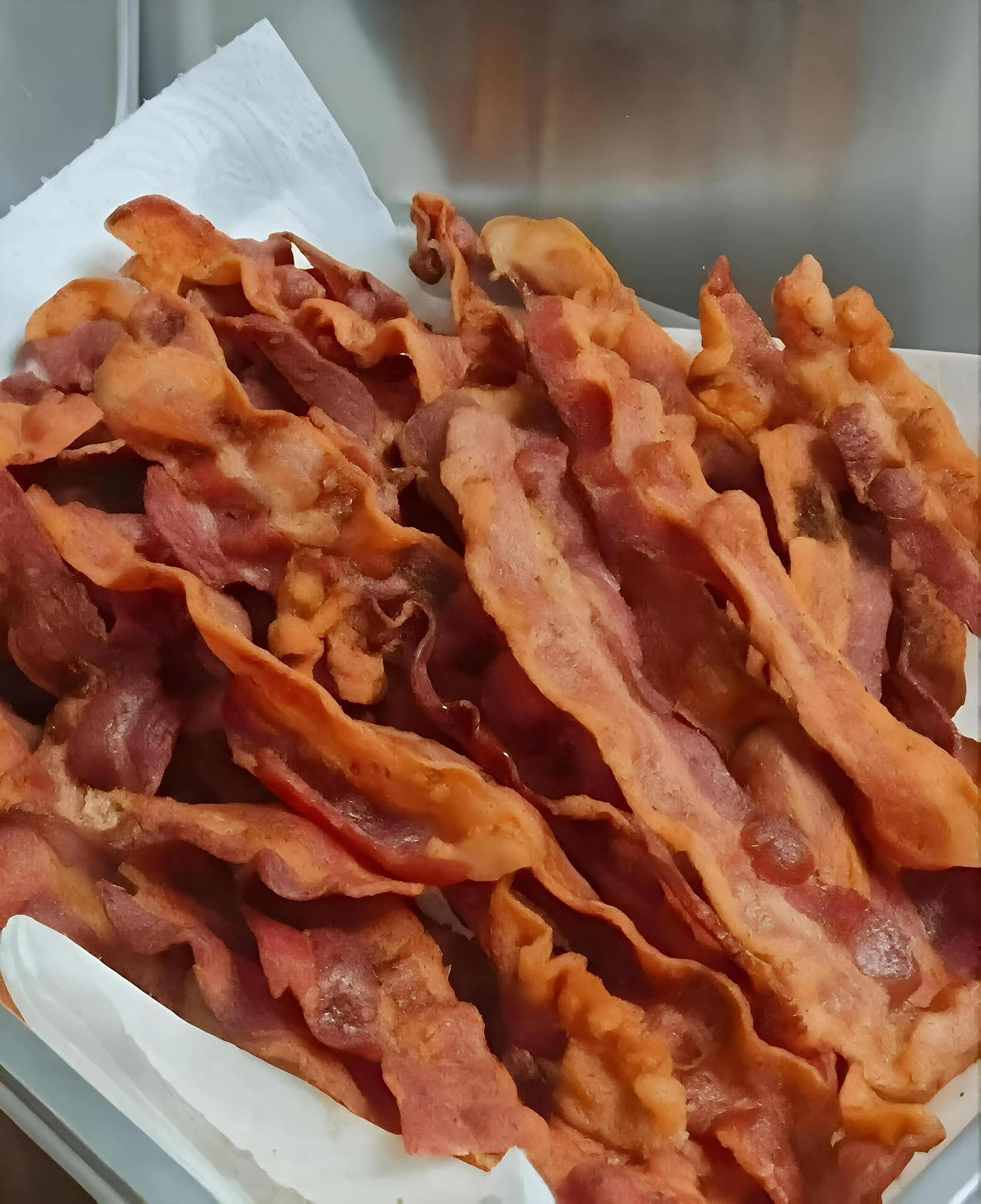
Crispy Bacon 🥓 – Complete Recipe Guide
Introduction
Crispy bacon is one of the most beloved breakfast foods in the world. Known for its rich flavor, smoky aroma, and crunchy texture, bacon can transform simple meals into something truly delicious. Whether served alongside eggs, added to sandwiches, sprinkled on salads, or enjoyed as a snack, crispy bacon is incredibly versatile. The key to perfect bacon lies in cooking it slowly so the fat renders properly, leaving each strip golden, crisp, and flavorful.
Ingredients
- 10–12 slices bacon
- 1 teaspoon black pepper (optional)
- 1 teaspoon brown sugar (optional for sweet flavor)
- ½ teaspoon smoked paprika (optional)
- Parchment paper or paper towels
Optional serving ingredients:
- Eggs
- Toast or bread
- Avocado slices
- Maple syrup
Instructions
- Prepare the bacon
Remove the bacon from the refrigerator and allow it to sit at room temperature for about 5 minutes. - Choose your cooking method
Bacon can be cooked in a skillet, oven, or air fryer. - Lay the bacon flat
Arrange the slices in a single layer without overlapping. - Cook slowly
Cook on medium heat so the fat melts gradually and the bacon becomes crispy. - Turn occasionally
Flip the bacon to ensure both sides cook evenly. - Drain excess fat
Place the cooked bacon on paper towels to absorb grease. - Serve warm
Enjoy immediately while crispy.
Cooking Methods
1. Skillet Method (Classic)
- Place bacon strips in a cold pan.
- Turn heat to medium.
- Cook 8–10 minutes, turning occasionally.
- Remove when golden and crisp.
2. Oven Method (Best for large batches)
- Preheat oven to 200°C (400°F).
- Line a baking tray with parchment paper.
- Place bacon strips evenly.
- Bake 15–20 minutes until crispy.
3. Air Fryer Method
- Preheat air fryer to 180°C (350°F).
- Place bacon strips in basket.
- Cook 7–10 minutes depending on thickness.
Formation (Texture & Appearance)
Perfect bacon should be:
- Golden reddish-brown color
- Crispy edges
- Slightly chewy center
- Wavy or curled strips due to fat rendering
The crisp texture forms when the fat melts and the protein caramelizes during cooking.
History of Bacon
Bacon has existed for thousands of years. Ancient Chinese civilizations were among the first to cure pork belly with salt. Later, the Romans developed their own bacon-style pork called petaso. In Europe, especially England, bacon became a breakfast staple during the Middle Ages. Today, it is popular worldwide and commonly associated with American and British breakfasts.
Benefits of Bacon
When eaten in moderation, bacon can provide several nutritional benefits:
- Good source of protein
- Contains B vitamins such as B1, B3, B6, and B12
- Provides zinc and selenium
- Helps with energy production due to healthy fats
However, moderation is important due to its salt and fat content.
Nutrition Information (Approximate per 2 slices)
- Calories: 80–100
- Protein: 6 g
- Fat: 7 g
- Carbohydrates: 0 g
- Sodium: 350–400 mg
Why People Love Bacon ❤️ (Lovers Section)
Bacon lovers appreciate it because:
- The crispy texture is extremely satisfying
- The smoky aroma stimulates appetite
- It pairs with many foods like eggs, burgers, salads, and pasta
- It adds a rich savory flavor known as umami
Many people consider bacon the “king of breakfast foods.”
Serving Ideas
Crispy bacon can be used in many delicious ways:
- Breakfast with eggs and toast
- Bacon sandwiches
- Crumbled on salads
- Added to burgers
- Mixed into pasta or baked potatoes
Conclusion
Crispy bacon is a timeless comfort food loved across the globe. With just a few simple ingredients and proper cooking techniques, anyone can prepare perfectly crunchy bacon at home. Whether cooked in a skillet, oven, or air fryer, bacon delivers rich flavor and satisfying texture that enhances countless dishes. Enjoy it responsibly, share it with family and friends, and experience why bacon continues to be one of the most loved foods in the world. 🥓✨
If you want, I can also give you:
• 30 creative bacon recipes 🍳
• Secrets restaurants use to make extra crispy bacon 🔥
• Homemade bacon curing recipe 🥓