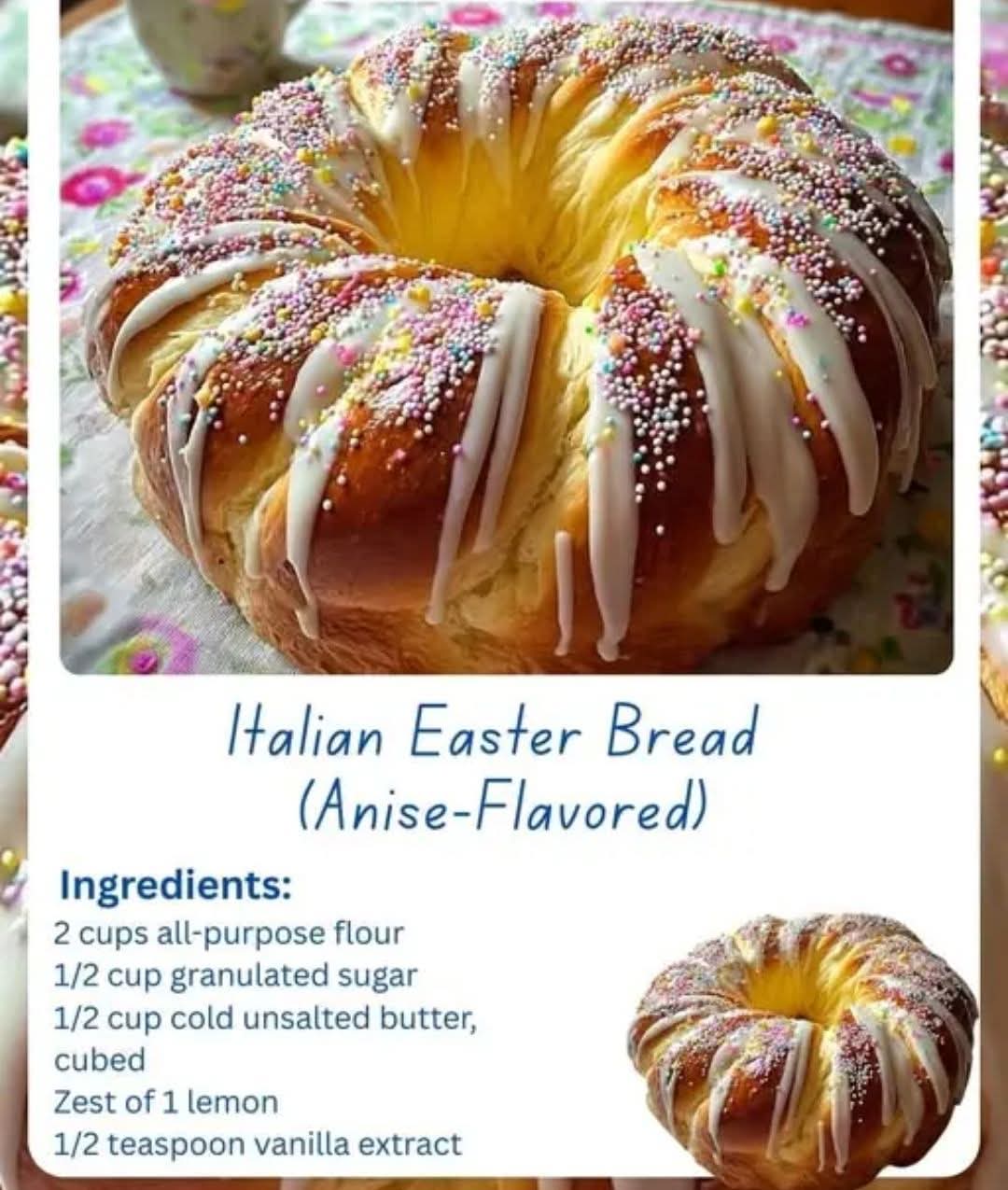
Absolutely! Let’s make this Italian Easter Bread recipe grand and detailed, with all the sections you requested. Here’s a full version for you:
Italian Easter Bread (Anise-Flavored) – A Celebration of Tradition and Sweetness
Introduction
Italian Easter Bread is more than just a dessert—it’s a symbol of family, renewal, and the joyous spirit of Easter. With its soft, slightly sweet dough infused with anise, it’s traditionally braided or shaped into rings, often decorated with vibrant colored eggs. The aroma of anise combined with the warmth of freshly baked bread evokes memories of Italian kitchens bustling with love, laughter, and generations passing down their culinary heritage. This bread is perfect for holiday tables, brunch gatherings, or simply to enjoy with a cup of tea or coffee.
Its slightly chewy texture, subtle sweetness, and delicate licorice-like hint from anise make it a unique treat that delights both the eyes and the palate. Now, let’s dive into making this festive masterpiece.
Ingredients
For the Dough:
- 1/2 cup whole milk, warmed (110°F / 43°C)
- 1 packet (2 1/4 tsp) active dry yeast
- 1/2 cup granulated sugar
- 1/4 cup unsalted butter, melted
- 3 large eggs, at room temperature
- 1/2 tsp salt
- 1 tsp anise extract or 1 tbsp crushed anise seeds
- 4 cups all-purpose flour (plus extra for kneading)
For the Topping:
- 1 egg, beaten (for egg wash)
- 1/4 cup colored sprinkles (optional)
- 6 whole colored eggs (optional, for traditional decoration)
Instructions & Methods
Step 1: Activate the Yeast
- Pour warm milk into a small bowl.
- Add 1 tsp sugar and sprinkle the yeast over the top.
- Let it sit for 5–10 minutes until foamy and bubbly.
Tip: If the yeast doesn’t foam, it may be expired or the milk was too hot—start over to ensure a good rise.
Step 2: Prepare the Dough
- In a large mixing bowl, combine melted butter, remaining sugar, eggs, salt, and anise extract or seeds.
- Add the foamy yeast mixture.
- Gradually add the flour, one cup at a time, mixing until a soft dough forms.
Step 3: Knead the Dough
- Turn the dough onto a lightly floured surface.
- Knead for 8–10 minutes until smooth and elastic.
- Place the dough in a greased bowl, cover with a clean cloth, and let it rise in a warm place for 1–2 hours or until doubled in size.
Step 4: Shape the Bread
- Punch down the dough gently to release air.
- Divide into 3 equal portions for braiding or shape into desired rings.
- For traditional Easter bread, place whole colored eggs into the braid or circle.
Step 5: Second Rise
- Place the shaped bread on a baking sheet lined with parchment paper.
- Cover lightly and allow to rise again for 30–45 minutes until puffy.
Step 6: Bake
- Preheat the oven to 350°F (175°C).
- Brush the top of the bread with beaten egg for a glossy finish.
- Sprinkle colored sugar or sprinkles if desired.
- Bake for 25–30 minutes, or until golden brown and sounds hollow when tapped.
Step 7: Cool & Serve
- Remove from oven and let the bread cool on a wire rack for at least 15 minutes before slicing.
- Serve warm or at room temperature.
History & Formation
Italian Easter Bread has its roots in Southern Italy, where families would bake sweet, braided breads to celebrate Easter Sunday. The round shape symbolizes the cycle of life and resurrection, while the inclusion of colored eggs represents new life and fertility. The anise flavoring was introduced centuries ago, prized for its aromatic sweetness and digestive benefits after heavy holiday meals. Over generations, these breads became a centerpiece on Easter tables, shared among family, neighbors, and friends, embodying the spirit of community and renewal.
Conclusion
This anise-flavored Italian Easter Bread is more than a dessert; it’s a celebration of tradition, love, and culinary artistry. Soft, slightly sweet, and infused with the unique aroma of anise, it’s the perfect way to welcome spring and share joy with loved ones. Every bite carries warmth, history, and a little piece of Italy’s Easter heritage.
For the Lovers of Tradition
- Enjoy it with a cup of espresso or cappuccino.
- Pair with homemade ricotta or jam for a true Italian breakfast.
- Gift a loaf to friends or family—the bright colors and sweet aroma always charm hearts.
Methods with Lovers
- Family Braiding: Invite children or family members to help braid the dough—making it together is as much a joy as eating it.
- Egg Placement: Let loved ones place the colored eggs in the braid; it becomes a fun holiday tradition.
- Sharing & Stories: Serve the bread while sharing stories of Easter traditions—food tastes better when it’s made with love and history.
If you want, I can also create a step-by-step illustrated guide with photos of braiding and decorating, so your Italian Easter Bread looks professional and festive. It’ll make it even more special for family and friends.
Do you want me to do that next?