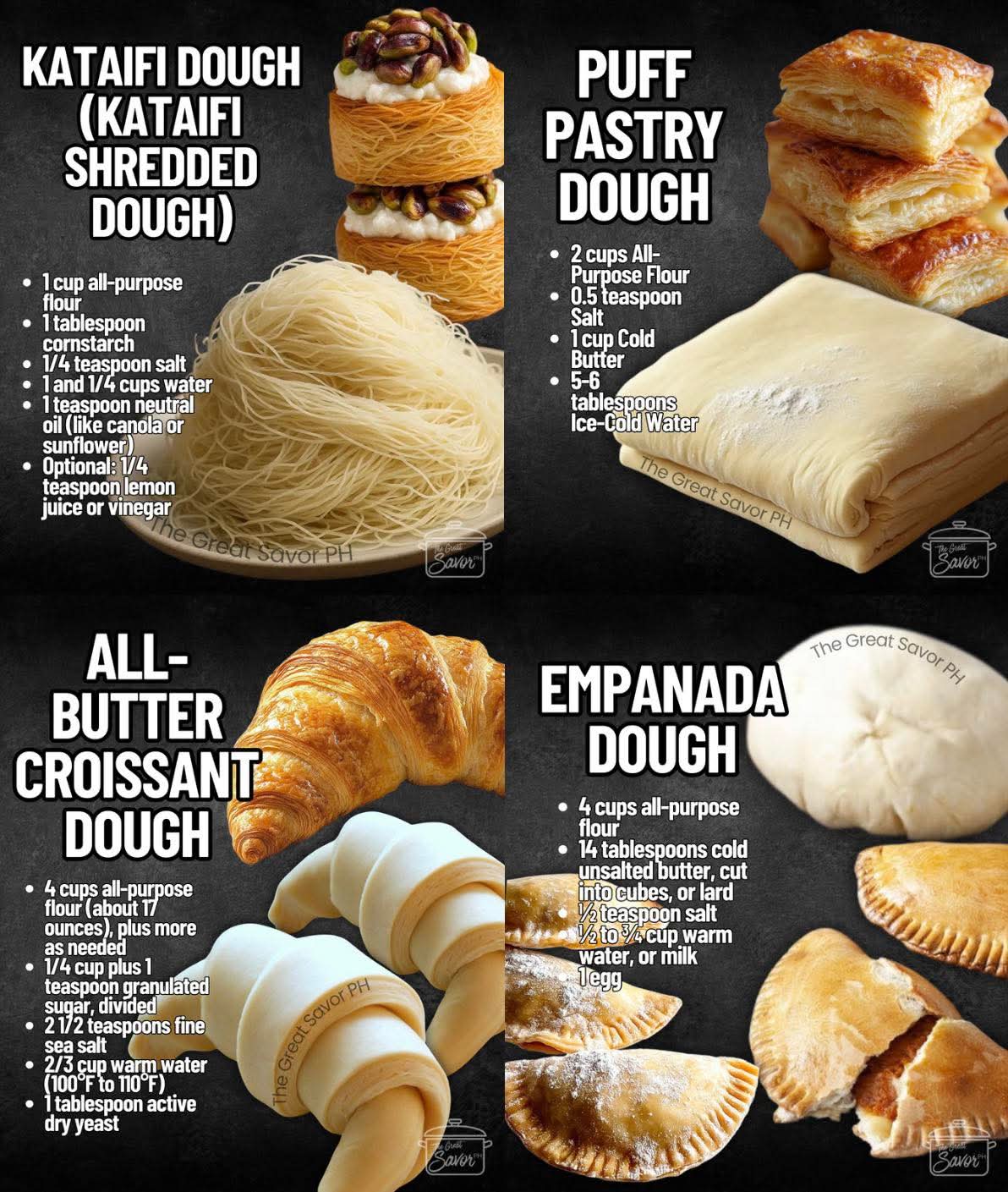
Here is a complete expanded guide to Pastry Dough Recipes with introduction, history, ingredients, instructions, methods, formation, and conclusion—perfect for baking lovers. 🥐🥟🍰
The Ultimate Guide to Pastry Dough Recipes
Kataifi Dough • Puff Pastry Dough • Croissant Dough • Empanada Dough
Introduction
Pastry dough is the foundation of countless desserts and savory dishes around the world. From the delicate shredded strands of kataifi used in Middle Eastern sweets to the buttery layers of French puff pastry and croissants, pastry dough represents both culinary technique and tradition.
Every type of pastry dough has its own texture, preparation style, and cultural background. Some are crisp and flaky, others soft and layered, while some are tender and perfect for stuffing. Mastering these doughs allows bakers to create elegant pastries, comforting baked goods, and impressive desserts.
In this guide, we explore four beloved pastry doughs: Kataifi Dough, Puff Pastry Dough, Croissant Dough, and Empanada Dough. Each recipe includes detailed ingredients, preparation steps, and helpful methods to ensure success in your kitchen.
1. Kataifi Dough (Kataifi Shredded Dough)
History
Kataifi dough originates from the Middle East and Mediterranean regions, particularly Greece and Turkey. The dough is famous for its hair-thin strands used in desserts like kunafa, kataifi nests, and syrup-soaked pastries filled with nuts or cream.
Traditionally, it is made by drizzling thin batter onto a hot surface to create delicate strands.
Ingredients
• 1 cup all-purpose flour
• 1 tablespoon cornstarch
• 1/4 teaspoon salt
• 1 1/4 cups water
• 1 teaspoon neutral oil (canola or sunflower)
• Optional: 1/4 teaspoon lemon juice or vinegar
Instructions
- In a mixing bowl whisk flour, cornstarch, and salt.
- Slowly add water while whisking continuously to prevent lumps.
- Add oil and optional lemon juice. Mix until smooth.
- Cover and let the batter rest for 30 minutes.
- Heat a nonstick skillet over medium-low heat.
- Pour batter into a squeeze bottle or piping bag.
- Drizzle very thin lines of batter across the hot pan.
- Cook for 30–45 seconds until the strands set but remain pale.
- Carefully lift strands with a spatula and transfer to a rack to dry.
Methods & Tips
• Keep the batter smooth and lump-free.
• Use steady hand movements to create fine strands.
• Do not brown the dough—kataifi should remain light in color.
Formation
The thin strands can be formed into:
• Bird’s nests for nut fillings
• Layers for syrup desserts
• Wrappers for shrimp or cheese fillings
Let the strands dry 1–2 hours before using.
Storage
• Refrigerate up to 3 days
• Freeze up to 2 months
2. Puff Pastry Dough
History
Puff pastry originated in France during the 17th century. It became famous for its dramatic layers created by folding butter into dough multiple times. When baked, steam forms between layers, producing the classic flaky texture used in pastries like mille-feuille and vol-au-vents.
Ingredients
• 2 cups all-purpose flour
• ½ teaspoon salt
• 1 cup cold butter (cubed)
• 5–6 tablespoons ice-cold water
Instructions
- In a bowl whisk flour and salt together.
- Add cold butter cubes and flatten them slightly into the flour.
- Add ice water gradually while mixing until a shaggy dough forms.
- Shape into a rectangle and chill 30 minutes.
- Roll dough into a 10×20 inch rectangle.
- Fold into thirds like a letter.
- Rotate dough 90 degrees and chill again.
- Repeat folding process several times.
- Chill for at least 1 hour before using.
Methods & Tips
• Butter must remain very cold.
• Do not overwork the dough.
• Resting between folds creates the signature layers.
Formation
Puff pastry can be shaped into:
• Turnovers
• Napoleons
• Palmiers
• Savory tart shells
3. All-Butter Croissant Dough
History
Croissants became popular in France in the 1800s but were inspired by Austrian pastries. Today they are one of the most iconic breakfast pastries in the world, famous for their airy layers and rich buttery flavor.
Ingredients
• 4 cups all-purpose flour
• 1/4 cup + 1 teaspoon sugar
• 2 1/2 teaspoons sea salt
• 2/3 cup warm water
• 1 tablespoon active dry yeast
• 1 1/2 cups cold butter + 3 tablespoons melted butter
• 1/2 cup whole milk
Instructions
- Combine flour, sugar, and salt in a bowl.
- Activate yeast with warm water and sugar.
- Add milk and melted butter to the yeast mixture.
- Gradually mix in flour until dough forms.
- Knead until smooth and elastic.
- Refrigerate dough 2–8 hours.
- Flatten cold butter into a square block.
- Roll dough into a square and place butter inside.
- Fold dough corners over butter.
- Roll into rectangle and fold like a letter.
- Chill and repeat folding process three times.
Methods & Tips
• Temperature control is crucial.
• Butter and dough must have similar firmness.
• Proper folding creates flaky layers.
Formation
After laminating:
- Roll dough into large sheet.
- Cut into triangles.
- Roll from base to tip to form crescent shapes.
- Proof until doubled.
- Bake until golden brown.
4. Empanada Dough
History
Empanadas originated in Spain and spread throughout Latin America. They are handheld pastries filled with meat, cheese, vegetables, or sweet fillings. The dough is soft yet sturdy, making it perfect for baking or frying.
Ingredients
• 4 cups all-purpose flour
• 14 tablespoons cold butter or lard
• ½ teaspoon salt
• ½–¾ cup warm water or milk
• 1 egg (whisked)
Instructions
- Combine flour and butter until crumbly.
- Add salt and mix.
- Pour in water and egg.
- Stir until dough forms.
- Knead about 5 minutes.
- Wrap and chill 30 minutes.
- Divide dough into 22–25 portions.
- Roll each piece into a 5–6 inch circle.
Methods & Tips
• Chill dough to relax gluten.
• Keep butter cold for flakiness.
• Avoid over-kneading.
Formation
Fill circles with desired filling:
Examples: • Beef and onions
• Chicken and cheese
• Spinach and feta
• Sweet apple or dulce de leche
Fold into half moons and seal edges by crimping with a fork.
Why Bakers Love These Doughs ❤️
Pastry lovers enjoy these doughs because they offer:
• Incredible textures
• Versatility for sweet and savory recipes
• Rich buttery flavor
• Beautiful bakery-style results at home
Each dough represents a different culinary tradition and technique, making them exciting to learn and master.
Conclusion
Pastry dough is truly the backbone of baking. From the delicate threads of kataifi to the luxurious laminated layers of croissants and puff pastry, these recipes open the door to endless culinary creativity.
With patience, practice, and quality ingredients, any home baker can master these classic doughs and create pastries that rival those found in professional bakeries.
Whether you are preparing elegant desserts, comforting savory pies, or festive pastries for family and friends, these dough recipes will become treasured staples in your kitchen.
If you want, I can also give you:
• 10 more professional pastry dough recipes used in bakeries 🥐
• 5 secrets to perfectly flaky pastry every time
• Best fillings for empanadas, croissants, and kataifi.