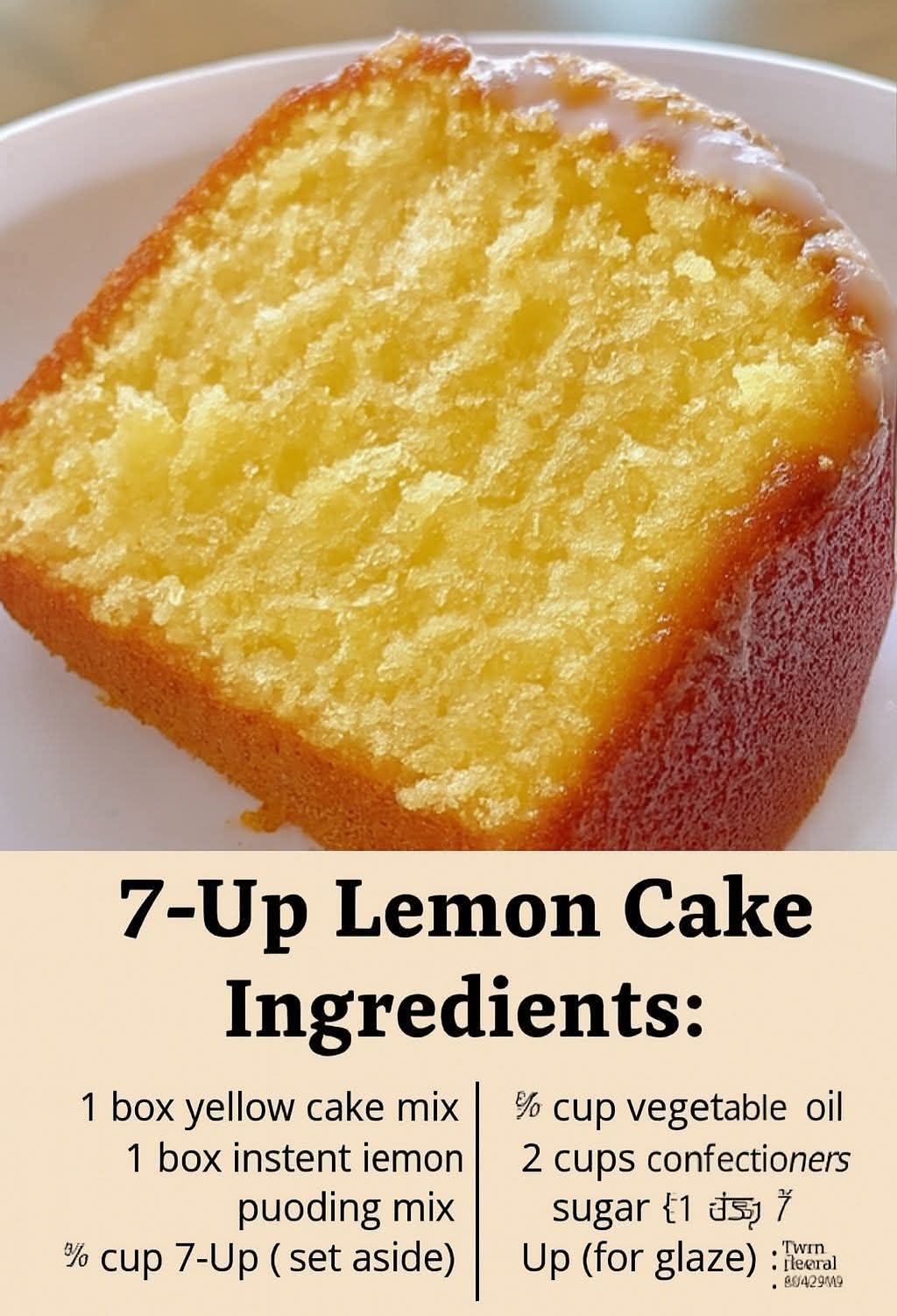
Here is a comprehensive, “big” recipe based on the initial “7Up Lemon Pound Cake” inspiration, but built into a classic, from-scratch Bundt cake. The recipe you provided is a great starting point, but it’s missing a few key elements for a true pound cake texture and that signature 7Up flavor. I’ve expanded it into a complete guide.
—
The Story of the Sunshine Cake: 7Up Lemon Pound Cake
Introduction
There are some recipes that feel like a hug from the inside. They taste of sunshine, of lazy afternoons, and of family gatherings. The 7Up Pound Cake is one such recipe. It’s a classic Southern confection that has graced dessert tables and church suppers for generations. But why 7Up? The story goes that the carbonation in the lemon-lime soda not only adds a delicate citrus flavor but also reacts with the other ingredients to create a uniquely tender and fine crumb. It’s the secret to a cake that is incredibly moist, dense yet light, and absolutely bursting with a nostalgic, lemony sweetness. This isn’t just a cake; it’s a slice of culinary history, a testament to the magic that happens when simple, humble ingredients come together to create something truly special. This recipe, built from the notes of a beloved classic, is one you’ll want to pass down. Don’t lose this recipe.
—
The History & Formation of a Classic
The pound cake’s name originates from its original 18th-century recipe: one pound each of flour, butter, sugar, and eggs. It was a simple, heavy, and reliable cake. As time went on, bakers began to experiment, adding leavening agents like baking powder to lighten the crumb and flavorings to make it their own.
The 7Up Pound Cake is a perfect example of mid-20th-century American baking, an era where convenience foods and creative substitutions were celebrated. The lemon-lime soda, invented in 1929, became a popular mixer, but its entrance into baking was a stroke of genius. It served multiple purposes: it acted as a tenderizer, a leavening agent (the carbonation helps the cake rise), and a flavor booster all in one. This clever “formation” of a recipe transformed the dense, traditional pound cake into something airier, moister, and brightly flavored, securing its place as a timeless favorite.
—
The Benefits of Baking This Cake (Besides the Obvious Deliciousness!)
· Stress Relief: The rhythmic process of creaming butter and sugar, sifting flour, and watching a cake rise in the oven is a known form of culinary therapy.
· Creates Connection: Baking this cake is an act of love. Sharing it with family, friends, or colleagues creates a moment of connection and shared joy.
· A Tangible Achievement: In a world that’s often digital and abstract, pulling a beautiful, golden-brown Bundt cake from the oven provides an immediate and satisfying sense of accomplishment.
· Budget-Friendly Joy: This cake uses mostly pantry-staple ingredients, proving you don’t need expensive components to create something truly luxurious.
—
The Ultimate 7Up Lemon Pound Cake Recipe
Yield: 1 (10-inch) Bundt cake or 2 (9×5-inch) loaves
Prep time: 20 minutes
Bake time: 60-75 minutes
Ingredients
For the Cake:
· 3 cups all-purpose flour
· 1/2 teaspoon baking powder
· 1/2 teaspoon salt
· 1 cup (2 sticks) unsalted butter, softened to room temperature
· 1/2 cup vegetable shortening (e.g., Crisco) – This is the secret to an extra-tender crumb!
· 2 3/4 cups granulated sugar
· 5 large eggs, room temperature
· 1 teaspoon lemon extract
· 1 teaspoon vanilla extract
· 3/4 cup 7Up (or any lemon-lime soda), at room temperature and slightly flat
For the Lemon Glaze (The Perfect Finish):
· 1 1/2 cups powdered sugar, sifted
· 2-3 tablespoons fresh lemon juice
· 1 teaspoon lemon zest (optional, for extra color and flavor)
—
Instructions & Method
1. Preparation (Mise en Place):
Preheat your oven to 325°F (160°C) . Generously grease and flour a 10-inch (12-cup) Bundt pan. Make sure to get into all the nooks and crannies to prevent sticking. You can also use a baking spray with flour. This step is crucial!
2. Combine Dry Ingredients:
In a medium bowl, whisk together the flour, baking powder, and salt. Set aside.
3. Cream the Fats and Sugar:
In a large bowl of a stand mixer fitted with the paddle attachment (or using a hand mixer), beat the softened butter and shortening together on medium speed until smooth and well-combined, about 1-2 minutes. Gradually add the granulated sugar and continue beating for another 3-5 minutes, until the mixture is light, fluffy, and pale in color. This step is vital for incorporating air, which will give your cake a beautiful texture.
4. Add Eggs and Extracts:
Add the eggs one at a time, beating well after each addition. Scrape down the sides and bottom of the bowl with a spatula to ensure everything is evenly mixed. Beat in the lemon and vanilla extracts.
5. Alternate Adding Dry Ingredients and 7Up:
With the mixer on low speed, add the dry ingredients in three additions, alternating with the 7Up in two additions. Begin and end with the dry ingredients (Flour -> 1/2 7Up -> Flour -> Remaining 7Up -> Flour). Mix only until just combined after each addition. Do not overmix! Overmixing develops the gluten in the flour, which can result in a tough, dense cake. Finish folding the batter gently with a spatula to ensure no streaks of flour remain.
6. Bake to Perfection:
Pour the thick, luscious batter into the prepared Bundt pan and spread it evenly. Bake for 60 to 75 minutes, or until a long skewer or cake tester inserted into the center comes out clean or with just a few moist crumbs attached. The top should be a deep golden brown.
7. The Cooling Process:
Place the pan on a wire rack and allow the cake to cool in the pan for 15-20 minutes. This is critical, as it allows the cake structure to set. After 20 minutes, carefully invert the cake onto the wire rack to cool completely. If it sticks, gently tap the bottom of the pan.
8. The Glorious Glaze:
While the cake cools, make the glaze. In a small bowl, whisk together the sifted powdered sugar and 2 tablespoons of lemon juice. Add more lemon juice, a teaspoon at a time, until you reach a thick but pourable consistency. Stir in the lemon zest if using. Once the cake is completely cool, drizzle the glaze over the top, letting it cascade down the sides.
—
Nutrition Information (Per Serving – Approximate)
Please note this is an estimate and will vary based on specific ingredients and serving size. Cake is a treat to be enjoyed!
· Serving Size: 1 slice (based on 16 servings)
· Calories: ~450
· Fat: ~20g
· Carbohydrates: ~65g
· Sugar: ~45g
· Protein: ~5g
—
For the Lovers… Of Cake, of Nostalgia, of Lemon
This cake is for the lovers of tradition, for those who believe that dessert is the most important part of the meal. It’s for the lemon lover who craves that bright, zesty kick, and the sweet-tooth who appreciates a dense, buttery crumb. It’s for the baker who loves to hear the satisfied sighs around the table after the first bite. This 7Up Pound Cake is more than a recipe; it’s a love letter to simple, heartfelt baking.
Conclusion
From its humble beginnings as a basic pound of ingredients to its ingenious mid-century makeover, the 7Up Lemon Pound Cake is a dessert that has earned its place in history. With its golden crust, incredibly moist and tender crumb, and the perfect balance of buttery richness and bright citrus, it’s a guaranteed crowd-pleaser. Whether you’re a seasoned baker or just starting out, this recipe is a rewarding and delicious journey. So, the next time you’re looking to bring a little sunshine into your kitchen, skip the complicated desserts and turn to this timeless classic. Bake it, share it, and most importantly, don’t lose this recipe.