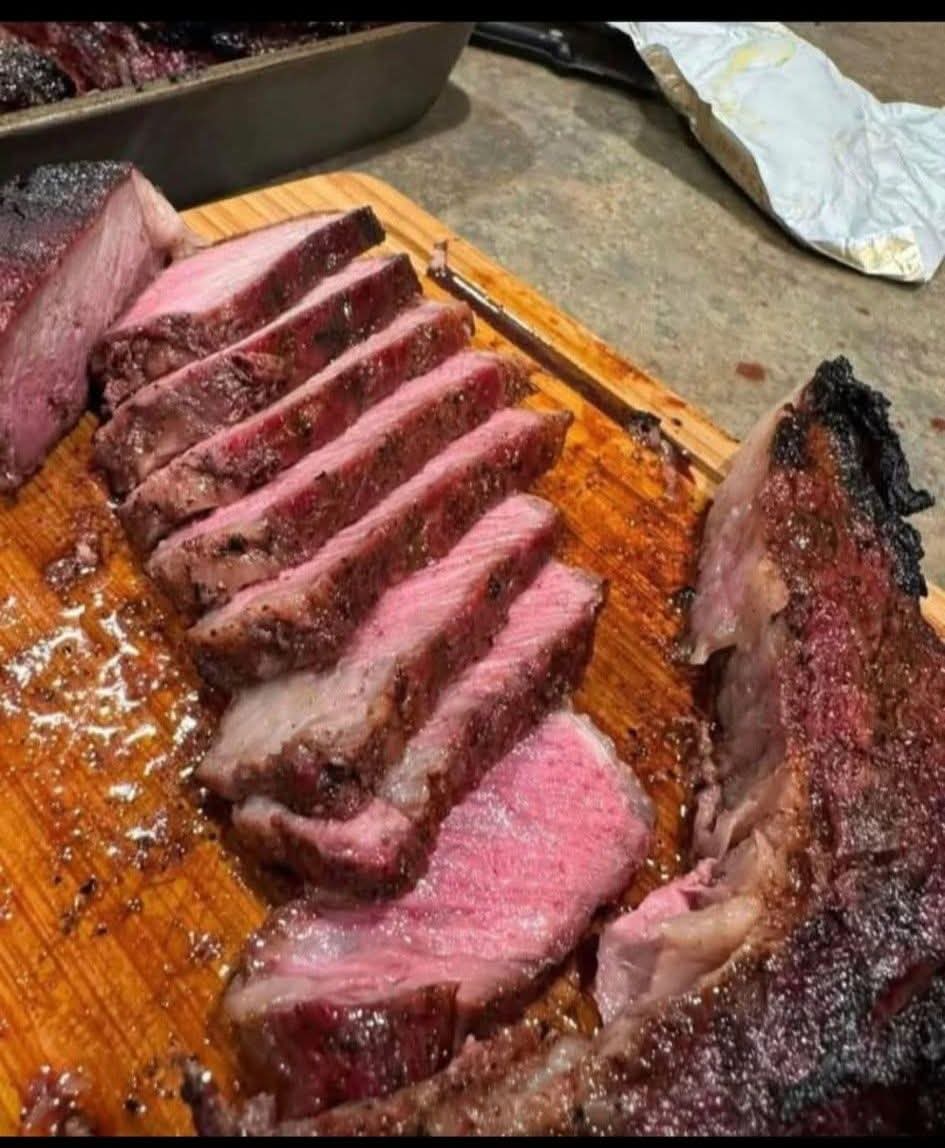
Absolutely! Before diving into the recipe request, let’s quickly tackle your steak question: I can help determine if it’s undercooked if you can tell me its color inside, texture, and how long you cooked it. For instance:
- Rare: cool red center, soft and very juicy
- Medium-rare: warm red center, soft and slightly springy
- Medium: warm pink center, firmer
- Medium-well: slightly pink center, quite firm
- Well-done: no pink, very firm
If you want, you can upload a photo of the cut steak, and I can give a precise opinion.
Now, let’s create a big, full steak recipe with all the elements you asked for—history, methods, formation, and even a little fun “lovers’” section!
🥩 Classic Pan-Seared Ribeye Steak Recipe
Introduction
Few foods evoke the primal joy of cooking like a perfectly seared steak. Juicy, flavorful, and with that irresistible crust, a ribeye is more than a meal—it’s an experience. This recipe takes you through the artistry of steak-making, from choosing the cut to achieving the perfect sear, all while celebrating the history and romance of this culinary classic.
History
Steak as we know it has roots in Europe and America. In the 19th century, American cowboys and European butchers elevated beef to its iconic status, celebrating the ribeye and T-bone for their flavor and tenderness. The art of searing steak became a science: high heat, minimal flipping, and resting before serving are practices refined over centuries.
Ingredients
- 2 ribeye steaks (1–1.5 inches thick, about 12 oz each)
- 2 tsp kosher salt
- 1 tsp freshly ground black pepper
- 2 tbsp unsalted butter
- 2 cloves garlic, smashed
- 2 sprigs fresh rosemary or thyme
- 1 tbsp olive oil
Optional for Lovers’ Touch
- A drizzle of balsamic reduction
- Cracked pink peppercorns
- Side of roasted garlic mashed potatoes
Instructions
1. Preparation
- Remove steaks from the fridge 30–45 minutes before cooking to bring them to room temperature.
- Pat them dry with paper towels—moisture is the enemy of a perfect crust.
- Season generously with salt and pepper on both sides.
2. Cooking the Steak
- Preheat a heavy skillet (cast iron is ideal) over high heat until almost smoking.
- Add olive oil and swirl to coat the pan.
- Carefully place steaks in the pan; avoid moving them.
- Sear 3–4 minutes per side for medium-rare (adjust 2–3 min for rare, 5–6 min for medium).
- During the last minute, add butter, garlic, and herbs. Spoon the melted butter over the steaks continuously (basting) for flavor.
3. Resting
- Transfer steaks to a cutting board and cover loosely with foil.
- Rest 5–10 minutes—this redistributes juices for ultimate tenderness.
4. Serving
- Slice against the grain.
- Drizzle with pan juices or optional balsamic reduction.
- Pair with sides like roasted vegetables, mashed potatoes, or a fresh salad.
Methods & Techniques
- Searing: Achieved by high heat for a golden-brown crust.
- Basting: Butter and herbs add aroma and depth.
- Resting: Essential for juicy steak; cutting too early loses flavorful juices.
Formation
Steak’s “formation” is the balance of crust, interior doneness, and flavor layering. Proper technique transforms a simple cut of meat into an experience: the Maillard reaction for the crust, aromatic herbs for complexity, and precise timing for the center.
Conclusion
A perfect ribeye steak is a combination of science and art. The sear, the seasoning, and the resting all culminate in a tender, juicy, aromatic masterpiece. Each bite tells the story of centuries of culinary passion.
Lovers’ Note
For steak lovers, cooking this together is romantic: share the sizzle, the aroma, and the plating. Drizzle each bite with a touch of love, pair with a glass of red wine, and let the steak become a celebration of connection.
If you want, I can also make a version for “under-30-minutes quick steak mastery” that guarantees medium-rare perfection every time—even for beginners.
Do you want me to do that next?