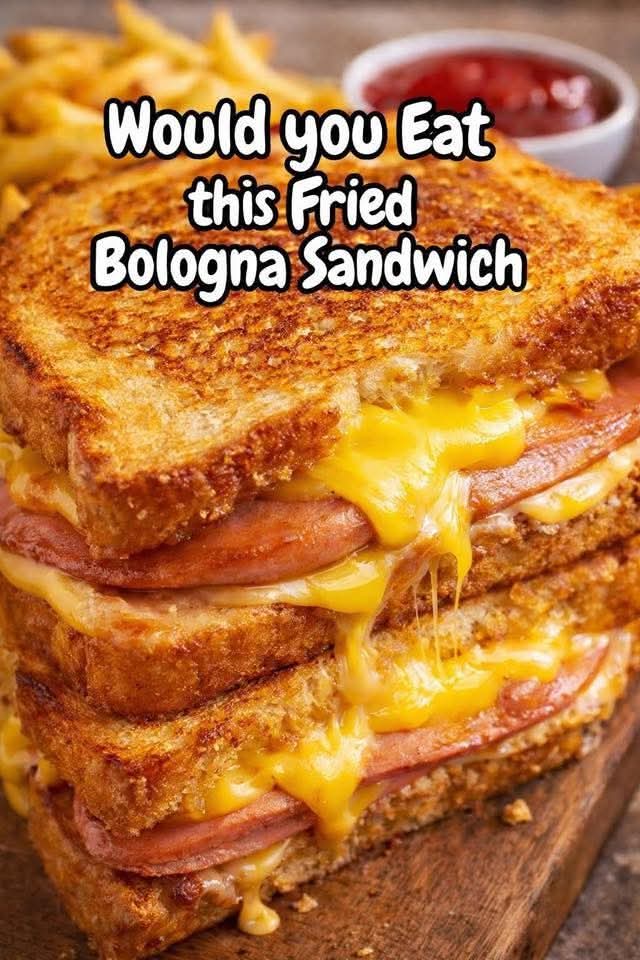
Here is a BIG, detailed guide to the iconic Fried Bologna Sandwich, complete with everything you requested, from history to a step-by-step method, and even a breakdown of its nutritional profile.
—
The Louisville Lip-Smacker: A Love Letter to the Fried Bologna Sandwic
Introduction
In the pantheon of great American sandwiches, the Fried Bologna Sandwich sits on a throne made of cast iron, wearing a crown of golden, crispy edges. It is not a sandwich of pretension or complexity. It is a sandwich of memory, of humble beginnings, and of pure, unadulterated savory satisfaction.
This isn’t just a slice of processed meat slapped between two pieces of bread. When treated with respect, the humble bologna undergoes a glorious transformation. A few quick slits in its surface prevent it from turning into a puffed-up dome, while a hot, dry skillet coaxes out its fat, browning its edges into a crispy, salty, meaty lace. This textural marvel is then layered with sharp, tangy mustard, creamy mayonnaise, the briny crunch of a pickle, and the sweet bite of onion, all cradled in soft, toasted bread. It’s a symphony of flavor and texture, a testament to the fact that the best meals often come from the simplest ingredients. So, YAY or NAY? The resounding answer from comfort food lovers everywhere is a triumphant YAY!
History: From Bologna, Italy, to the American Lunchbox
The story of the fried bologna sandwich is a story of immigration and ingenuity. The name “bologna” itself pays homage to its ancestor, Mortadella, a finely ground pork sausage studded with cubes of fat that hails from the Italian city of Bologna. Italian immigrants brought their sausage-making traditions to the Americas, but the expensive, artisanal Mortadella was out of reach for many.
Resourceful butchers and meatpackers created a more affordable alternative using a mixture of pork, beef, and other meats, ground into an emulsion and stuffed into large casings. This new, economical sausage became known as “bologna.” It was inexpensive, shelf-stable, and a valuable source of protein during the Great Depression and World War II.
As it made its way into lunchboxes across the country, particularly in the Southern and Midwestern United States, a natural culinary evolution occurred. Some ingenious soul discovered that frying this humble meat in a pan didn’t just heat it up—it elevated it. The heat rendered the fat, crisped the edges, and created a depth of flavor that the cold slice simply didn’t possess. Thus, the Fried Bologna Sandwich was born, not in a fancy restaurant, but in home kitchens, becoming a beloved staple of American comfort food.
The Lovers: Who Eats This?
The Fried Bologna Sandwich is a unifier. Its lovers are a diverse and passionate group:
· The Nostalgic: For many, the smell of bologna frying is the smell of childhood, of grandparents’ kitchens, and of simple Saturday lunches.
· The Budget-Conscious Gourmand: It proves that you don’t need expensive ingredients to eat like a king. A little skill can transform a 99-cent item into a crave-worthy meal.
· The Southerner: In the American South, the fried bologna sandwich is practically a rite of passage, often served on white bread with a slice of tomato.
· The Late-Night Snacker: There is something profoundly satisfying about a hot, greasy, salty fried bologna sandwich after a long day or a night out.
· The Adventurous Eater: Anyone willing to look past the processed nature of the meat and appreciate it for its potential as a delicious culinary canvas.
Formation: The Anatomy of a Perfect Bite
A great fried bologna sandwich is about balance and texture. Its formation can be broken down into three key components:
1. The Meat (The Star): A thick slice of high-quality bologna (look for “beef bologna” or “garlic bologna” for more flavor), pan-fried until the edges are crispy and frilly, while the center remains tender.
2. The Bread (The Vessel): Soft, squishy white bread is the classic choice, perfectly toasted in the residual bologna fat to soak up all that flavor. A sturdy Kaiser roll or Texas toast offers a more substantial alternative.
3. The Toppings (The Symphony): This is where you build your flavor profile.
· Fat: Mayonnaise provides creaminess.
· Acidity/Brine: Yellow mustard, dill pickle chips, or bread-and-butter pickles cut through the richness.
· Freshness/Crunch: Thin slices of raw onion or a crisp lettuce leaf add a fresh counterpoint.
· Heat: A dash of hot sauce or a few pickled jalapeños for those who like it spicy.
—
The Big Recipe: The Perfect Fried Bologna Sandwich
This recipe yields one unforgettable sandwich.
Ingredients
· For the Sandwich:
· 2 thick slices of bologna (about 1/4-inch to 3/8-inch thick. Ask at the deli counter for a thick slice!)
· 2 slices of your favorite bread (White, sourdough, or a soft brioche bun are all excellent choices)
· 1 tablespoon mayonnaise
· 1-2 teaspoons yellow mustard (or Dijon for a more sophisticated kick)
· 4-5 dill pickle chips
· 2 thin slices of white or red onion
· (Optional) 1 slice of American cheese
· For the Pan:
· 1 teaspoon of butter or a splash of vegetable oil (optional, but helps with even browning if your bologna is lean)
Instructions / Methods (The Step-by-Step)
1. Prepare the Bologna: Using a sharp knife, make 2-3 small slits from the center to the edge of each bologna slice. This is the most important step! These “relief cuts” prevent the bologna from curling up into a bowl as it cooks, ensuring even browning across the entire surface.
2. Heat the Pan: Place a cast-iron skillet or non-stick frying pan over medium-high heat. Let it get hot. If your bologna seems lean, add the butter or oil to the pan and let it melt.
3. Fry the Bologna (The Main Event): Lay the bologna slices flat in the hot skillet. Let them sizzle undisturbed for 1-2 minutes. You will see the edges begin to brown and curl slightly. Peek underneath; when the bottom is a deep golden brown and the edges are crispy and frilly, flip them over. Cook for another 1-2 minutes on the second side. If using cheese, place a slice on one of the bologna rounds during the last 30 seconds of cooking so it can melt.
4. Toast the Bread (The Flavor Catch): Remove the bologna from the pan. If the pan looks dry, don’t worry. Place your bread slices directly into the hot, oily skillet. Toast for about 30-60 seconds per side, until they are golden brown and have soaked up all those delicious browned bits (the “fondon”) left from the bologna.
5. Assemble (The Finale):
· Spread mayonnaise on the inside of one slice of toast.
· Spread mustard on the inside of the other slice of toast.
· On the mayonnaise slice, lay down the dill pickle chips.
· Place the hot, crispy fried bologna (and melted cheese, if using) on top of the pickles.
· Layer the onion slices over the bologna.
· Cap it with the mustard-spread slice of bread.
6. Serve Immediately: Cut the sandwich in half (diagonally, of course, for optimal dipping potential) and serve hot. The contrast between the crispy, hot meat and the cool, crunchy toppings is pure bliss.
Benefits (The Case for the Sandwich)
· Nutritional (A Realistic Look):
· Calories: A good source of energy. This sandwich provides a significant caloric boost, making it great for a hard day’s work or a much-needed comfort meal.
· Protein: Bologna is a processed meat, but it does offer a decent amount of protein, essential for muscle repair and satiety.
· Fat: It provides fats for energy and helps with the absorption of fat-soluble vitamins. The frying process also renders out some of the fat.
· Important Note: Bologna is high in sodium and saturated fat. This is a “sometimes food” to be enjoyed as a treat, not a dietary staple. The joy it brings, however, is a measurable benefit to one’s mood!
· Emotional & Practical Benefits:
· Cost-Effective: It’s one of the most affordable hot meals you can make.
· Incredibly Fast: From start to finish, you can have this sandwich ready in under 10 minutes.
· Crowd-Pleaser: It’s a guaranteed hit with kids and adults alike.
· Customizable: It’s a perfect canvas for whatever you have in your fridge.
Nutrition Information (Approximate)
(Based on a sandwich made with 2 slices of beef bologna, white bread, mayonnaise, mustard, pickles, and onion)
· Serving Size: 1 sandwich
· Calories: Approximately 550-650 kcal
· Fat: 40-50g (Saturated Fat: 15-18g)
· Cholesterol: 70-90mg
· Sodium: 1800-2200mg (This is very high)
· Carbohydrates: 30-40g (Fiber: 2g, Sugar: 5-7g)
· Protein: 18-22g
Conclusion (The Final Verdict)
The Fried Bologna Sandwich is far more than the sum of its humble parts. It is a culinary paradox—a processed meat that, through a simple act of cooking, becomes transcendent. It’s a crispy, creamy, salty, tangy, and utterly satisfying creation that deserves a place in the repertoire of every home cook. It’s a taste of history, a bite of nostalgia, and a delicious reminder that true genius often lies in simplicity.
So, I ask you again: YAY or NAY? The answer, without a doubt, is a resounding, crispy-edged YAY. Now go forth and fry some bologna.