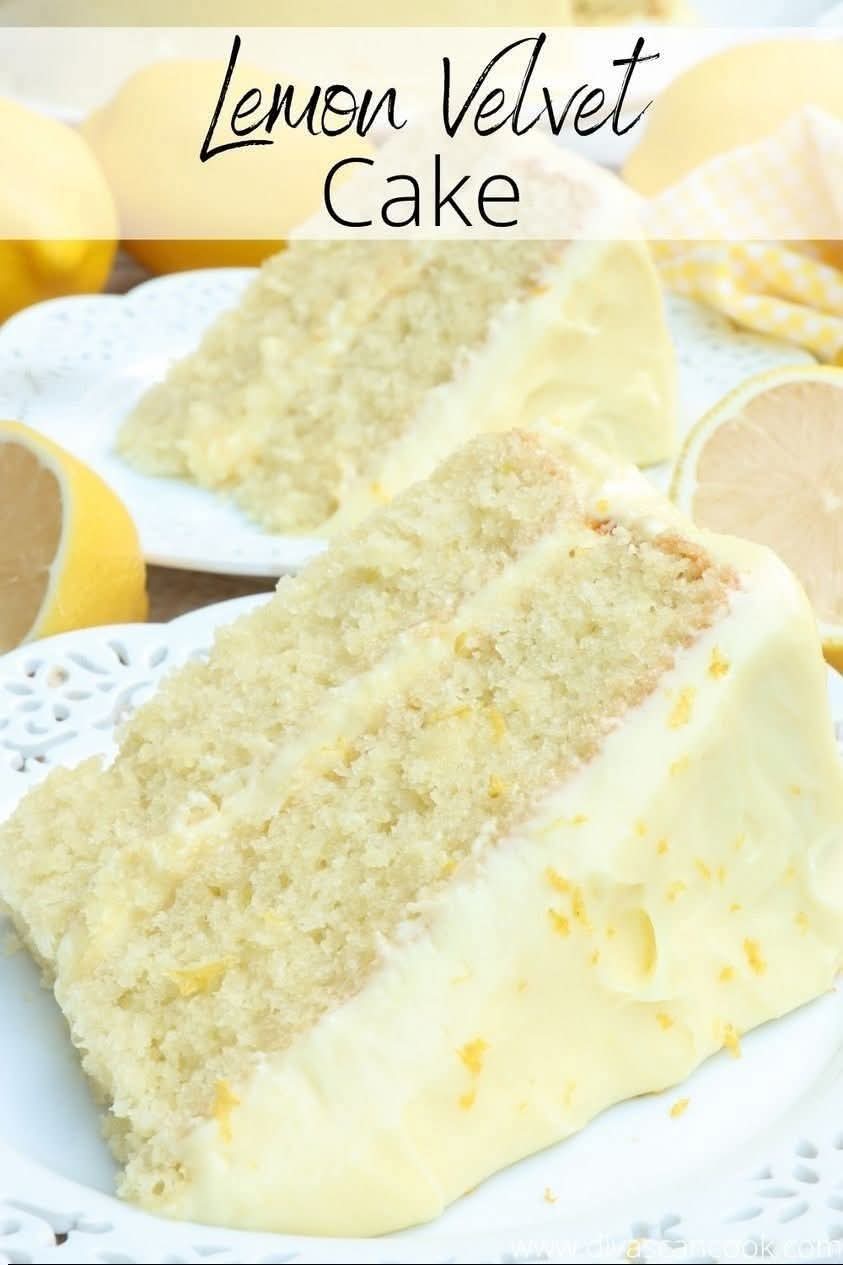
Here is a grand, comprehensive guide to the legendary Lemon Velvet Cake with Lemon Cream Cheese Frosting. This recipe is designed to be the only one you will ever need, perfect for impressing guests or treating yourself.
—
The Legend of the Lemon Velvet Cake: An Introduction
Before the era of artificial flavors, “velvet” cakes were a hallmark of the finest bakers. The term “velvet” referred to the cake’s impossibly tender crumb, achieved by using low-protein flour (like cake flour) and, in some recipes, acidic ingredients like buttermilk or vinegar to tenderize the gluten.
Our Lemon Velvet Cake is a tribute to this classic texture, infused with the bright, sunlit flavor of fresh lemons. It is not a dense lemon pound cake, nor is it a light, airy sponge. It sits perfectly in the middle: a moist, fine-crumbed cake with a delicate richness that melts in your mouth. It is then crowned with a tangy, luscious Lemon Cream Cheese Frosting—a modern complement that cuts through the sweetness with its signature zip. This cake is a celebration of balance: rich yet refreshing, sweet yet tart, dense yet impossibly tender.
The Sweet Science: Formation & Benefits
The Formation of a Velvet Crumb:
The magic of this cake lies in the reverse creaming method.
1. The Coating: Dry ingredients (flour, sugar, leavening) are mixed first. The cold butter is cut into this mixture, coating the flour proteins in fat. This fat barrier prevents the flour from absorbing liquid too quickly and forming long, tough gluten strands.
2. The Emulsion: The liquid ingredients (buttermilk, eggs, lemon juice) are added slowly. Because the flour is already coated in fat, the liquid hydrates the cake gently, resulting in a fine, velvety, and sturdy crumb that is perfect for layering.
Benefits of Baking from Scratch:
· Pure Flavor: You control the ingredients. Real lemon zest and juice provide a brightness no extract can replicate.
· No Preservatives: You avoid the stabilizers and chemicals found in boxed mixes.
· Customization: You can adjust the sweetness and tartness to your exact preference.
· Mindfulness: The process of baking is a therapeutic act of creation, filling your home with wonderful aromas and your heart with the joy of making something beautiful.
—
The Grand Recipe
Yield: One 3-layer, 8-inch cake, or a 9×13-inch sheet cake.
Prep time: 45 minutes
Bake time: 25-30 minutes
Total time: ~3 hours (including cooling)
Ingredients
For the Lemon Velvet Cake:
· Dry Mix:
· 3 cups (360g) Cake Flour (spooned & leveled) – The secret to the velvet texture.
· 2 cups (400g) Granulated Sugar
· 1 tablespoon (12g) Baking Powder
· 1 teaspoon Baking Soda
· 1 teaspoon Fine Sea Salt
· Fat Mix:
· 1 cup (226g) Unsalted Butter, cold and cubed – Do not soften fully; it needs to be cool to create the right texture.
· Wet Mix:
· 4 large Eggs, at room temperature
· 1 cup (240ml) Buttermilk, at room temperature
· ¼ cup (60ml) Fresh Lemon Juice (about 2 lemons)
· Zest of 3 large Lemons (about 2 tablespoons)
· 2 teaspoons Vanilla Extract
For the Lemon Cream Cheese Frosting:
· 16 oz (450g) full-fat Cream Cheese, cold
· 1 cup (226g) Unsalted Butter, slightly softened (cool room temperature)
· 5 cups (600g) Powdered Sugar, sifted
· Zest of 2 Lemons
· 2 tablespoons Fresh Lemon Juice
· 1 teaspoon Vanilla Extract
· Pinch of salt
Equipment
· Three 8-inch round cake pans or one 9×13 pan
· Parchment paper
· Electric mixer (stand or hand-held)
· Mixing bowls
· Cooling racks
· Offset spatula for frosting
—
The Method: A Step-by-Step Guide
Step 1: Prepare for Success
· Preheat your oven to 350°F (175°C).
· Grease your cake pans thoroughly with butter or baking spray. Line the bottoms with a circle of parchment paper for guaranteed release. Dust the sides lightly with flour and tap out the excess.
Step 2: The Reverse Creaming (Dry + Fat)
· In the bowl of your stand mixer fitted with the paddle attachment, combine the cake flour, sugar, baking powder, baking soda, and salt. Mix on low speed for 30 seconds to combine and aerate.
· With the mixer on low, scatter the cold, cubed butter into the flour mixture. Once added, increase speed to medium-low and mix until the butter is broken down into small, pea-sized pieces and the mixture looks like damp sand. This takes about 2-3 minutes. Do not over-mix into a paste.
Step 3: The Emulsion (Wet into Dry)
· In a separate bowl or large measuring cup, whisk together the eggs, buttermilk, lemon juice, lemon zest, and vanilla extract until combined.
· With the mixer on low speed, pour in about half of the wet ingredients. Mix until the dry ingredients are moistened, then increase speed to medium and beat for about 45 seconds to build the cake’s structure.
· Scrape down the bowl and paddle. Reduce speed to low and add the remaining wet ingredients in a slow, steady stream. Mix until just combined and smooth. The batter will be thick, luscious, and slightly fluffy.
Step 4: Bake to Perfection
· Divide the batter evenly between the prepared pans.
· Bake for 25-30 minutes, or until a toothpick inserted into the center comes out clean or with a few moist crumbs.
· Let the cakes cool in the pans on a wire rack for 15 minutes. Then, turn them out onto the rack to cool completely. The cakes must be 100% cool before frosting, or the frosting will melt.
Step 5: The Tangy Crown (Frosting)
· In a large bowl, beat the cold cream cheese and butter together with an electric mixer on medium speed until smooth and combined, about 2 minutes. Scrape the bowl well.
· Add the powdered sugar one cup at a time, mixing on low speed to prevent a sugar cloud. Once incorporated, add the lemon zest, lemon juice, vanilla, and salt.
· Increase speed to medium-high and beat for 2-3 minutes until the frosting is light, fluffy, and spreadable. Be careful not to over-beat, or it can become too soft.
Step 6: Assembly
· If your cake layers have domed tops, use a serrated knife to level them.
· Place one cake layer on your serving plate. Spread about ¾ cup of frosting evenly on top.
· Add the second layer, another ¾ cup of frosting, and top with the final layer.
· Apply a thin “crumb coat” of frosting all over the cake to seal in crumbs. Refrigerate for 30 minutes.
· Finish with the remaining frosting, creating swirls and peaks with your spatula. Garnish with extra lemon zest or thin lemon slices if desired.
For the Lovers of Lemon
This cake is for the true citrus devotees. It’s for those who appreciate the way a bright, acidic flavor can dance alongside a rich, buttery base. It is a cake that makes you pucker slightly just before you smile. Whether you’re a novice baker looking for a showstopper or a seasoned pro seeking the perfect lemon layer cake, this recipe delivers a symphony of flavor and texture that will earn you the title of “The Baker” among your friends and family.
Conclusion: A Slice of Sunshine
In a world of complex desserts, the Lemon Velvet Cake stands as a testament to the power of simplicity done right. It is a cake that is both nostalgic and exciting, familiar and elegant. From its impossibly tender crumb, born from a classic baking technique, to its tangy, creamy frosting, every bite is a moment of pure, sunny bliss. Bake it for a birthday, a holiday, or a simple Tuesday—and watch it disappear, slice by glorious slice.