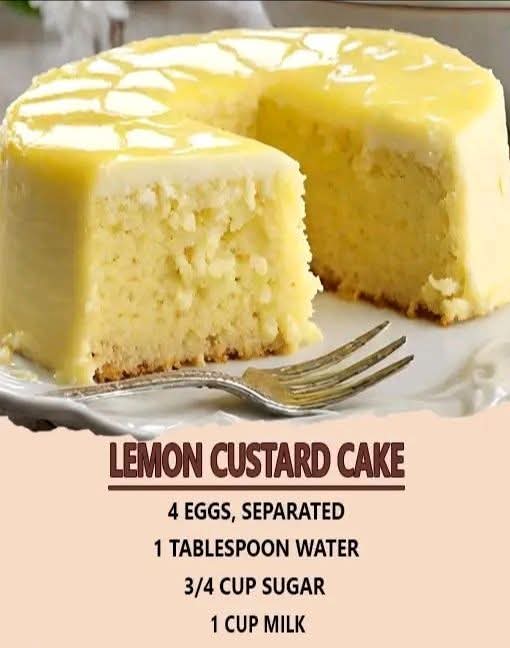
Here’s a full, detailed Lemon Custard Cake recipe crafted just the way you asked—complete with history, methods, and a little love for dessert enthusiasts. 🍋
🍰 Lemon Custard Cake – A Bright, Silky Delight
Introduction
Lemon Custard Cake is a nostalgic dessert that perfectly balances the buttery richness of a classic cake with the tangy, creamy silkiness of lemon custard. Imagine biting into a soft, tender cake with a sun-kissed custard center that melts in your mouth. Its history traces back to European kitchens, where combining fruit curds with sponge cakes was a way to celebrate seasonal citrus. Today, it’s a favorite for brunches, tea parties, and special family gatherings—a cake that feels like sunshine on a plate.
Ingredients
For the Cake:
- 1 cup (230 g) unsalted butter, softened
- 1 cup (200 g) granulated sugar
- 4 large eggs, room temperature
- 1 tsp vanilla extract
- 1½ cups (190 g) all-purpose flour
- 1 tsp baking powder
- ¼ tsp salt
- ¼ cup (60 ml) milk, room temperature
- Zest of 1 lemon
For the Lemon Custard Filling:
- ¾ cup (150 g) granulated sugar
- 3 tbsp cornstarch
- ½ tsp salt
- 2 cups (480 ml) whole milk
- 3 large egg yolks, lightly beaten
- 3 tbsp unsalted butter
- 2 tbsp fresh lemon juice
- 1 tsp lemon zest
Optional Topping:
- Powdered sugar for dusting
- Whipped cream or fresh berries
Instructions & Methods
1. Prepare the Cake
- Preheat your oven to 350°F (175°C). Grease and flour a 9-inch round cake pan or line it with parchment paper.
- In a large mixing bowl, cream together the softened butter and granulated sugar until light and fluffy (about 3–4 minutes).
- Add the eggs one at a time, beating well after each addition. Stir in the vanilla extract and lemon zest.
- In a separate bowl, whisk together the flour, baking powder, and salt. Gradually add the dry ingredients to the butter mixture, alternating with the milk, beginning and ending with flour. Mix until just combined.
- Pour the batter into the prepared cake pan and smooth the top with a spatula.
2. Bake the Cake
- Bake for 25–30 minutes, or until a toothpick inserted into the center comes out clean.
- Remove from the oven and allow the cake to cool completely in the pan before filling.
3. Make the Lemon Custard
- In a medium saucepan, whisk together sugar, cornstarch, and salt. Gradually add milk while whisking to avoid lumps.
- Cook over medium heat, stirring constantly until the mixture thickens and comes to a gentle boil.
- Temper the egg yolks by slowly adding a small amount of the hot milk mixture to the yolks while whisking continuously. Then, pour the yolk mixture back into the saucepan.
- Continue cooking for 2–3 minutes, stirring constantly, until thickened. Remove from heat.
- Stir in butter, lemon juice, and lemon zest until smooth. Allow custard to cool slightly.
4. Assemble the Cake
- Carefully slice the cooled cake horizontally into two layers.
- Spread the lemon custard evenly over the bottom layer and place the top layer back on.
- Chill for at least 1 hour to allow the custard to set.
5. Serve
- Dust the top with powdered sugar and optionally serve with fresh berries or whipped cream. Slice and enjoy!
History & Formation
The concept of lemon custard within cakes dates back to 18th-century European patisseries. Lemon was a prized fruit, often incorporated into sweet and tart desserts. Combining a soft butter cake with a silky custard filling became a technique to balance richness with brightness. Over time, this evolved into modern layered custard cakes, celebrated for their creamy texture and tangy flavor.
The “formation” of this cake—baking first, then layering with custard—ensures a stable base while keeping the custard silky, not soggy. It’s a method beloved by home bakers and pastry chefs alike.
Conclusion
Lemon Custard Cake is more than a dessert; it’s a celebration of flavor and texture. Its tender cake, zesty custard, and cheerful aroma make it perfect for sunny afternoons or festive tables. Each bite is a comforting blend of sweetness and citrus tang that leaves a smile lingering.
For Cake Lovers
- Pair with a cup of Earl Grey tea or a sparkling lemonade for a refreshing match.
- Variations include using lime or orange in place of lemon for a citrus twist.
- For extra indulgence, drizzle white chocolate ganache on top before serving.
This cake truly “loves” its audience: light yet rich, tangy yet sweet, perfect for anyone who appreciates a classic, homemade dessert with a bright personality. 🌞
If you want, I can also create a step-by-step visual “methods with lovers” version with little tips at each stage for maximum flavor and texture—it makes baking almost foolproof.
Do you want me to do that next?