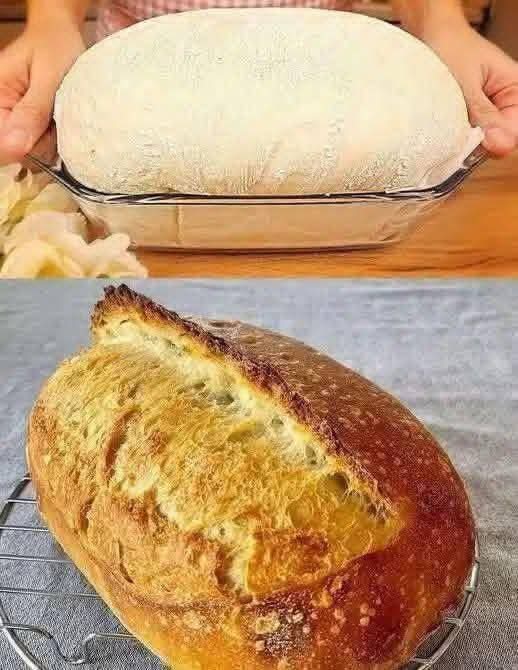
🍞 Homemade Artisan Crusty Bread
There is nothing more comforting than the smell of freshly baked bread filling your kitchen. This beautiful golden loaf with its crispy crust and soft, airy inside is a classic artisan-style bread — simple ingredients, traditional methods, and incredible flavor. Whether served with butter, soup, or olive oil, this bread turns any meal into something special.
🏺 History of Artisan Bread
Artisan bread has ancient roots dating back over 10,000 years. Early civilizations in Egypt discovered natural fermentation, which later evolved into sourdough bread. European bakers refined crusty loaves, especially in France and Italy, creating iconic rustic breads baked in stone ovens.
Traditional bread was made with just flour, water, salt, and wild yeast — proving that simple ingredients can create something extraordinary.
🥖 Ingredients
Basic Artisan Bread (1 Large Loaf)
- 3 ½ cups (450g) all-purpose or bread flour
- 1 ½ teaspoons salt
- ½ teaspoon instant yeast (or 1 teaspoon active dry yeast)
- 1 ½ cups warm water (not hot)
- Extra flour for dusting
Optional:
- 1 tablespoon olive oil (for softer crumb)
- Cornmeal for dusting pan
🧂 Formation of the Dough
- Mixing Stage – Flour, salt, and yeast are combined.
- Hydration Stage – Water is added to activate gluten.
- Fermentation Stage – Yeast produces gas, creating air pockets.
- Shaping Stage – Dough is folded into a tight loaf.
- Final Proofing – Dough rises and develops flavor.
- Baking Stage – Heat creates oven spring and crust formation.
👩🍳 Instructions (Step-by-Step)
1️⃣ Mix the Dough
In a large bowl, combine flour, salt, and yeast. Add warm water and mix with a spoon until a sticky dough forms. Do not overmix.
2️⃣ First Rise (Bulk Fermentation)
Cover the bowl with plastic wrap or a towel. Let rise at room temperature for 8–12 hours (or overnight). The dough will double and become bubbly.
3️⃣ Shape the Dough
Lightly flour your surface. Gently fold the dough over itself 3–4 times. Shape into a round or oval loaf.
4️⃣ Second Rise
Place dough on parchment paper or in a floured bowl. Cover and let rise for 30–60 minutes.
5️⃣ Preheat Oven
Preheat oven to 230°C (450°F). Place a Dutch oven or heavy pot inside to heat.
6️⃣ Bake
Carefully place dough (with parchment) into hot pot. Cover and bake for 30 minutes.
Remove lid and bake another 10–15 minutes until deep golden brown.
7️⃣ Cool
Let bread cool at least 30 minutes before slicing.
🔥 Baking Methods
1. Dutch Oven Method (Best Crust)
Creates steam inside the pot for a crispy crust.
2. Baking Stone Method
Place a pan of water in oven for steam effect.
3. Traditional Oven Tray
Works well but crust may be slightly softer.
💪 Benefits of Homemade Bread
- No preservatives or additives
- Rich in carbohydrates for energy
- Contains protein from flour
- Good source of fiber (especially if using whole wheat flour)
- Supports gut health if naturally fermented
🥗 Nutrition (Per Slice – Approximate)
- Calories: 120–150
- Carbohydrates: 25g
- Protein: 4–5g
- Fat: 1g
- Fiber: 1–3g
(Nutrition varies depending on flour used.)
❤️ Why Bread Lovers Adore This Recipe
- Crispy bakery-style crust
- Soft and airy interior
- Simple 4 ingredients
- Beginner-friendly
- Budget-friendly
- Smells amazing while baking
Bread lovers say the crackling sound of the crust while cooling is pure happiness!
🧡 Conclusion
This homemade artisan bread proves that you don’t need fancy equipment or complicated techniques to create bakery-quality bread at home. With patience and simple ingredients, you’ll enjoy a rustic loaf with a crunchy crust and tender crumb — perfect for sandwiches, dipping in olive oil, or enjoying warm with butter.
Once you bake this bread, you may never want store-bought again!
If you’d like, I can also give you: • Sourdough version
• Whole wheat version
• Garlic & herb version
• Cheese-filled version 🧀
• Moroccan-style khobz variation
Just tell me which one you want 😊