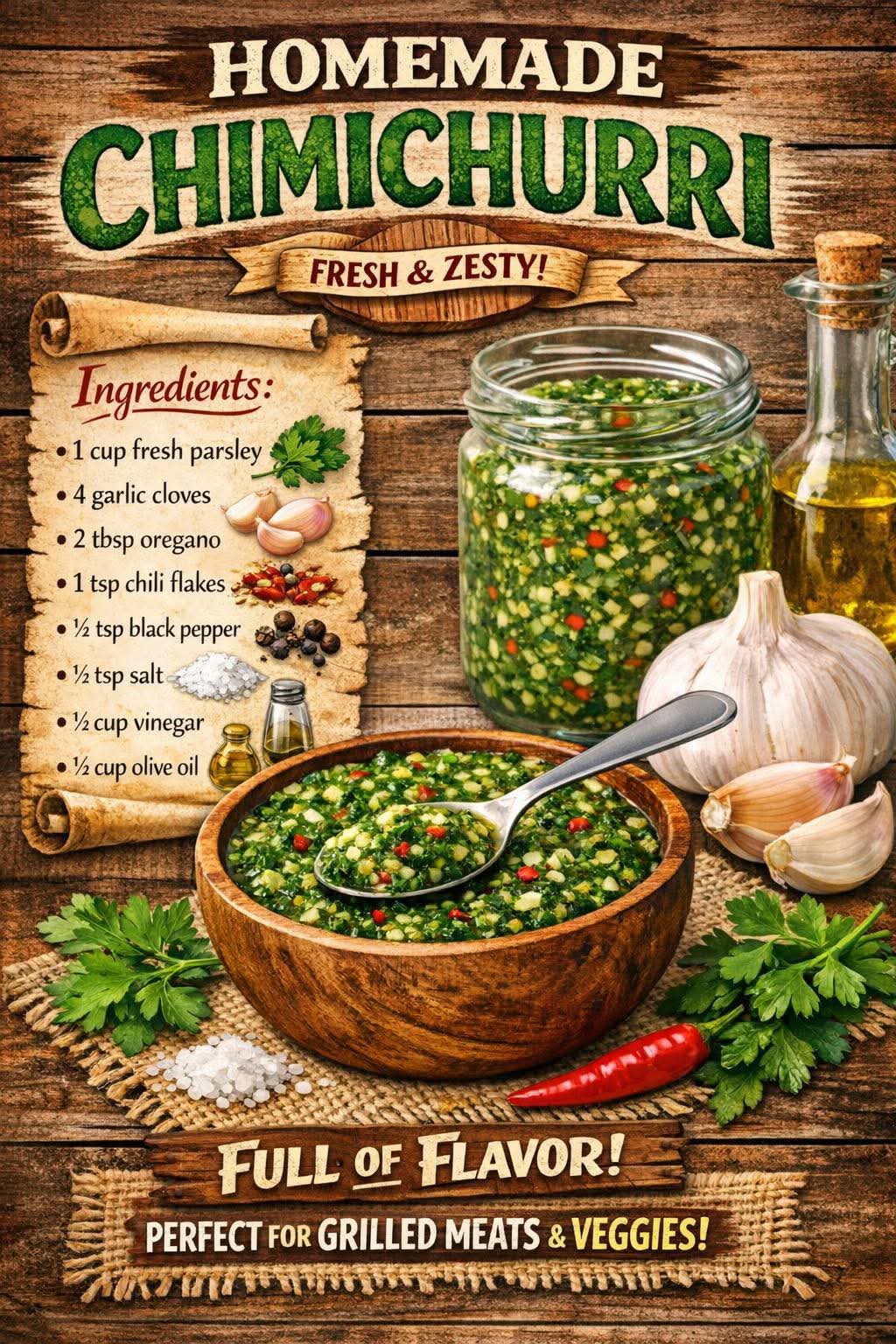
Absolutely! Let’s make a full, detailed, and heartwarming recipe for your homemade chimichurri, complete with everything you asked for.
🌿 Homemade Chimichurri – The Green Elixir of Flavor
Introduction
Chimichurri is a vibrant, zesty sauce that has been the secret behind perfectly grilled meats and roasted vegetables for generations. Bursting with fresh herbs, garlic, and a touch of heat, it’s the ultimate companion for summer barbecues or cozy indoor dinners. This sauce is more than just a condiment—it’s a celebration of simplicity, freshness, and bold flavors that transport you straight to the sun-soaked fields of Argentina. Smooth, tangy, and full of personality, chimichurri is easy to make, endlessly versatile, and instantly addictive.
Ingredients
Fresh and Flavorful Base:
- 1 cup fresh parsley, tightly packed
- 4 garlic cloves, peeled
- 2 tablespoons fresh oregano (or 1 tbsp dried)
- 1 teaspoon red chili flakes
- ½ teaspoon freshly ground black pepper
- ½ teaspoon salt
Liquids for Balance:
- ½ cup red wine vinegar (or apple cider vinegar for a milder tang)
- ½ cup extra virgin olive oil
Optional Enhancements:
- 1 small shallot, finely minced
- Juice of ½ lemon for brightness
- Fresh cilantro for added depth
Instructions
Step 1: Prep the Herbs and Garlic
- Wash and pat dry the parsley and oregano.
- Peel the garlic cloves.
- Roughly chop parsley and oregano to make blending easier.
Step 2: Blend the Ingredients
- In a food processor or blender, combine parsley, oregano, garlic, chili flakes, salt, and black pepper.
- Pulse until herbs are finely chopped but not pureed. You want some texture for a rustic feel.
Step 3: Add the Liquids
- Slowly pour in the vinegar while pulsing to incorporate.
- Gradually add the olive oil until the mixture becomes a vibrant, pourable sauce.
- Taste and adjust seasoning with extra salt, chili, or lemon juice if desired.
Step 4: Rest for Maximum Flavor
- Transfer chimichurri to a jar or airtight container.
- Let it rest at room temperature for at least 30 minutes, or refrigerate for up to 24 hours. This allows flavors to meld and develop a deeper, richer taste.
Method
- Chopping & Pulsing: Keeps herbs fresh and vibrant while releasing essential oils.
- Emulsifying: Gradual incorporation of olive oil with vinegar creates a silky yet textured sauce.
- Infusion: Resting allows garlic, herbs, and chili to fully meld, maximizing aroma and flavor.
History
Chimichurri has its roots in Argentina and Uruguay, where it became the iconic companion to grilled meats—especially beef. Its origins are somewhat mysterious, but it likely emerged from European immigrants combining Mediterranean herbs with local techniques. Today, it’s a global favorite, celebrated for its bright, herbal punch and ability to elevate any dish from mundane to memorable.
Formation
The magic of chimichurri lies in the chemistry of fresh herbs, acidic vinegar, and fatty olive oil. Parsley and oregano release aromatic oils, vinegar adds tang and balances richness, and olive oil binds everything together into a smooth, glossy sauce. Red chili flakes introduce heat while enhancing overall complexity. This combination creates a sauce that’s lively, vibrant, and instantly recognizable.
Conclusion
Homemade chimichurri is more than a sauce—it’s a burst of summer, a reminder of outdoor gatherings, and an instant flavor enhancer for any meal. Easy to make, endlessly versatile, and brimming with fresh goodness, it’s the kind of recipe that once you make it, you’ll never go back to store-bought versions. From roasted vegetables to grilled steaks, from seafood to sandwiches, chimichurri adds love in every bite.
Lovers’ Notes
- Perfect for meat lovers: slather over grilled steak, chicken, or lamb.
- Veggie lovers rejoice: drizzle over roasted vegetables or grain bowls.
- Crowd-pleaser: serve as a dipping sauce with fresh bread or empanadas.
- Make-ahead: flavors improve when left to rest, making it ideal for entertaining.
Methods with Lovers
- Texture Lovers: Pulse herbs lightly—don’t overblend—keep a rustic feel.
- Heat Lovers: Adjust chili flakes to match your spice tolerance; a little goes a long way.
- Acidity Lovers: Add a splash of extra vinegar or lemon juice for brightness.
- Oil Lovers: Use good-quality olive oil; it’s the backbone of a silky, flavorful chimichurri.
- Patience Lovers: Let it rest—flavors bloom beautifully when given time to mingle.
If you want, I can also craft a smoky roasted version of chimichurri that’s perfect for winter grilling, giving it a deeper, wood-fired flavor while keeping it bright and fresh.
Do you want me to make that version too?