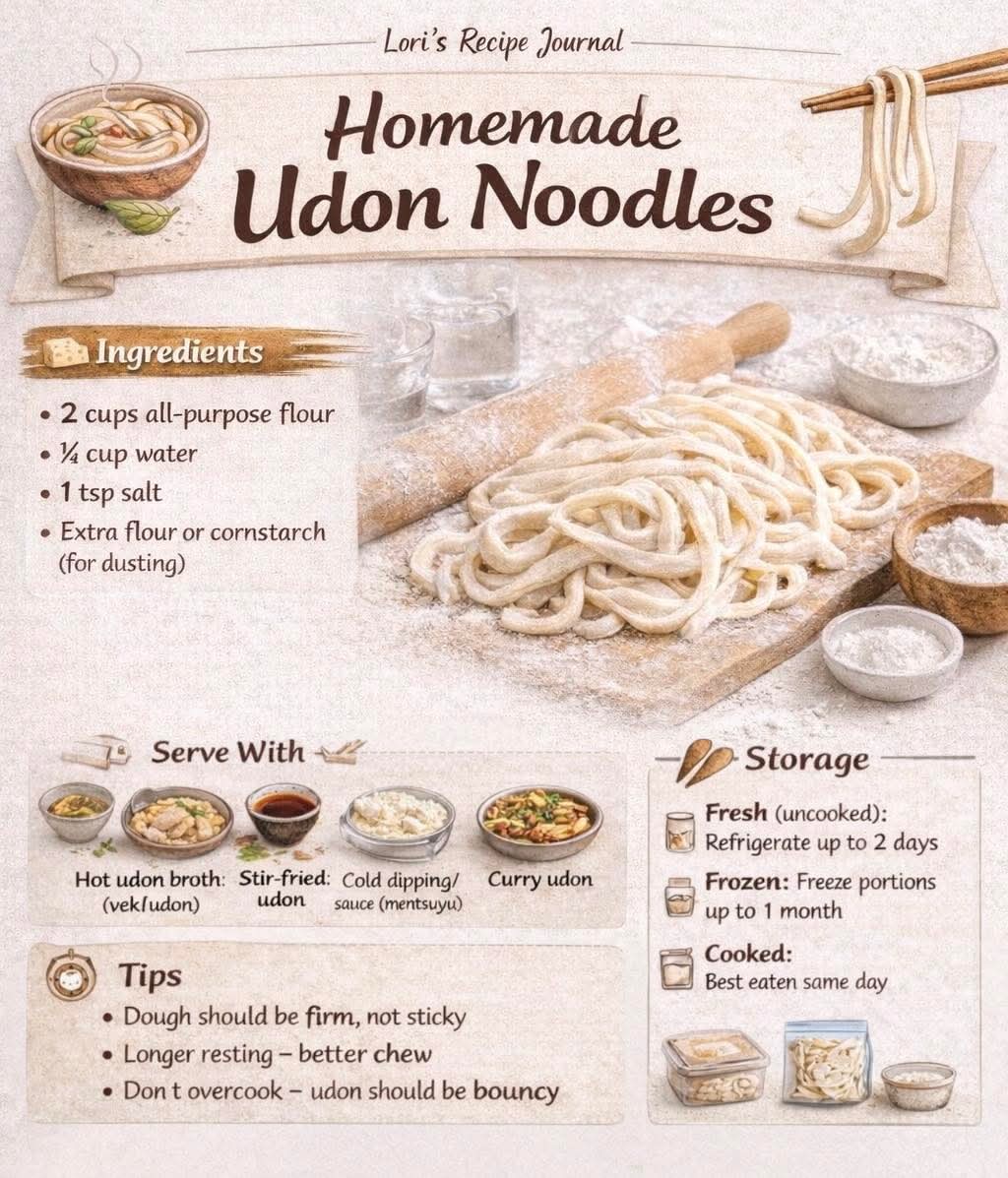
Here’s a full, detailed, “everything-you-need” recipe experience for Homemade Japanese Udon Noodles — thick, chewy, and utterly satisfying. I’ve included introduction, ingredients, step-by-step instructions, methods, history, formation, conclusion, and a nod to udon lovers. 🍜✨
🍜 Homemade Udon Noodles — Thick, Chewy, Japanese-Style
Introduction
Udon noodles are a cornerstone of Japanese cuisine, beloved for their thick, chewy texture and versatility. From steaming bowls of hot udon soup to quick stir-fried yaki udon, these noodles serve as the perfect canvas for a wide range of flavors. Making udon at home may seem intimidating, but with simple ingredients and a bit of patience, you can create noodles that rival your favorite Japanese restaurant.
Homemade udon has a wonderful chewiness and subtle flavor that store-bought noodles can’t match. Rolling, resting, and cutting the dough carefully ensures that every bite is satisfyingly bouncy. This recipe also includes tips for storage, serving, and variations so you can enjoy udon in multiple ways.
Ingredients
- 2 cups all-purpose flour
- ¾ cup water
- 1 teaspoon salt
- Extra flour or cornstarch for dusting
Optional toppings and accompaniments:
- Hot udon broth (dashi-based)
- Stir-fried vegetables and proteins for yaki udon
- Cold dipping sauce (mentsuyu)
- Curry udon sauce
Methods & Instructions
1. Mix the Dough
- Dissolve the salt in water.
- Gradually pour the salted water into the flour while mixing with your hands or a spoon.
- Mix until a shaggy, slightly dry dough forms.
2. Knead
- Transfer dough to a lightly floured surface.
- Knead 8–10 minutes until smooth and firm.
- Traditional Japanese method: place dough in a zip-top bag and gently step on it to knead evenly.
3. Rest
- Wrap the dough in plastic wrap or a clean cloth.
- Let it rest at room temperature for 30–60 minutes.
- Resting relaxes gluten, making the dough easier to roll and ensuring a better chew.
4. Roll
- Roll the dough into a rectangle about ⅛ inch thick.
- Dust lightly with flour or cornstarch to prevent sticking.
5. Cut Noodles
- Fold the dough gently (dusting in between layers to prevent sticking).
- Cut into ¼-inch-wide strips using a sharp knife.
- Gently separate the noodles and dust with flour.
6. Cook
- Boil a large pot of salted water.
- Add noodles and cook 8–10 minutes, until tender but still chewy.
- Drain and rinse briefly in cold water to stop cooking and remove excess starch.
Serving Suggestions
- Hot Udon Soup: Serve noodles in a dashi-based broth with scallions, tempura, or fish cake.
- Yaki Udon: Stir-fry noodles with vegetables, meat, or tofu in soy sauce-based seasoning.
- Cold Udon: Serve chilled with mentsuyu dipping sauce and shredded nori.
- Curry Udon: Pour a warm Japanese curry sauce over the noodles for a comforting meal.
History & Formation
Udon noodles date back over 1,000 years in Japan, likely influenced by Chinese wheat noodles brought to Japan during the Nara period. Traditionally, udon was made by hand, kneaded with the feet for even texture, and enjoyed regionally with distinct broths and toppings. Thick and chewy, udon became a beloved comfort food, adaptable to hot soups, stir-fries, and cold dishes.
The formation of udon focuses on achieving the perfect balance of elasticity and chewiness: kneading develops gluten, resting relaxes the dough, and cutting ensures uniform strands that cook evenly.
Conclusion & Udon Lovers’ Note
Homemade udon is a labor of love that rewards you with noodles full of flavor and satisfying texture. Every step—from kneading to cutting to cooking—creates noodles that are tender, chewy, and versatile. Whether you enjoy a simple hot broth, a hearty curry, or a quick stir-fry, homemade udon elevates your meal experience.
For udon lovers: nothing beats the satisfaction of making your own noodles and customizing them to your taste. With a little patience, flour, and water, you can bring the heart of Japanese comfort food into your kitchen.
Tips & Tricks for Udon Lovers
- Dough should feel firm, not sticky. Adjust flour or water slightly if needed.
- Longer resting improves chewiness.
- Don’t overcook—udon should remain bouncy and elastic.
- Leftover uncooked noodles can be refrigerated for up to 2 days or frozen for 1 month.
- Cooked noodles are best enjoyed the same day for maximum texture.
If you want, I can also make a “Udon Masterclass” visual guide, showing traditional kneading with feet, rolling, folding, and plating for authentic Japanese presentation. It would be perfect for sharing or keeping as a reference.
Do you want me to make that visual step-by-step version? 🍜✨