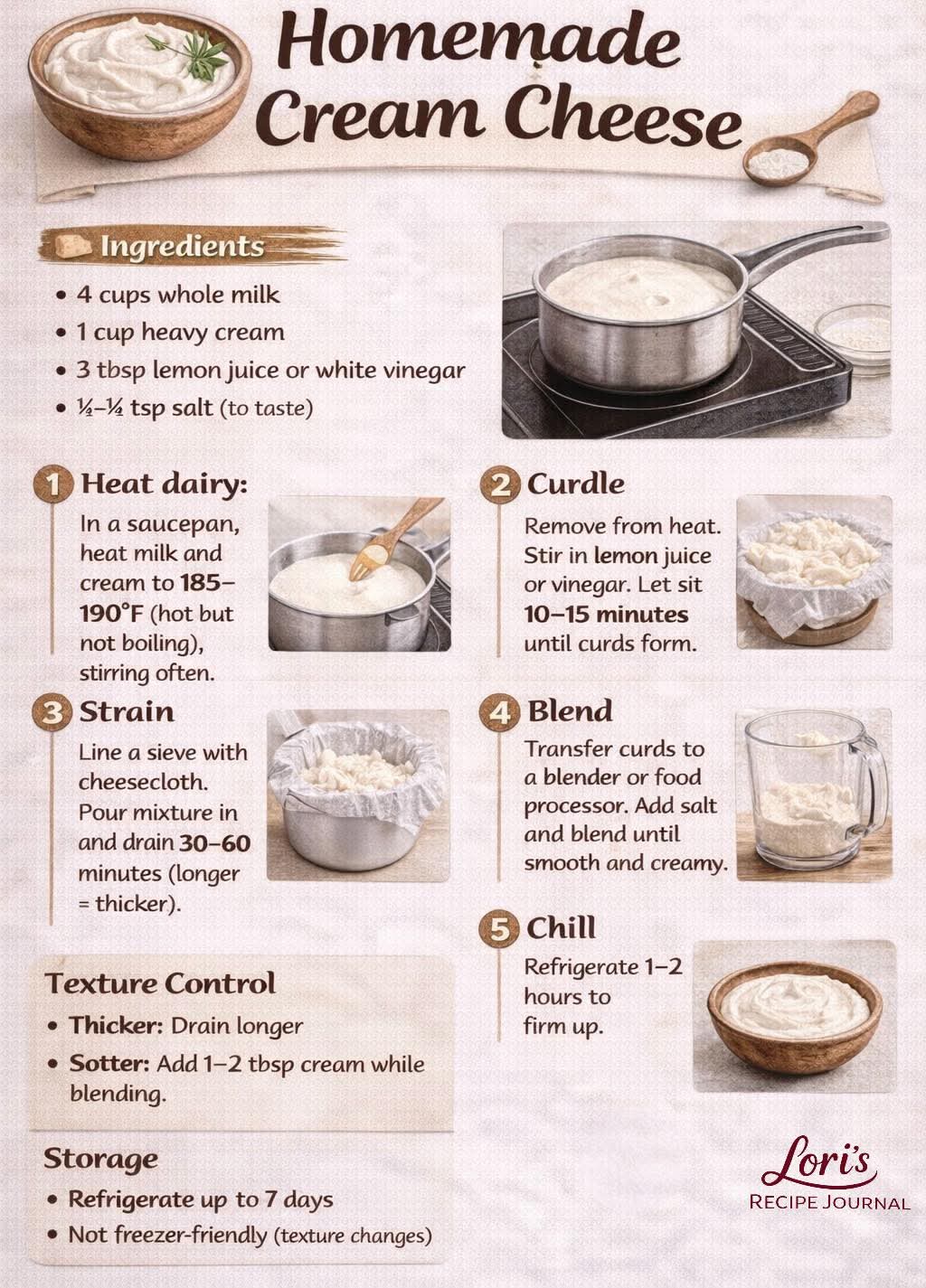
Here’s a complete, detailed recipe experience for Homemade Cream Cheese—smooth, creamy, versatile, and perfect for both sweet and savory creations. I’ve included introduction, ingredients, step-by-step instructions, methods, history, formation, conclusion, and notes for cream cheese lovers. 🧀✨
🧀 Homemade Cream Cheese — Smooth, Creamy, and Versatile
Introduction
Homemade cream cheese is one of the most rewarding kitchen projects: with just a few ingredients, you can create a silky, fresh cheese that surpasses store-bought versions in flavor and texture. This fresh cheese is naturally tangy, lightly creamy, and endlessly versatile—perfect for everything from classic cheesecake and frosting to bagels, dips, or savory spreads.
Unlike commercial cream cheese, which often contains stabilizers and preservatives, homemade cream cheese offers full control over flavor, texture, and richness. Plus, it’s surprisingly easy to make, requiring minimal equipment and simple ingredients.
Ingredients
- 4 cups whole milk
- 1 cup heavy cream
- 3 tablespoons lemon juice or white vinegar
- ¼–½ teaspoon salt (to taste)
Optional for texture variation:
- 1–2 tablespoons extra cream for softer cheese
Methods & Instructions
1. Heat the Dairy
- In a medium saucepan, combine milk and heavy cream.
- Heat over medium, stirring often, until the mixture reaches 185–190°F (hot but not boiling).
2. Curdle the Milk
- Remove the saucepan from heat.
- Stir in lemon juice or white vinegar.
- Let the mixture sit 10–15 minutes. Curds will form as the liquid separates from the whey.
3. Strain the Curds
- Line a sieve or colander with cheesecloth.
- Pour the curdled mixture into the lined sieve.
- Allow to drain for 30–60 minutes, depending on desired thickness.
- Tip: Longer draining = thicker cream cheese; shorter draining = softer, spreadable cheese.
4. Blend the Cheese
- Transfer the drained curds to a blender or food processor.
- Add salt and blend until smooth and creamy.
- Optional: for softer cheese, add 1–2 tablespoons of cream while blending.
5. Chill & Firm Up
- Transfer to an airtight container.
- Refrigerate 1–2 hours to allow the cream cheese to firm up.
- Use within 7 days.
Texture Control Tips
- Thicker Cream Cheese: Drain curds longer or use slightly less cream while blending.
- Softer, Spreadable Cream Cheese: Blend with 1–2 tablespoons extra cream.
- Flavor Enhancements: Add herbs, garlic, or smoked paprika for savory spreads; honey or vanilla for sweet applications.
Storage
- Refrigerate up to 7 days.
- Not freezer-friendly—freezing changes the texture, making it grainy.
Uses & Serving Suggestions
- Sweet: Cheesecakes, frosting, dips, fruit spreads.
- Savory: Bagels, toast, crackers, sandwiches, dips, and spreads.
- Creative: Mix with herbs, smoked salmon, or roasted vegetables for an elevated appetizer.
History & Formation
Cream cheese was first developed in the United States in the late 1800s, inspired by European fresh cheeses like Neufchâtel. Its mild flavor, smooth texture, and versatility quickly made it a pantry staple. Traditional methods involve curdling milk with an acid (like lemon juice or vinegar), straining the whey, and blending the curds into a creamy consistency.
The formation of homemade cream cheese relies on two key processes:
- Curdling: Acid causes milk proteins to coagulate, forming curds.
- Blending: Smooths the curds into a creamy, spreadable texture while incorporating salt and optional cream.
This simple science is what gives cream cheese its signature tang, creaminess, and adaptability.
Conclusion & Cream Cheese Lovers’ Note
Homemade cream cheese is a simple yet transformative kitchen project. Its fresh, tangy flavor elevates any dish—from luscious desserts like cheesecake to savory spreads on a warm bagel. For cream cheese lovers, nothing beats the satisfaction of spreading your own freshly made, silky-smooth cheese over toast or incorporating it into your favorite recipes.
Each batch can be customized for texture, richness, and flavor, making it an indispensable staple for both everyday use and special culinary projects.
💡 Pro Tips for Cream Cheese Lovers:
- Use whole milk and full-fat cream for maximum richness.
- Strain curds longer for firm cream cheese ideal for piping desserts.
- Experiment with mix-ins: chives, roasted red peppers, honey, or vanilla extract.
- Store in airtight containers to maintain freshness and prevent absorbing fridge odors.
If you want, I can also make a step-by-step visual guide for homemade cream cheese, showing curd formation, draining, blending, and presentation ideas for both sweet and savory applications.
Do you want me to make that visual guide? 🧀✨