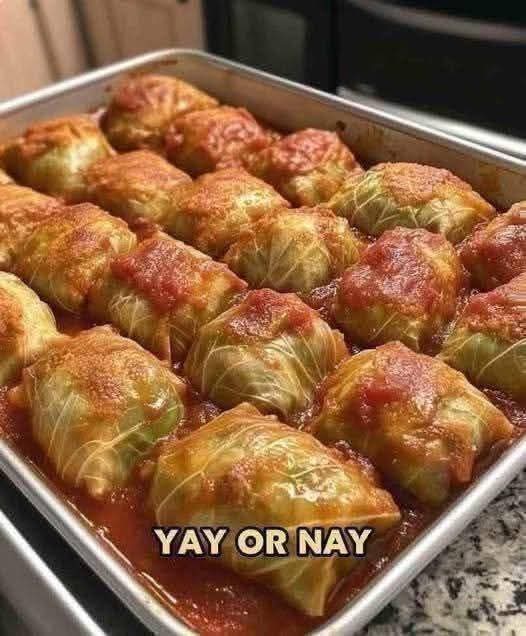
Here is a massive, comprehensive guide to Stuffed Cabbage Rolls, designed to be the only resource you’ll ever need. It covers everything from a heartfelt introduction to detailed history, nutrition, and of course, the big recipe itself.
—
The Humble Hero: A Complete Guide to Stuffed Cabbage Rolls
Introduction: A Hug on a Plate
Would anyone here actually eat stuffed cabbage rolls? The answer, for countless generations across dozens of cultures, has been a resounding and enthusiastic “Yes!” Far from being a simple weeknight meal, the stuffed cabbage roll is a culinary icon. It’s a dish born of frugality, raised on tradition, and perfected by love. It’s the taste of grandmother’s kitchen, the centerpiece of family gatherings, and the ultimate comfort food. A tender cabbage leaf cradles a savory, herb-infused filling of meat and rice, all simmered gently in a rich, aromatic tomato sauce. Each bite is a perfect harmony of textures and flavors: the slight tang of the cabbage, the savory richness of the meat, and the sweet-sour depth of the sauce. This guide will take you on a journey through the world of stuffed cabbage, from its ancient origins to a foolproof recipe that will make you a believer. So, prepare to roll up your sleeves and discover why this dish has captured hearts and stomachs for centuries.
—
A Brief History: From Ancient Fields to Family Tables
The concept of wrapping food in leaves is as old as cooking itself, a practical method for creating a portable, self-contained meal. While the exact origin is murky, most food historians trace the modern stuffed cabbage roll back to the ancient kitchens of the Middle East and the Ottoman Empire. The Persian dish dolma (meaning “stuffed thing”) typically involved wrapping grape leaves around a mixture of rice and meat.
As trade routes and empires expanded, this brilliant idea traveled westward into Eastern Europe and the Balkans. Here, the more readily available and hardier cabbage leaf replaced the delicate grape leaf. Each culture adopted and adapted the dish to its own palate and pantry:
· Poland (Gołąbki): The name charmingly means “little pigeons,” likely referring to the small, neat shape of the rolls. They are often served with a creamy mushroom sauce or a simple tomato sauce.
· Ukraine (Holubtsi): Similar to the Polish version, these are a cornerstone of Ukrainian cuisine, especially during the harvest season.
· Romania (Sarmale): A true national dish, sarmale are smaller, often fermented cabbage leaves (sauerkraut) are used, and the filling is rich with pork, rice, and dill. They are slow-cooked for hours and served with polenta (mămăligă) and sour cream.
· Sweden (Kåldolmar): A testament to cultural exchange, Swedish cabbage rolls are said to have been introduced by King Karl XII after his time in the Ottoman Empire. They have a distinct flavor profile, often including allspice and are served with lingonberry jam, gravy, and boiled potatoes.
· Middle East (Malfouf): These are typically smaller, lighter, and more acidic. They use a simpler filling of rice and spiced minced meat and are cooked in a tangy lemon and garlic broth.
This rich tapestry of history is what makes stuffed cabbage rolls so much more than just food; they are a story on a plate, a tangible link to the past.
—
The Big, Foolproof Recipe (For Beginners and Beyond)
This recipe is designed for success. It breaks down every step, demystifies the process, and guarantees delicious, comforting rolls.
Yields: 12-16 rolls
Prep time: 45 minutes
Cook time: 1 hour 30 minutes
Introduction to This Recipe
This version aims for a classic, crowd-pleasing flavor. We’ll use a combination of ground meats for richness, a simple technique for prepping the cabbage that avoids boiling the whole head, and a wonderfully balanced sweet-and-sour tomato sauce that caramelizes as it bakes, creating a truly unforgettable dish. It’s a project, but a rewarding one.
Ingredients
For the Cabbage:
· 1 large head of green cabbage (about 3 lbs)
· Water for boiling
For the Filling:
· 1 lb (450g) ground beef (80/20)
· ½ lb (225g) ground pork
· 1 cup cooked white rice (long-grain or medium-grain), cooled
· 1 medium yellow onion, finely chopped
· 2 cloves garlic, minced
· 1 large egg, lightly beaten
· 1 teaspoon salt
· ½ teaspoon black pepper
· 1 teaspoon sweet paprika
· ½ teaspoon dried thyme
For the Sauce:
· 1 (28-ounce) can crushed tomatoes
· 1 (15-ounce) can tomato sauce
· ¼ cup packed brown sugar (adjust to taste)
· 2 tablespoons apple cider vinegar or lemon juice (adjust to taste)
· 1 bay leaf
· Salt and pepper to taste
For Assembly & Garnish:
· 2 tablespoons olive oil or butter
· Fresh dill or parsley, chopped, for garnish
· Sour cream, for serving (optional, but highly recommended)
Methods & Instructions: A Step-by-Step Guide
Step 1: Prepare the Cabbage Leaves (The Freezer Method)
This is the game-changer. Instead of boiling a heavy, water-logged head of cabbage, use your freezer.
1. Place the whole head of cabbage in a large plastic bag and put it in the freezer overnight (or for at least 4-6 hours).
2. The day you’re cooking, take the cabbage out and let it thaw on the counter for a few hours. As it thaws, the leaves will become limp, pliable, and easy to remove without tearing. Once thawed, carefully cut out the core with a sharp knife. Gently peel off 12-16 large leaves. If some leaves are still stiff in the center, you can briefly dip them in boiling water for 30 seconds.
Step 2: Make the Filling
1. In a large bowl, combine the ground beef, ground pork, cooled rice, chopped onion, minced garlic, and beaten egg.
2. Add the salt, pepper, paprika, and thyme.
3. Using your hands (clean ones!), gently mix everything together until just combined. Do not overmix, or the filling can become tough.
Step 3: Assemble the Rolls
1. Lay a cabbage leaf on your work surface with the inside of the leaf facing up. If the thickest part of the stem is very prominent, you can shave it down slightly with a vegetable peeler or carefully trim it with a knife to make rolling easier.
2. Place a generous ¼ cup to ⅓ cup of filling near the stem end of the leaf.
3. Fold the stem end over the filling, then fold in the sides, and roll it up tightly (like a burrito) towards the tip of the leaf. Don’t worry if it’s not perfect; the sauce will hold it together.
Step 4: Prepare the Sauce and Bake
1. Preheat your oven to 350°F (175°C).
2. In a separate bowl, whisk together the crushed tomatoes, tomato sauce, brown sugar, and vinegar/lemon juice. Taste the sauce and adjust the sweet and sour elements to your preference.
3. Spread a thin layer of the sauce on the bottom of a large Dutch oven or a deep 9×13-inch baking dish. This prevents the rolls from sticking.
4. Arrange the cabbage rolls snugly in the dish, seam-side down. They should fit tightly together, which helps them keep their shape.
5. Pour the remaining sauce evenly over the rolls. Tuck the bay leaf into the sauce.
6. Drizzle the olive oil or dot with butter over the top of the rolls. This adds richness and helps with browning.
7. Cover the dish tightly with a lid or aluminum foil.
8. Bake for 1 hour. Then, remove the cover and bake for another 30 minutes, allowing the sauce to thicken slightly and the tops of the rolls to caramelize a bit.
—
Formation: The Science of a Great Roll
The magic of stuffed cabbage lies in the formation of flavors during the long, slow cooking process.
· Braising: This is a combination cooking method. First, the covered baking steams the rolls, ensuring the filling cooks through gently and the cabbage becomes meltingly tender. Then, the uncovered baking allows the sauce to reduce and concentrate, and the Maillard reaction (browning) occurs on the exposed edges, creating deep, savory notes.
· Flavor Marriage: As the rolls simmer in the sauce, starches from the rice thicken the sauce slightly. The cabbage releases its sweet juices, which meld with the acidity of the tomatoes and the richness of the meat. The brown sugar and vinegar create a classic flavor profile that balances and enhances all the other ingredients.
—
The Lovers: Who Eats Stuffed Cabbage?
The lovers of stuffed cabbage are a diverse and passionate group:
· The Traditionalist: The grandparent or parent who learned the recipe from their own elders. For them, the dish is about memory, heritage, and carrying on a family legacy. The smell alone transports them home.
· The Comfort Seeker: Anyone looking for a deeply satisfying, warming meal on a cold day. It’s the culinary equivalent of a warm blanket.
· The Adventurous Beginner: The home cook looking for a project that is both challenging and rewarding. The sense of accomplishment from a perfect pan of homemade rolls is immense.
· The Cultural Explorer: Someone interested in food history and trying authentic dishes from around the world, from Polish gołąbki to Romanian sarmale.
—
Benefits: More Than Just a Meal
· Nutritional: This is a balanced meal in one dish. You have your protein from the meat, carbohydrates from the rice, and fiber, vitamins C and K from the cabbage. The lycopene in the cooked tomatoes is a powerful antioxidant.
· Economic: Stuffed cabbage is a wonderfully economical dish. It uses affordable, humble ingredients and stretches a smaller amount of meat with rice and vegetables into a hearty meal that can feed a crowd.
· Make-Ahead & Freezer-Friendly: The flavors actually deepen and improve overnight. This makes it a perfect make-ahead meal for busy weeks. It also freezes beautifully, both before and after baking.
—
Nutrition Information (Approximate, per roll, based on 14 rolls)
· Calories: 250-300
· Protein: 15-18g
· Fat: 12-15g
· Carbohydrates: 20-25g
· Fiber: 4-5g
· Sugar: 8-10g (from sauce and cabbage)
· Sodium: 500-700mg (varies greatly with added salt)
Note: This is an estimate and will vary based on specific ingredients and portion sizes.
—
Conclusion: A Dish Worth Rolling For
So, would anyone here actually eat stuffed cabbage rolls? Absolutely. They are a testament to the fact that the simplest ingredients, treated with care and tradition, can be transformed into something truly magnificent. They are a labor of love, but the payoff is immense: a dish that nourishes the body, warms the soul, and connects us to a long line of cooks who have made it their own. This recipe is your invitation to join that tradition. Make a batch, share it with the ones you love, and create your own memories around this humble, heroic dish.
Smacznego! (Polish for “Enjoy your meal!”) Poftă Bună! (Romanian) God smak! (Swedish)