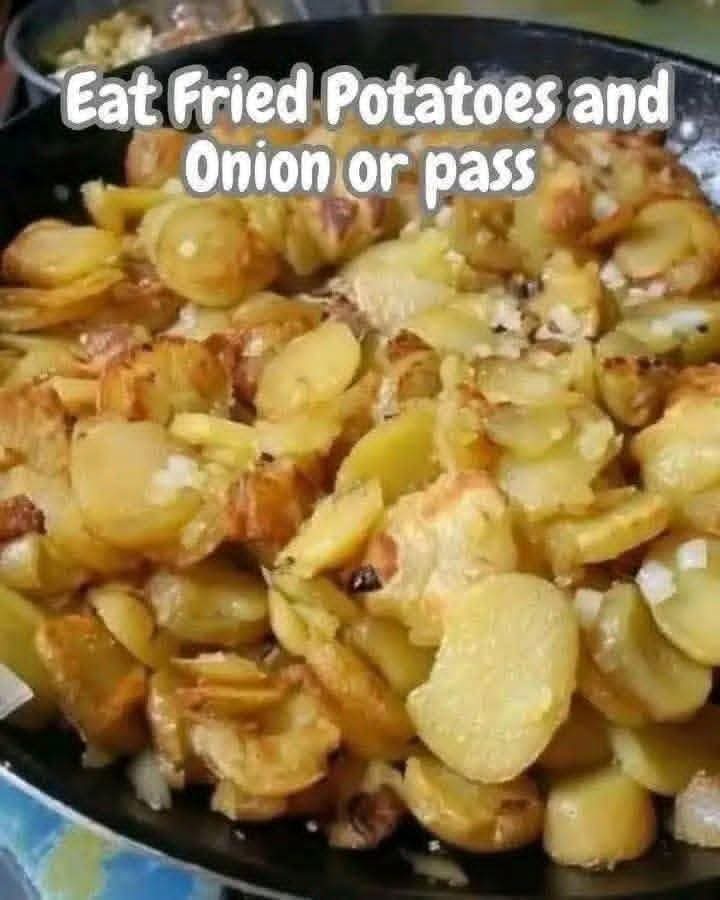
Here is a comprehensive guide to making the perfect Fried Potatoes and Onions, complete with all the sections you requested.
—
The Humble Masterpiece: A Guide to Fried Potatoes and Onions
Introduction
There are dishes that impress with their complexity, and then there are dishes that achieve perfection through their beautiful simplicity. Fried Potatoes and Onions firmly belongs to the latter category. It is the ultimate comfort food, a golden, crispy, and aromatic side dish that has graced breakfast tables, dinner plates, and campfire cast-iron skillets for generations. The magic lies in the alchemy of two humble ingredients: the starchy, earthy potato and the pungent, sweet onion. When they meet in a hot pan with a little oil, they transform into something far greater than the sum of their parts. The potatoes become irresistibly crispy on the outside and fluffy within, while the onions caramelize, releasing their natural sugars to create a savory-sweet counterpoint. This recipe is not just about following steps; it’s about understanding a simple, timeless method that yields a consistently delicious result.
History
The exact origins of fried potatoes and onions are difficult to pinpoint, as the combination is a fundamental one in many cultures. It is a quintessential example of “peasant food” – a dish born from necessity, using inexpensive, shelf-stable ingredients that were readily available.
· European Roots: Potatoes, native to South America, were brought to Europe in the 16th century. Once they overcame initial skepticism, they became a staple crop for the poor due to their caloric density and ease of storage. Onions, cultivated for millennia, were another dietary cornerstone. It was only natural that cooks would combine these two sturdy vegetables in a pan with fat (butter, lard, or oil) to create a filling and satisfying meal.
· American Adaptation: In the United States, the dish evolved alongside the country’s culinary trends. It became a classic “down-home” side dish, particularly in the South and Midwest. It’s a close relative of “hash browns” and “home fries,” with the addition of onion setting it apart. The version we know and love today was likely popularized in the 19th and 20th centuries as cast-iron cooking reigned supreme and hearty, simple food was valued.
Benefits
This dish isn’t just delicious; it offers several benefits:
· Nutritional Value: Potatoes are an excellent source of vitamin C, potassium, and fiber (especially if you leave the skin on). Onions are packed with antioxidants and prebiotics, which support gut health.
· Simplicity and Affordability: The ingredients are among the cheapest in the grocery store, making this an incredibly budget-friendly way to create a satisfying and flavorful side dish.
· Versatility: It pairs with almost anything – eggs for breakfast, a grilled steak for dinner, or sausages for a hearty supper. It’s a perfect canvas for other flavors.
· Emotional Comfort: For many, the smell of onions and potatoes caramelizing in a pan is the very scent of home, comfort, and simpler times.
Ingredients
· 2 lbs (about 900g) Russet or Yukon Gold potatoes: Russets are starchy and yield a fluffy interior and very crispy exterior. Yukon Golds are waxy and hold their shape well, offering a buttery flavor and creamy texture.
· 1 large yellow or sweet onion: Yellow onions are the standard for a balanced flavor. Sweet onions (like Vidalia or Walla Walla) will caramelize beautifully and add a touch more sweetness.
· 3-4 tablespoons vegetable oil, canola oil, or bacon fat: You need a fat with a high smoke point. Bacon fat adds an incredible depth of flavor.
· 1 teaspoon salt, plus more to taste: Use kosher or sea salt for the best flavor.
· 1/2 teaspoon freshly ground black pepper
· 1/2 teaspoon paprika (optional): Adds a subtle smokiness and a beautiful golden color.
· 2 tablespoons fresh parsley, chopped (optional): For a fresh, vibrant garnish.
Instructions (Formation)
The key to perfect fried potatoes and onions is managing moisture and heat. Follow these steps for optimal “formation”:
1. Prepare the Potatoes: Wash and scrub your potatoes. You can peel them if you like, but leaving the skin on adds texture and nutrients. Cut them into a uniform 1/2-inch to 3/4-inch dice. Uniformity is crucial for even cooking.
2. The Water Soak (Optional but Recommended): Place the diced potatoes in a large bowl and cover them with cold water. Let them soak for at least 30 minutes, or up to overnight in the refrigerator. This draws out excess starch, which is the number one enemy of crispiness.
3. Dry Thoroughly: This is the most important step. Drain the potatoes and then spread them out on a clean kitchen towel or a few layers of paper towels. Pat them completely dry. Any residual water will turn to steam in the pan and prevent browning.
4. Prepare the Onion: While the potatoes dry, peel and slice the onion in half from root to stem. Then, slice each half into thin half-moons (about 1/4-inch thick).
5. Heat the Pan: Place a large, heavy-bottomed skillet (cast iron is ideal) over medium-high heat. Add the oil and let it heat until it shimmers.
6. First Sear (The Potatoes): Carefully add the bone-dry potatoes to the hot pan in a single, even layer. Don’t overcrowd the pan; if necessary, cook in batches. Let them cook undisturbed for 5-7 minutes, until the bottom side is deep golden brown and crispy.
7. Add the Onions: Give the potatoes a stir. Now, add the sliced onions to the pan. They will seem like a lot, but they will cook down. Season with salt, pepper, and paprika (if using).
8. Continue Cooking: Continue to cook, stirring occasionally, for another 15-20 minutes. The goal is to let the potatoes become tender and golden on all sides, while the onions soften, turn translucent, and begin to caramelize at the edges. Don’t stir too often; give them time to develop a new crust on each side. If the pan looks dry at any point, you can add a splash more oil.
9. Final Seasoning and Serve: Once the potatoes are cooked through (a fork should slide in easily) and the onions are beautifully browned, taste and adjust seasoning with more salt and pepper if needed. Remove from heat, garnish with fresh parsley, and serve immediately.
Methods
There are a few schools of thought on the best method, each yielding slightly different results:
· The One-Pan Method (Described Above): This is the classic method. Potatoes go in first to establish a crust, then onions are added. This ensures the potatoes are perfectly cooked without the onions burning, as the onions release moisture that would otherwise steam the potatoes.
· The Parboil Method: For guaranteed tenderness, some cooks parboil the diced potatoes in salted water for 5-7 minutes until just barely fork-tender. They are then drained, dried, and fried as usual. This ensures a fluffy interior and a crust that forms very quickly.
· The “All-In” Method: This is the quickest but riskiest method. Potatoes and onions are added to the pan at the same time. The onions often release too much water, steaming the potatoes and making it difficult to achieve a good crust. You’ll end up with softer, more “home fry” style potatoes, which is still delicious but less crispy.
Lovers
Fried Potatoes and Onions are universally beloved, but they hold a special place in the hearts of:
· The Breakfast Enthusiast: For them, it’s an essential component of a hearty “full breakfast,” nestled next to eggs, bacon, and toast.
· The Home Cook: It’s a go-to recipe for anyone who wants to create a satisfying, no-fuss meal that feels like a warm hug.
· The Camper and Outdoor Cook: There’s something magical about making a skillet of potatoes and onions over a campfire, the aroma mixing with the smell of woodsmoke and fresh air.
· The Frugal Gourmet: It’s a testament to the fact that you don’t need expensive ingredients to eat like a king.
Nutrition (Approximate, per serving)
(Based on 4 servings)
· Calories: 250-300
· Fat: 10-15g
· Carbohydrates: 35-40g
· Fiber: 4-5g
· Protein: 4-5g
· Vitamin C: ~30% of the Daily Value
· Potassium: ~20% of the Daily Value
Note: Nutritional values will vary based on the amount of oil absorbed and the specific ingredients used.
Conclusion
Fried Potatoes and Onions is more than just a recipe; it’s a foundational cooking experience. It teaches the importance of heat management, the transformative power of browning, and the magic that happens when simple, quality ingredients are treated with respect. It is a dish that connects us to culinary traditions across the globe and to the comforting meals of our past. So, the next time you have a couple of potatoes and an onion, don’t see a humble meal—see an opportunity to create a golden, crispy, and utterly satisfying masterpiece. It’s proof positive that the simplest things in life are often the very best.