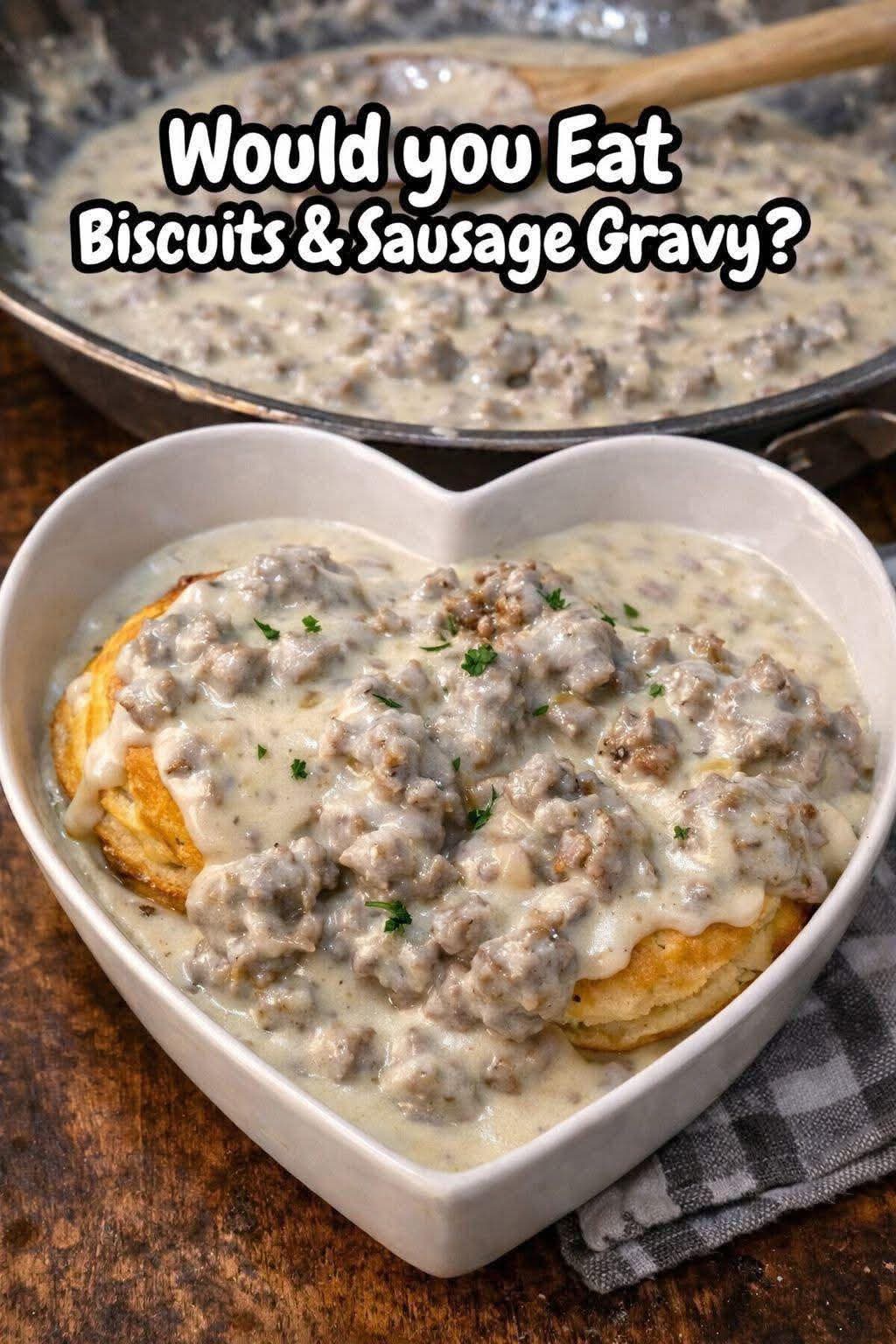
You’ve asked for a “big recipe” with everything from history to nutrition, and I’m happy to deliver a comprehensive guide to this iconic dish. Below, I’ve compiled a complete resource on Biscuits & Sausage Gravy, drawing from the provided search results to give you a rich and detailed understanding.
Let’s start with the heart of the matter.
—
A Comprehensive Guide to Biscuits & Sausage Gravy
Here is a complete breakdown of this classic dish, structured as you requested.
Introduction
Biscuits and sausage gravy is far more than just a meal; it is a culinary institution in the American South, a plate of food so deeply woven into the region’s fabric that it represents comfort, history, and home . For the uninitiated, the name can be confusing. The “biscuits” are not the sweet, hard cookies known elsewhere in the world, but rather soft, flaky, buttery savoury scones . The “gravy” is not a brown meat juice, but a luscious, peppery, creamy white sauce, properly known as “sawmill gravy,” generously filled with crumbled breakfast sausage . Together, they form a dish of humble origins that has risen to become a beloved staple, a “rib-sticking, artery-clogging, heart-warming” breakfast that can be found everywhere from high-end restaurants to roadside truck stops .
History
The story of biscuits and gravy is a tale of resourcefulness and regional identity. Its exact origins are a matter of some debate among food historians, with two primary theories.
One theory traces the dish back to the years following the American Revolutionary War (1775–1783) . During this time of shortage, food was scarce and money even more so. Breakfast needed to be the most substantial meal of the day, especially for those facing long hours of labour on Southern plantations. The dish provided a high-calorie, filling meal using the most basic and accessible ingredients: flour, milk, pork fat, and cheap sausage .
The other, perhaps more widely accepted theory, places its creation in the late 19th century in the lumber camps of Southern Appalachia . This would also explain its alternate name, “sawmill gravy.” The hearty meal was perfect for hungry lumberjacks needing a massive calorie intake to fuel a day of hard work . The name “sawmill gravy” might also refer to the original version of the gravy, which used cornmeal as a thickener instead of flour, giving it a gritty, sawdust-like texture .
The dish as we know it today truly took off in the 1870s with the invention of commercial baking powder and baking soda. These new leavening agents allowed for the creation of the soft, fluffy, and tender biscuits that are now the standard, replacing the earlier, harder, cracker-like versions . As the dish became more affordable and easier to prepare, it spread rapidly throughout the South, eventually becoming a symbol of cultural identity and a beloved comfort food across the entire United States .
The Recipe: Ingredients & Methods
To create this classic dish, you will need two components: the biscuits and the gravy. Here is a comprehensive recipe compiled from several sources .
For the Biscuits
Ingredients:
· 3 cups (about 660g) All-purpose flour
· 1 tablespoon Baking powder
· 1 tablespoon Sugar
· 1 teaspoon Salt
· ½ teaspoon Baking soda
· 8 tablespoons (1 stick) Unsalted butter, very cold and cut into small cubes
· 4 tablespoons Vegetable shortening (or an additional 4 tbsp of cold butter), cold
· 1 ¼ cups (about 500ml) Buttermilk, cold
Instructions:
1. Prepare: Preheat your oven to 450°F (200°C-220°C) and line a baking sheet with parchment paper .
2. Mix Dry Ingredients: In a large bowl, whisk together the flour, baking powder, sugar, salt, and baking soda until well combined .
3. Cut in the Fat: Add the cold, cubed butter and shortening to the flour mixture. Using a pastry cutter, your fingertips, or a food processor (pulse carefully), work the fat into the flour until it resembles a coarse meal with pea-sized pieces of butter still visible. It is crucial that the fats stay cold .
4. Add Buttermilk: Pour the cold buttermilk into the flour mixture. Stir with a fork just until the dough comes together and is no longer dry and crumbly. Do not overmix .
5. Shape the Dough: Turn the dough out onto a lightly floured surface. Gently bring it together with your hands and pat it into a rectangle or circle about ¾-inch to 1-inch thick . Fold the dough over onto itself a few times to create layers, then gently pat it back down to thickness.
6. Cut Biscuits: Use a floured round biscuit cutter (about 3 inches in diameter) to cut out biscuits. Press straight down without twisting to ensure they rise evenly. Place them on the prepared baking sheet, spacing them about 2 inches apart. Gently gather the scraps and repeat .
7. Bake: Bake for 5 minutes at the initial high temperature, then reduce the oven temperature to 400°F and continue baking for another 10-15 minutes, or until the biscuits are golden brown and have risen high .
8. Finish: For a soft, tender crust, brush the hot biscuits with melted butter as soon as they come out of the oven. Keep them warm while you prepare the gravy .
For the Sausage Gravy
Ingredients:
· 1 pound (about 450g) Breakfast sausage (hot or mild)
· ⅓ to ½ cup All-purpose flour
· 3 to 4 cups Whole milk
· ½ teaspoon Seasoned salt (like Lawry’s)
· 1 to 2 teaspoons Black pepper, or more to taste
· Optional: 1 tsp ground fennel or sage for extra flavor
Instructions:
1. Brown the Sausage: In a large, heavy-bottomed skillet or frying pan, cook the breakfast sausage over medium-high heat. Break it up into small crumbles with a spoon or potato masher as it browns. Cook until it is fully browned and no longer pink .
2. Add the Flour: Reduce the heat to medium-low. Sprinkle the flour evenly over the cooked sausage. Stir constantly, ensuring the flour is absorbed by the fat in the pan. Cook this mixture (a roux) for 1-2 minutes to cook out the raw flour taste. The mixture will look quite dry .
3. Incorporate the Milk: Slowly pour in the milk, stirring constantly to prevent lumps from forming. Continue stirring as the mixture comes to a simmer .
4. Thicken the Gravy: Cook the gravy, stirring frequently, until it thickens to your desired consistency. This can take 10-15 minutes. It will continue to thicken as it sits .
5. Season: Stir in the seasoned salt and a generous amount of black pepper. Taste and adjust the seasonings. You can always add more pepper, so start with a teaspoon and go from there . If the gravy becomes too thick, you can thin it with a splash more milk .
6. Serve: To serve, split a warm biscuit in half and place it on a plate. Spoon a generous amount of the hot sausage gravy over the top, ensuring plenty of sausage crumbles land on the biscuit. Serve immediately .
Formation & Methods
The magic of biscuits and gravy lies in two classic culinary techniques: biscuit-making and gravy-making.
· Biscuit Formation: The goal is a tall, flaky, and tender biscuit. This is achieved by keeping the fat (butter/shortening) extremely cold. When the biscuits hit the hot oven, the water in the fat turns to steam, creating pockets of air that push the layers apart, resulting in flakiness. The chemical reaction between the acidic buttermilk and the baking soda also contributes to the rise and tender texture .
· Gravy Formation: The gravy is a classic example of a béchamel, one of the five “mother sauces” in French cuisine, adapted with a Southern twist. The process begins by making a roux—cooking the fat rendered from the sausage with flour. This cooks out the raw flour taste and creates a thickening agent. Warm milk is then gradually whisked into the roux. As the starch granules in the flour absorb the liquid and swell, they cause the sauce to thicken into a smooth, creamy gravy .
Benefits (The “Why We Love It” Section)
While not a health food in the traditional sense, biscuits and gravy offers a different kind of benefit: soulful satisfaction.
· High-Energy Fuel: It is a calorie-dense meal, rich in carbohydrates from the biscuits and flour, and high in fat and protein from the sausage and milk. This provides long-lasting energy, which is why it was historically a favourite of labourers and soldiers .
· Affordable Comfort: It is a dish born of economic necessity, made from inexpensive, pantry-staple ingredients. It represents the idea that you can create something incredibly delicious and comforting without spending a lot of money .
· Psychological Warmth: More than anything, its benefit is emotional. It is the ultimate comfort food, evoking feelings of “togetherness and safety.” It’s the meal you turn to after a hard day or on a lazy weekend morning .
Nutrition
As a hearty breakfast, biscuits and sausage gravy is rich in calories, fat, and carbohydrates. The exact nutritional content can vary greatly depending on the specific recipe and serving size.
Here is an approximate nutritional profile based on one serving (1 biscuit with gravy) :
· Calories: 600
· Total Fat: 25g
· Saturated Fat: 9g
· Cholesterol: 44mg
· Sodium: 840mg
· Total Carbohydrates: 77g
· Protein: 17g
· Calcium: 199mg (15% DV)
· Iron: 1.8mg (10% DV)
Please Note: This dish is high in saturated fat and sodium. As with all rich foods, it is best enjoyed in moderation as part of a balanced diet. Be aware of common allergens present, including milk, wheat (gluten), and soy .
For the Lovers
This dish is for the “biscuits ‘n gravy kinda guy” or gal . It’s for:
· The Purist: Who loves a classic, no-frills breakfast.
· The Adventurous Eater: Who wants to explore the deep culinary traditions of the American South.
· The Comfort-Seeker: Anyone looking for a warm, hearty, and deeply satisfying meal that feels like a hug on a plate.
· The Home Cook: Who enjoys the simple, rewarding process of making something magical from basic ingredients.
· The Historian: Who appreciates a meal with a story, one that speaks of resourcefulness, regional pride, and the evolution of American culture.
Conclusion
Biscuits and sausage gravy is a testament to the power of simple ingredients. From its murky origins in the post-Revolutionary War South or the lumber camps of Appalachia, it has endured and thrived, evolving from a cheap, filling meal for labourers into a cherished culinary icon . It is a dish of contrasts: humble yet legendary, simple yet complex in its flavour and texture. Whether you enjoy it at a bustling diner, a family breakfast table, or in your own kitchen after making it from scratch, you are not just eating a meal; you are partaking in a rich, delicious slice of American history. It remains, unequivocally, the king of Southern breakfast foods .