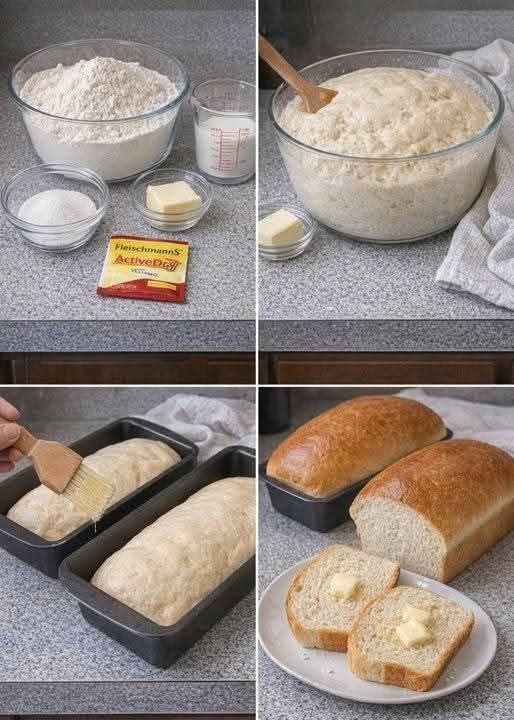
🍞 Classic Homemade White Bread
📝 Introduction
There’s nothing more comforting than the smell of freshly baked homemade bread filling your kitchen. Soft, fluffy on the inside with a golden crust on the outside, classic white bread is perfect for sandwiches, toast, or simply enjoyed warm with butter. This traditional yeast bread recipe is simple, economical, and rewarding—ideal for both beginners and experienced bakers.
📜 History of White Bread
Bread is one of the oldest prepared foods in human history, dating back over 10,000 years to ancient civilizations like Egypt and Mesopotamia. The discovery of yeast fermentation allowed bread to rise, creating softer textures. White bread became popular in Europe during the Middle Ages, symbolizing refinement and quality because it used finely milled wheat flour. Today, homemade bread remains a beloved staple across the world.
🧂 Ingredients (Makes 2 Loaves)
- 6–7 cups all-purpose flour
- 2 ¼ teaspoons (1 packet) active dry yeast
- 2 ½ cups warm milk (or warm water)
- ¼ cup sugar
- 1 ½ teaspoons salt
- 3 tablespoons butter (softened)
- Extra butter for brushing
🥣 Preparation Method
1️⃣ Activate the Yeast
- Warm the milk to about 38–43°C (100–110°F).
- Add sugar and yeast.
- Let sit for 5–10 minutes until foamy.
2️⃣ Mix the Dough
- In a large bowl, combine flour and salt.
- Add the yeast mixture and softened butter.
- Mix until a sticky dough forms.
3️⃣ Kneading
- Knead by hand for 8–10 minutes (or 5–7 minutes using a stand mixer).
- Dough should become smooth and elastic.
4️⃣ First Rise (Fermentation)
- Place dough in a greased bowl.
- Cover and let rise 1–1½ hours, until doubled in size.
5️⃣ Shaping
- Punch down dough.
- Divide into two portions.
- Shape into loaves and place in greased loaf pans.
6️⃣ Second Rise (Proofing)
- Cover and let rise 30–45 minutes until doubled again.
7️⃣ Baking
- Preheat oven to 180°C (350°F).
- Bake for 25–30 minutes until golden brown.
- Brush tops with melted butter.
- Cool before slicing.
🔬 Formation & Science Behind It
- Yeast Fermentation: Yeast consumes sugar and produces carbon dioxide, creating air bubbles that make bread rise.
- Gluten Development: Kneading strengthens gluten proteins, giving bread structure and elasticity.
- Maillard Reaction: During baking, sugars and proteins react to form the golden crust and rich flavor.
🌟 Benefits of Homemade Bread
- No preservatives or additives
- Budget-friendly
- Customizable (add seeds, herbs, whole wheat)
- Fresh, natural taste
- Rich in carbohydrates for energy
🥗 Nutritional Value (Per Slice Approx.)
- Calories: 120–150 kcal
- Carbohydrates: 22g
- Protein: 3–4g
- Fat: 2–3g
- Fiber: 1g
- Calcium & Iron (small amounts)
Values vary depending on ingredients used.
❤️ Why Bread Lovers Adore This Recipe
- Soft and fluffy texture
- Perfect for toast, sandwiches, or French toast
- Comfort food loved by families
- Brings warmth and tradition to the table
- Amazing aroma while baking
🧁 Optional Variations
- Add honey instead of sugar
- Replace half the flour with whole wheat
- Add garlic and herbs for savory bread
- Sprinkle sesame or oats on top
🏁 Conclusion
Homemade white bread is more than just food—it’s a tradition, a comfort, and a symbol of home. With simple ingredients and patience, you can create bakery-quality bread right in your kitchen. Once you try this recipe, you may never go back to store-bought bread again!
Would you like this recipe in Arabic or French as well?