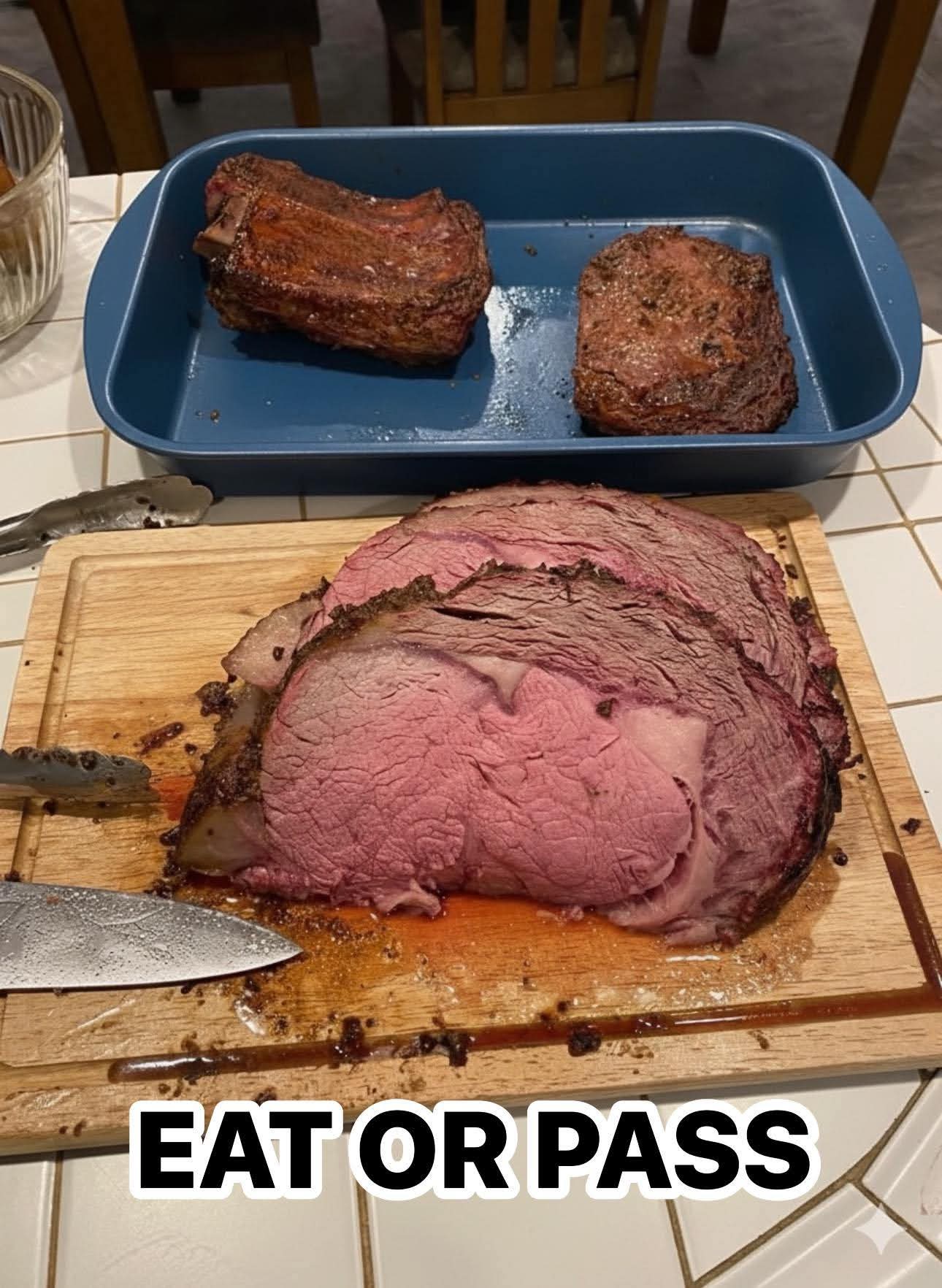
Absolutely! Here’s a full, indulgent Prime Rib Recipe crafted with all the sections you asked for — from introduction to “lovers” tips. 🥩🔥
Prime Rib Done Right: Juicy, Buttery, Flavor-Packed from Edge to Center 😋✨
Introduction
Few dishes scream “celebration” and “comfort food” quite like a perfectly roasted prime rib. Imagine a crusty, herb-seasoned exterior giving way to tender, buttery, pink meat that practically melts in your mouth. Prime rib is a centerpiece for holiday dinners, family gatherings, or any occasion that deserves indulgence. With the right seasoning, technique, and patience, you can transform this luxurious cut into a flavor-packed feast.
Ingredients
- Prime Rib Roast: 5–7 lbs, bone-in or boneless
- Kosher Salt: 2 tbsp
- Freshly Ground Black Pepper: 2 tbsp
- Garlic: 4 cloves, minced
- Fresh Rosemary: 2 tbsp, chopped
- Fresh Thyme: 2 tbsp, chopped
- Olive Oil: 3 tbsp
- Unsalted Butter: 4 tbsp, softened
- Optional: Horseradish sauce, au jus, or red wine reduction for serving
Instructions & Methods
1. Preparing the Roast
- Take the prime rib out of the refrigerator at least 2 hours before cooking to reach room temperature—this ensures even cooking.
- Pat dry with paper towels.
2. Seasoning
- In a small bowl, combine salt, pepper, garlic, rosemary, thyme, and olive oil.
- Rub this mixture generously all over the roast, pressing it into the meat.
- For extra flavor, make small slits in the meat and insert slivers of garlic.
3. Preheating & Roasting
- Preheat oven to 450°F (230°C).
- Place the roast on a rack in a roasting pan, fat side up.
- Roast at 450°F for 20–30 minutes to create a flavorful crust.
4. Slow Roasting
- Reduce oven temperature to 325°F (165°C).
- Continue roasting until internal temperature reaches your desired doneness:
- Rare: 120–125°F
- Medium-Rare: 130–135°F
- Medium: 140–145°F
- This usually takes about 15–20 minutes per pound after the initial sear.
5. Resting
- Remove the roast from the oven and tent loosely with foil.
- Rest for 20–30 minutes to allow juices to redistribute—this is key for buttery, juicy slices.
6. Serving
- Slice between the ribs for bone-in or into thick slices for boneless.
- Serve with au jus, horseradish sauce, or your favorite sides like roasted vegetables and creamy mashed potatoes.
History & Formation
Prime rib, also called a standing rib roast, traces its roots to English and French culinary traditions. Historically, this cut was reserved for royalty and aristocrats due to its tenderness and rich marbling. Over time, it became a symbol of celebration in American homes, particularly around holidays like Christmas and Thanksgiving. Its signature formation comes from roasting the rib section standing upright, allowing heat to circulate evenly, producing a crusty exterior while keeping the interior juicy and flavorful.
Conclusion
A perfectly roasted prime rib is more than a meal—it’s an experience. The contrast between the savory crust and the tender, juicy interior delights every sense. With patience and a few simple ingredients, you can elevate this classic roast into a culinary masterpiece that impresses family and friends alike.
For Prime Rib Lovers
- Crust Lovers: Brush the crust with a mixture of Dijon mustard and herbs before the high-heat roast for extra flavor.
- Juice Lovers: Always rest the meat before slicing; every impatient cut wastes precious juice.
- Aroma Lovers: Roasting over a bed of halved onions, garlic, and carrots infuses a fragrant aroma that fills the kitchen.
- Leftover Lovers: Thinly slice leftovers for gourmet sandwiches with horseradish mayo and arugula.
If you want, I can also give you a “chef’s secret” version with a garlic-herb butter injected inside the roast for extra buttery, melt-in-your-mouth flavor—this takes it from perfect to legendary.
Do you want me to make that upgraded version too?