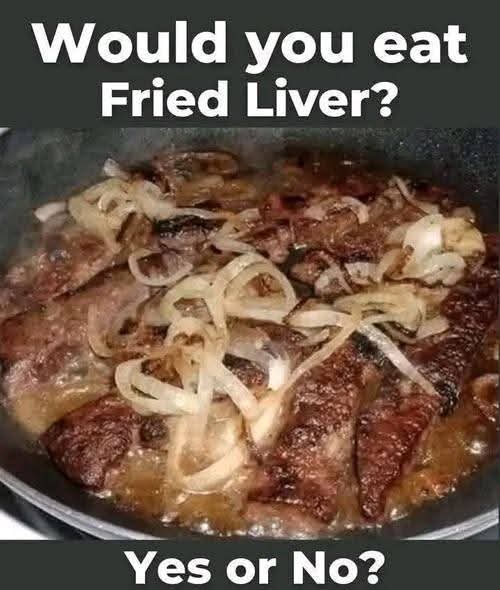
My vote is a resounding yes. It’s a dish that has sadly fallen out of fashion in many homes, but when prepared with care, it offers an unbeatable combination of rich, savory flavor and incredible nutritional value. Here is a comprehensive guide to this classic, from its history to your dinner plate.
A Big, Bold Recipe for Fried Liver with Onions
This recipe is designed to serve 4 people and focuses on achieving that perfect tender liver and sweet, caramelized onion topping. The key is not to overcook the liver.
Introduction
Welcome to the ultimate comfort food: fried liver with onions. This dish is a celebration of simple, robust flavors. The secret lies in the contrast between the tender, earthy liver and the sweet, soft, caramelized onions. For too long, liver has been misunderstood, often associated with a tough, metallic taste. This recipe will guide you through the steps to ensure your liver is succulent and delicious, transforming skeptics into lovers with just one bite. It’s a nostalgic journey back to the dinner tables of the past, reimagined for the modern cook .
Ingredients
· 1 lb (450g) beef or calf’s liver, sliced about ½-inch thick. If the liver has a thin membrane, ask your butcher to remove it, or do it yourself by slipping a knife under it and peeling it away .
· 2 large yellow or white onions, peeled and sliced into thin rings or half-moons.
· ½ cup (60g) all-purpose flour, for dredging.
· 1 teaspoon salt, plus more for the onions.
· ½ teaspoon black pepper, freshly ground.
· 3 tablespoons unsalted butter or bacon fat, divided. (Bacon fat adds an incredible depth of smoky flavor) .
· 2 tablespoons olive oil, divided.
· ½ cup (120ml) beef broth or water (optional, for making a light gravy).
· Fresh parsley, chopped, for garnish (optional).
Instructions & Methods
Follow these steps for perfect fried liver and onions every time.
1. Prepare the Liver: Rinse the liver slices under cold water and pat them completely dry with paper towels. This is a crucial step for achieving a good sear. If there are any tough connective tubes, cut them out. You can leave the slices whole or cut them into smaller, serving-sized pieces .
2. Prepare the Dredge: On a large plate, combine the flour, 1 teaspoon of salt, and ½ teaspoon of black pepper. Mix well with a fork.
3. Caramelize the Onions: Heat 1 tablespoon of butter (or bacon fat) and 1 tablespoon of olive oil in a large skillet (preferably cast-iron or stainless steel) over medium heat. Add the sliced onions and a pinch of salt. Cook, stirring occasionally, for about 15-20 minutes, until they are soft, sticky, and a deep golden brown. If they start to stick or burn, add a tablespoon of water to the pan. Once done, transfer the onions to a bowl and cover to keep warm .
4. Dredge and Fry the Liver: While the onions are cooking, dredge the liver slices. Just before you’re ready to cook, coat the liver pieces in the seasoned flour. Shake off any excess flour—you want a light, even coating, not a thick, pasty crust.
5. Sear the Liver: Wipe out the skillet and add the remaining 2 tablespoons of butter (or bacon fat) and 1 tablespoon of olive oil. Increase the heat to medium-high. Once the fat is shimmering and hot, carefully place the dredged liver slices in the pan in a single layer. Do not crowd the pan; cook in batches if necessary. Sear for 2-3 minutes per side for beef liver, or until a nice brown crust has formed. The liver is done when it is still slightly pink in the center and springs back when lightly pressed. Overcooking is the number one enemy of tender liver .
6. Rest and Serve: Transfer the cooked liver to a clean plate. Don’t stack the pieces, or they’ll steam and lose their crust. Let them rest for 5 minutes. To serve, place the liver on a plate and pile the caramelized onions generously on top. Garnish with fresh parsley. For a simple pan gravy, you can pour the beef broth into the hot skillet after removing the liver, scrape up the browned bits (fond) from the bottom, and let it simmer for a minute until slightly reduced. Spoon this over the liver and onions .
The Rich History of Liver and Onions
Liver and onions is far more than just a meal; it is a global culinary tradition with deep roots. In many cultures, it was a staple born of practicality and respect for the whole animal. The dish became particularly popular in Europe and North America during the early to mid-20th century as a nourishing and affordable meal for families .
The pairing with onions is no accident. The sharp, pungent flavor of the onion perfectly balances liver’s distinct, sometimes metallic, “mineral” taste, making it more palatable . Variations of the dish are found worldwide. In Italy, you have Fegato alla Veneziana (Venetian-style liver), where thin slices of calf’s liver are cooked with onions and often a splash of white wine . The French have a traditional version that includes butter and bacon . In Latin America, hígado encebollado is a beloved comfort food, typically served with rice and beans . This simple dish connects us to a time when food was cherished and nothing went to waste.
Top 5 Health Benefits of Eating Liver
Liver is often called “nature’s multivitamin,” and for good reason. It is one of the most nutrient-dense foods you can eat .
1. Iron Powerhouse for Energy: Liver is exceptionally rich in highly absorbable heme iron, which is crucial for preventing iron-deficiency anemia, boosting energy levels, and combating fatigue .
2. An Explosion of Vitamin A: A small serving provides a massive amount of preformed Vitamin A (retinol), which is essential for maintaining healthy vision, a robust immune system, and glowing skin .
3. Brain-Boosting B Vitamins: It is packed with B vitamins, particularly Vitamin B12, which is vital for nerve function, brain health, and the formation of red blood cells. It also contains high levels of B2, B3, B5, B6, and folate .
4. High-Quality Protein for Strength: Liver is a fantastic source of complete, high-quality protein, which is necessary for building and repairing tissues, building muscle, and supporting overall bodily functions .
5. Trace Mineral Support: It provides a host of other essential minerals like copper, zinc, phosphorus, and selenium, which play key roles in everything from immune function to thyroid health and acting as powerful antioxidants .
Nutritional Information (Per Serving)
This table provides an estimated nutritional profile for one serving of fried liver and onions, based on the recipe above .
Nutrient Amount Notes
Calories 350-400 kcal Mainly from protein and healthy fats.
Protein 30-35 g Excellent source for muscle and tissue repair.
Fat 18-22 g Varies based on cooking fat used (butter/bacon fat).
Carbohydrates 10-15 g Primarily from the onions and a small amount of flour.
Iron 4-6 mg Highly absorbable heme iron, crucial for energy.
Vitamin A 300% RDA Supports vision and immune function.
Vitamin B12 600% RDA Essential for nerve health and red blood cell formation.
Conclusion: A Dish Worth Rediscovering
For the lovers of liver, this recipe is a timeless reminder of why this dish holds a special place in their hearts. For the skeptics, consider this your invitation to rediscover a classic. By following these simple methods—especially the crucial step of not overcooking—you can unlock a world of deep, savory flavor and incredible nutrition.
Fried liver with onions is more than just food; it’s a connection to our culinary heritage, a testament to nose-to-tail eating, and a delicious way to fuel your body. So, gather your ingredients, heat up that skillet, and get ready to fall in love with an old-school dinner classic. Yes, a thousand times, yes!