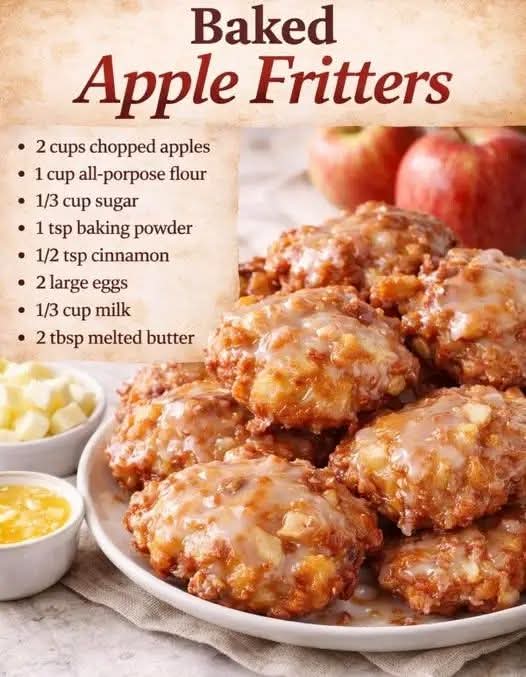
Here is a comprehensive guide to Baked Apple Fritters, expanded to include all the elements you requested, from a detailed recipe to their rich history and cultural significance.
—
The Ultimate Guide to Baked Apple Fritters: A Cozy Classic Reimagined
Introduction
There are few aromas as welcoming as apples and cinnamon baking in a warm oven. It is the scent of comfort, of autumn afternoons, and of cherished family gatherings. Baked Apple Fritters capture this essence perfectly, transforming a nostalgic, often greasy, deep-fried treat into a wholesome, guilt-free delight that can be enjoyed any time of the year. These fritters achieve the ideal balance of textures: a lightly crisp, golden exterior giving way to a soft, tender interior brimming with sweet, spiced apple chunks. Finished with a simple vanilla glaze that soaks into the warm crumb, they occupy a wonderful space between a breakfast pastry and a dessert. This guide will walk you through everything you need to know to create these bakery-worthy treats in your own kitchen, exploring not just the method, but the story and the benefits behind this beloved classic.
A Bite of History: The Journey of the Fritter
The story of the fritter is a long and global one, far predating the modern doughnut shop. The word “fritter” itself comes from the Latin frigere, meaning “to fry,” and versions of this dish have been enjoyed for centuries . Evidence of early fritters can be traced back to ancient Rome, where a version known as “scriblita” was enjoyed . As culinary techniques spread across Europe, the fritter evolved. In medieval England, cooks would make simple batters of flour, eggs, milk, and spices, folding in apples to create a frugal yet satisfying sweet treat .
The apple fritter has deep roots in North America, particularly with the Pennsylvania-Dutch settlers in the early 1800s. These German immigrants brought with them a tradition of frying dough, including a treat they called “fetschpatze” (fat sparrow) . The apple fritter became a staple in their communities, a delicious way to use the bounty of the autumn harvest. It was so beloved that historical records suggest variations of apple fritters were served at George Washington’s Mount Vernon estate, with recipes from the 18th century often calling for rich ingredients like brandy, wine, and heavy cream . Today, the apple fritter holds an almost mythical status in places like Ontario’s St. Jacobs Farmers’ Market, where dedicated fans line up for hours to get their hands on these iconic pastries, proving that this humble treat’s appeal is as strong as ever . While its origins are in frying, the baked version we explore here is a modern, thoughtful homage to this rich culinary history.
Why You’ll Love This Recipe (The Benefits)
Choosing to bake rather than fry these fritters comes with a host of benefits that make this recipe a standout:
· Healthier Indulgence: By baking instead of deep-frying, you significantly reduce the amount of oil and fat, resulting in a lighter treat that doesn’t compromise on flavor. This makes them a more sensible choice for breakfast or a snack .
· Simpler & Cleaner: Baking eliminates the need for a large pot of hot oil, making the cooking process far less intimidating, safer (especially for families), and much easier to clean up.
· Superior Texture and Flavor: These fritters are celebrated for their soft, almost cake-like interior, punctuated by tender, juicy apples . The edges become beautifully golden and slightly crisp, offering a delightful contrast without any greasiness.
· Versatility: As you’ll see in the recipe below, the basic batter is a canvas for your creativity. You can easily adapt it with different types of apples, add-ins like nuts or dried fruit, or experiment with the spice blend.
The Perfect Baked Apple Fritter Recipe
This recipe synthesizes the best elements from various trusted sources to create the ultimate baked apple fritter .
Ingredients
For the Fritters:
· 2 cups (250g) all-purpose flour – Provides the structure.
· 1/2 cup (100g) granulated sugar – Adds sweetness.
· 1/2 cup (110g) packed light brown sugar – Adds moisture and a hint of caramel.
· 1 tablespoon baking powder – The leavening agent for a light, fluffy texture.
· 1 teaspoon ground cinnamon
· 1/4 teaspoon ground nutmeg (freshly grated is best)
· 1/2 teaspoon salt
· 2 large eggs, room temperature
· 3/4 cup (180ml) whole milk, room temperature
· 1/4 cup (60g) unsalted butter, melted and cooled slightly
· 2 teaspoons vanilla extract
· 2 cups chopped apples, peeled and cored (about 2 large apples). Recommended: A mix of Granny Smith and Honeycrisp for a perfect balance of tart and sweet .
For the Vanilla Glaze:
· 1 cup (120g) confectioners’ sugar, sifted
· 2-3 tablespoons whole milk (or cream)
· 1/2 teaspoon vanilla extract
Instructions (The Method)
1. Prepare for Baking: Preheat your oven to 375°F (190°C) . Line a large baking sheet with parchment paper. This prevents sticking and ensures easy cleanup .
2. Combine Dry Ingredients: In a large bowl, whisk together the flour, granulated sugar, brown sugar, baking powder, cinnamon, nutmeg, and salt. Make sure there are no lumps of brown sugar.
3. Combine Wet Ingredients: In a separate medium bowl or a large liquid measuring cup, whisk the eggs until beaten. Add the milk, melted butter, and vanilla extract. Whisk until fully combined.
4. Bring the Batter Together: Pour the wet ingredients into the dry ingredients. Use a spatula to gently fold the mixture together until just combined. Be careful not to overmix; a few streaks of flour are okay, as overmixing will result in tough fritters.
5. Add the Apples: Gently fold the chopped apples into the batter until they are evenly distributed .
6. Scoop and Shape: Using a large cookie scoop or two spoons, drop 1/4-cup mounds of batter onto the prepared baking sheet, spacing them about 2 inches apart. They don’t need to be perfect rounds; a rustic, craggy shape is part of their charm .
7. Bake to Perfection: Bake for 15-18 minutes, or until the fritters are golden brown and a toothpick inserted into the center comes out clean. The edges should be firm to the touch .
8. Make the Glaze: While the fritters are baking, prepare the glaze. In a small bowl, whisk together the sifted confectioners’ sugar, 2 tablespoons of milk, and vanilla extract. Whisk until smooth. Add the remaining tablespoon of milk if you prefer a thinner glaze .
9. Glaze and Serve: Allow the fritters to cool on the baking sheet for about 5 minutes before transferring them to a wire rack. While they are still warm, drizzle the glaze generously over the top. The warmth will help the glaze set slightly and soak into the fritters. Serve warm for the best experience .
Nutrition Information (Approximate)
Please note that these values are estimates and will vary based on specific ingredients and portion sizes. Based on a recipe yielding 12 fritters, each serving (one fritter with glaze) contains approximately :
Nutrient Approximate Amount per Serving
Calories 220-260 kcal
Total Fat 6-8g
Saturated Fat 3-5g
Carbohydrates 38-42g
Sugars 22-26g
Protein 4-5g
Fiber 1-2g
Sodium 200-250mg
This information is for informational purposes only and is not a substitute for professional medical or nutritional advice.
The Formation of the Perfect Fritter
What makes a great fritter? It’s a careful balance of science and art. The formation begins with the apples. Choosing a firm apple like Granny Smith is crucial; they hold their shape during baking, providing tender chunks of fruit rather than melting into mush . When you cut them, aim for a uniform 1/4-inch dice to ensure even cooking.
The batter is the second critical component. The combination of both granulated and brown sugar provides immediate sweetness and depth of flavor. The melted butter enriches the crumb, while the high ratio of baking powder to flour ensures a dramatic rise, creating a light interior that cradles the apples. The key instruction in every reliable recipe is to not overmix . Overworking the gluten in the flour will develop toughness, robbing the fritter of its signature tender softness.
Finally, the baking process itself is transformative. The high heat of the oven quickly sets the exterior, creating that desirable golden-brown crust, while the inside steams gently, cooking the apples and the batter to a fluffy perfection. The glaze, a simple emulsion of sugar and liquid, acts not just as a sweet finish, but also as a tender coating that adds a slight crackle as it sets .
A Treat for All Lovers
Baked apple fritters are democratic in their appeal. They are a nostalgic nod to simpler times for older generations who remember the fritters of their youth . For busy parents, they are a straightforward recipe that fills the kitchen with an irresistible aroma and can be a fun, hands-on baking project with kids. Healthy-conscious eaters appreciate them as a way to enjoy a classic treat without the deep-fried guilt. And for anyone with a sweet tooth, they are simply a delicious excuse to enjoy the timeless flavor combination of apples and cinnamon. They are perfect for weekend brunches, cozy holiday breakfasts, dessert with a scoop of vanilla ice cream, or a thoughtful homemade gift for neighbors and friends.
Conclusion
In a world of complicated desserts, the Baked Apple Fritter stands out for its honest simplicity and profound comfort. By choosing to bake this version, you are not just making a recipe; you are participating in a long culinary tradition while adapting it for a modern, health-conscious kitchen. With a crust that yields to a soft, apple-filled heart, all crowned with a sweet, vanilla-kissed glaze, these fritters are more than the sum of their parts. They are a warm invitation to slow down, savor the moment, and share a piece of handmade goodness with the people you love. We hope this guide inspires you to preheat your oven, chop some apples, and create a batch of these unforgettable treats.