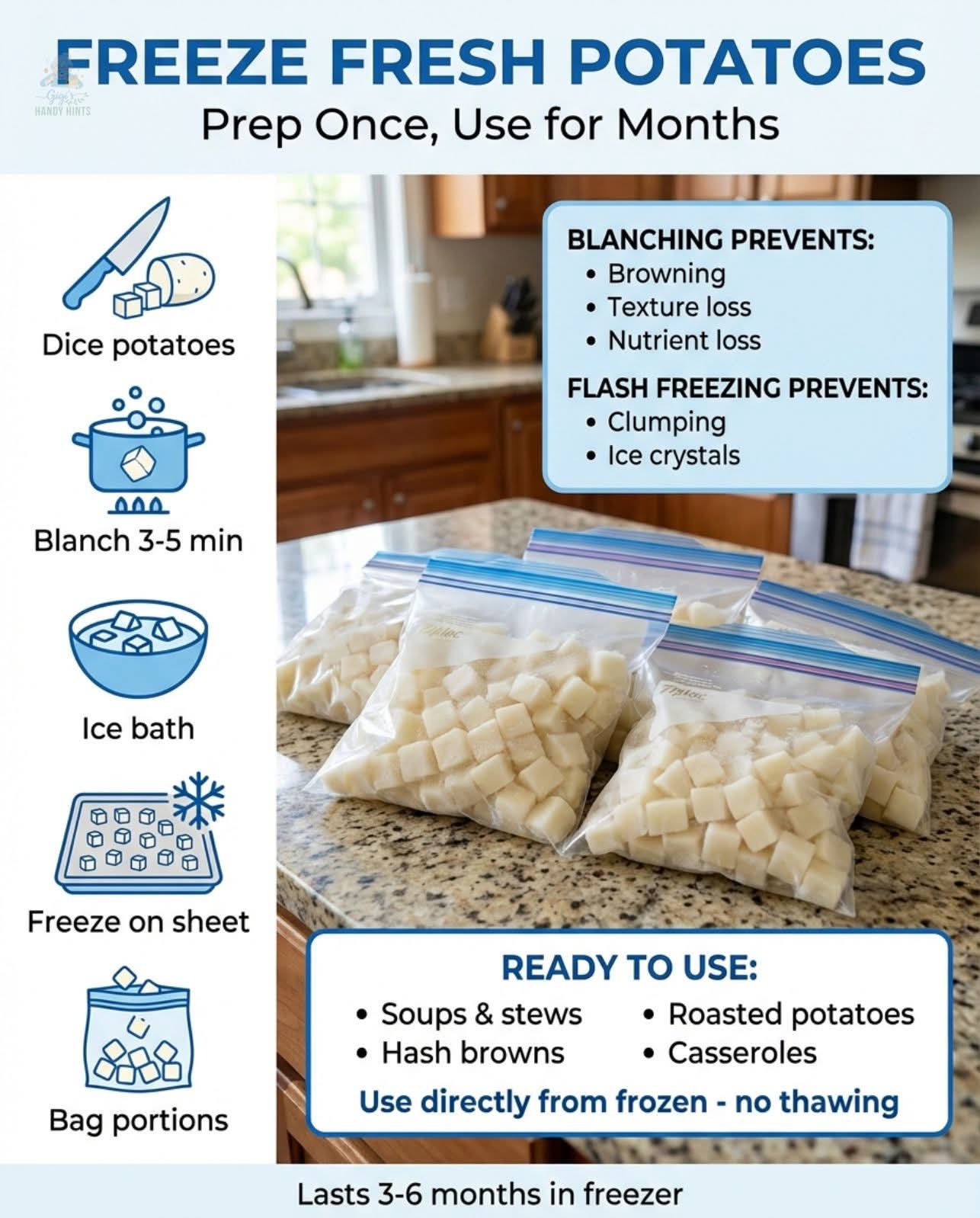
Here’s a fully fleshed-out, story-rich guide to preserving potatoes with your blanch-and-freeze method, with all the sections you asked for:
🥔 Perfectly Preserved Potatoes: Blanch & Freeze Method
Introduction
Potatoes are a kitchen staple loved worldwide for their versatility, affordability, and comforting flavor. From creamy mashed potatoes to crispy hash browns, they elevate countless dishes. Buying potatoes in bulk is economical, but the challenge is their tendency to sprout quickly. Luckily, blanching and freezing your potatoes locks in freshness, texture, and flavor for months, giving you ready-to-use ingredients that save both time and money.
This method is perfect for busy home cooks, meal preppers, and anyone who loves homemade dishes without daily prep. Plus, frozen potato cubes are incredibly convenient for soups, stews, casseroles, and skillet breakfasts.
Ingredients
- Fresh potatoes (Russets, Yukon Gold, or your favorite variety)
- Water
- Ice (for ice bath)
Optional: Salt for seasoning before freezing
Instructions & Methods
1. Preparation
- Wash potatoes thoroughly to remove dirt.
- Peel potatoes if desired (skins can be left on for a rustic texture).
- Dice potatoes into uniform 1/2-inch cubes for even cooking.
2. Blanching
- Bring a large pot of water to a rolling boil.
- Carefully add potato cubes and boil for 3-5 minutes, just until tender but not fully cooked.
- Immediately transfer potatoes to a large ice bath to halt cooking and preserve color and texture.
- Drain thoroughly and pat dry with a clean towel.
3. Freezing
- Line baking sheets with wax paper to prevent sticking.
- Spread potato cubes in a single layer, ensuring pieces don’t touch.
- Freeze for 2-3 hours until firm.
- Transfer frozen cubes to labeled freezer bags, remove excess air, and seal tightly.
4. Usage
- Use directly from frozen; no need to thaw.
- Perfect for soups, stews, casseroles, or making crisp hash browns.
- Cooking time is essentially the same as fresh potatoes, though slightly longer if baking or roasting.
History & Formation
Potatoes originated in the Andes region of South America, cultivated for thousands of years by indigenous peoples. Introduced to Europe in the 16th century, potatoes became a staple for their affordability and versatility. Over time, preservation techniques like drying, canning, and freezing evolved to prevent spoilage. Blanching before freezing is a modern method designed to deactivate enzymes that cause sprouting and browning, ensuring your potatoes remain ready-to-cook for months.
Conclusion
Blanching and freezing potatoes is a game-changer for home cooks. It transforms bulk purchases into a convenient, long-lasting ingredient that reduces waste and saves money. With frozen potato cubes at the ready, you can effortlessly elevate weeknight meals, prep for holidays, or create hearty dishes anytime.
Potato Lovers’ Notes
- Russet fans love the fluffy texture for mashing and baking.
- Yukon Gold enthusiasts appreciate creamy, buttery cubes perfect for soups and stews.
- For hash brown lovers, this method guarantees crispy, golden perfection without the wait.
Tips & Tricks
- Blanching time may vary slightly by potato type; firmer potatoes need 4-5 min, softer types 3-4 min.
- Spread cubes in a single layer for “flash freezing,” preventing clumps.
- Label freezer bags with the date to rotate stock effectively; potatoes last 3-6 months frozen.
💡 Cost Savings: Buying bulk potatoes at $0.25–$0.50/lb vs. $1–$2/lb for pre-frozen options is not only budget-friendly but also ensures better flavor and texture in your dishes.
If you want, I can also create a step-by-step illustrated “Potato Freezing Guide” that visually shows blanching, ice baths, and freezing layers—perfect for keeping on your fridge or phone for reference.
Do you want me to make that visual guide?