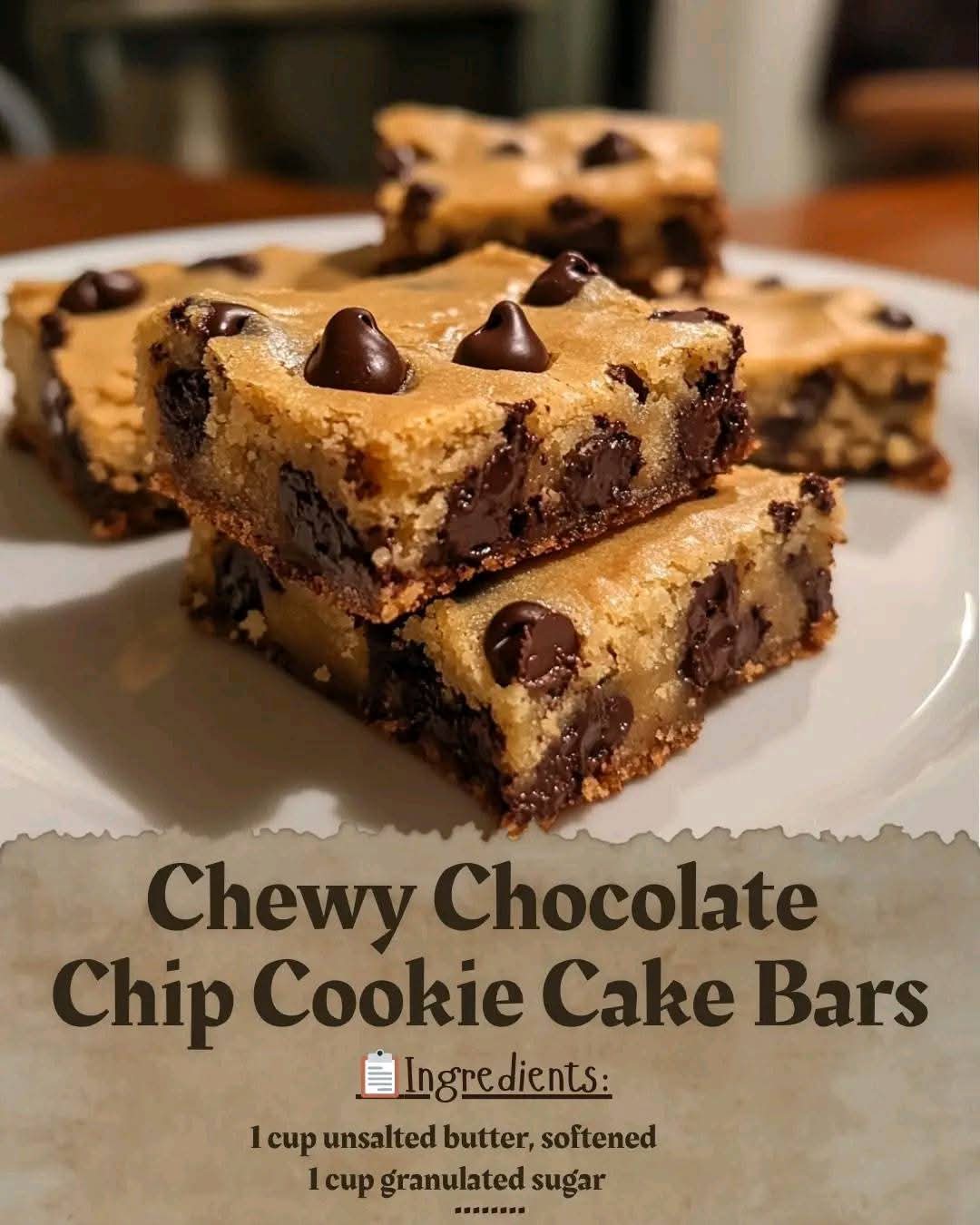
Here is a comprehensive, detailed guide to Chewy Chocolate Chip Cookie Cake Bars—structured exactly as you requested, with every section expanded into a complete narrative.
—
Chewy Chocolate Chip Cookie Cake Bars
Introduction
There is something magical about the intersection of a classic chocolate chip cookie and a celebratory cake. Chewy Chocolate Chip Cookie Cake Bars represent the best of both worlds: the nostalgic, buttery flavor of a homemade cookie combined with the satisfying density and shareable format of a bar dessert. Unlike delicate drop cookies that cool in minutes, these bars bake into a thick, golden slab with a crisp, crinkly top and an irresistibly soft, chewy center. Perfect for potlucks, birthday parties, or simply a Tuesday night indulgence, this recipe elevates the everyday cookie into a show-stopping treat. Every bite delivers pockets of melted chocolate suspended in a rich, brown sugar-infused dough that tastes exactly like love baked into permanence.
—
Ingredients
Yields one 9×13-inch pan; serves approximately 16-20 people
· 1 cup (2 sticks) unsalted butter, softened to room temperature
· 1 cup granulated sugar
· 1 cup packed light brown sugar
· 2 large eggs, at room temperature
· 1 tablespoon pure vanilla extract
· 2 ½ cups all-purpose flour
· 1 teaspoon baking soda
· 1 teaspoon salt (preferably kosher)
· 2 cups semi-sweet chocolate chips
· 1 cup chopped walnuts or pecans (optional, for texture)
· Flaky sea salt, for finishing (highly recommended)
—
Instructions (Formation & Methods)
Step 1: Preparation
Preheat your oven to 350°F (175°C). Line a 9×13-inch metal or glass baking pan with parchment paper, leaving overhang on the long sides to create “handles.” This will allow you to lift the entire slab out cleanly after baking. Lightly grease the parchment and exposed pan sides with non-stick spray.
Step 2: Cream the Butter and Sugars
In a large mixing bowl using a stand mixer fitted with the paddle attachment (or a hand mixer), cream the softened butter, granulated sugar, and brown sugar on medium-high speed for 2-3 minutes. The mixture should become pale, fluffy, and noticeably lighter in texture. This step is crucial—it dissolves the sugar and aerates the butter, forming the structural foundation for a chewy, non-greasy bar.
Step 3: Incorporate Wet Ingredients
Add the eggs, one at a time, beating well after each addition. Scrape down the sides and bottom of the bowl to ensure even mixing. Pour in the vanilla extract and mix until incorporated.
Step 4: Dry Ingredients
In a separate medium bowl, whisk together the flour, baking soda, and salt. Gradually add the dry mixture to the wet ingredients, mixing on low speed until just combined. Do not overmix—stop as soon as no white streaks of flour remain. Overworking the gluten will result in tough, cakey bars rather than the desired chewy texture.
Step 5: Fold in the Chocolate
Using a sturdy spatula, fold in the chocolate chips (and nuts, if using). Ensure they are evenly distributed throughout the thick, glossy dough.
Step 6: Press and Bake
Transfer the dough to the prepared pan. It will be thick; use lightly moistened fingers or an offset spatula to press it into an even, level layer. Bake for 25-30 minutes, or until the edges are deep golden brown and the center appears just set and slightly puffed. The top should look crackly and matte, not wet. A toothpick inserted in the center will come out with moist crumbs—not raw batter. This is the secret to chewiness: do not overbake.
Step 7: Cooling and Finishing
Place the pan on a wire rack and immediately sprinkle the hot surface with a pinch of flaky sea salt. Allow the bars to cool completely in the pan (about 1-2 hours). Cooling is essential; cutting them while warm will cause crumbling. Once cool, lift the parchment handles to remove the slab, place on a cutting board, and slice into squares or rectangles with a sharp chef’s knife.
—
History of the Chocolate Chip Cookie
The chocolate chip cookie was invented in 1938 by Ruth Graves Wakefield at the Toll House Inn in Whitman, Massachusetts. Originally, she intended to create a chocolate butter cookie by melting baker’s chocolate into the dough. Lacking the proper chocolate, she chopped up a semi-sweet Nestlé chocolate bar, expecting it to melt and disperse evenly. Instead, the chocolate retained its shape, and the “Toll House Cookie” was born. Nestlé later struck a deal with Wakefield, printing her recipe on their packaging in exchange for a lifetime supply of chocolate. The cookie cake bar is a modern evolution of this classic—a response to the need for portable, crowd-feeding desserts that retain the integrity of the original while maximizing surface area for that perfect edge-to-center ratio.
—
Benefits (Why Make This?)
· Psychological Comfort: The aroma of butter, vanilla, and chocolate baking is scientifically proven to evoke feelings of safety, nostalgia, and happiness.
· Ease and Efficiency: Bars eliminate the need for scooping individual cookies and multiple baking batches. One pan, one bake, done.
· Portability: Thick, sturdy bars travel well and do not crumble easily, making them ideal for bake sales, picnics, and gifts.
· Customizable: This base dough accepts endless variations—white chocolate, dark chocolate, peanut butter chips, dried fruit, or spices like cinnamon and espresso powder.
· Texture Perfection: The high ratio of brown sugar to granulated sugar, combined with melted butter in the creaming process, guarantees moisture retention and chewiness for days.
—
Nutrition (Approximate per bar, based on 20 servings)
· Calories: 320
· Fat: 16g
· · Saturated Fat: 10g
· Carbohydrates: 42g
· Sugar: 28g
· Protein: 4g
· Sodium: 210mg
· Fiber: 1.5g
Note: Nutritional values are estimates and will vary based on specific brands, nut additions, and exact portioning.
—
Lovers of the Cookie Cake Bar
This dessert is universally adored, but certain demographics hold it in especially high regard. College students appreciate the high yield and low effort. Parents love that one pan feeds a classroom of children without individual wrapping. Bakers respect the forgiving nature of the recipe and the guaranteed texture. Chocolate purists appreciate the unapologetic density of chocolate in every bite. The Chewy Chocolate Chip Cookie Cake Bar is the people’s champion—it asks for no special occasion and demands no refined skill. It is democracy on a dessert plate.
—
Conclusion
The Chewy Chocolate Chip Cookie Cake Bar is more than a recipe; it is a solution. It solves the problem of the cookie that disappears too quickly, the dessert that requires too much labor, and the treat that fails to satisfy a crowd. With a crisp edge, a soft heart, and a legacy rooted in American baking ingenuity, this bar stands as a testament to the beauty of simplicity. Whether served warm with a scoop of vanilla ice cream or packed into a lunchbox for the next day, it delivers pure, uncomplicated joy. Bake it once, and it will become your signature. Bake it twice, and it becomes tradition.