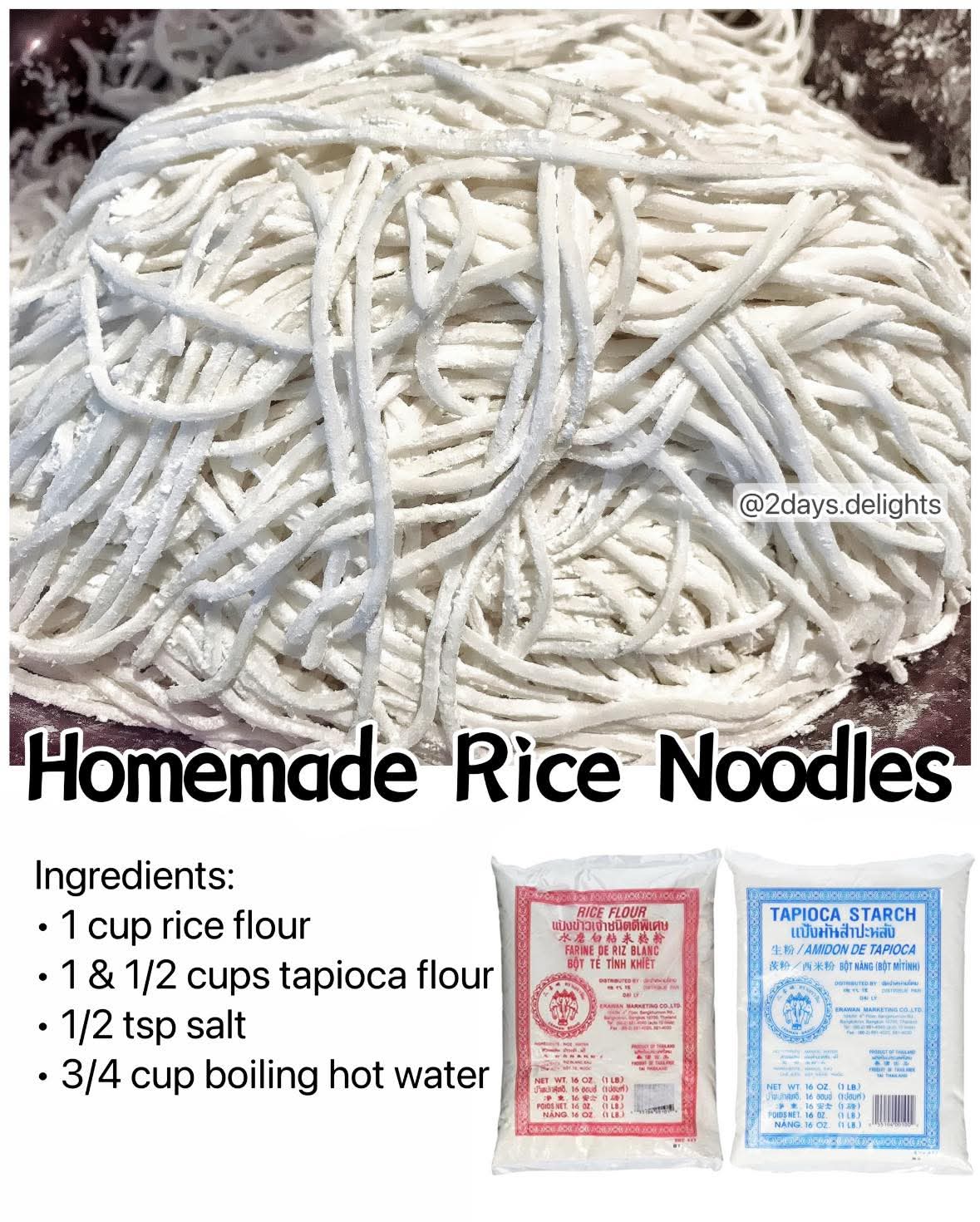
Absolutely! Let’s take your Soft & Chewy Rice Noodles recipe and turn it into a full, rich, story-filled culinary guide—with history, methods, tips, and love for the craft.
🍜 Soft & Chewy Rice Noodles: Handmade Asian Comfort
There’s something mesmerizing about handmade rice noodles. They’re soft, chewy, and have a delicate texture that store-bought noodles rarely match. Perfect for soups, stir-fries, or cold salads, these noodles are a testament to the art of simplicity—just a few ingredients, some hot water, and a little patience transform flour into a silky, delicious noodle.
Making your own noodles is not just about taste—it’s about connecting to tradition, experiencing the texture, and creating a dish that carries a touch of love in every bite.
📋 Ingredients (Yields ~2 servings)
- 120 g rice flour
- 180 g tapioca flour (for chewiness)
- 180 ml boiling hot water
- ½ tsp salt (optional, for flavor)
Optional toppings and additions for noodle lovers:
- Fresh herbs like cilantro or Thai basil
- Soy sauce, fish sauce, or chili oil for seasoning
- Protein: tofu, chicken, shrimp, or eggs
🍽️ Instructions & Methods
1. Mix the Flours
- In a large bowl, combine rice flour, tapioca flour, and salt.
- Slowly pour in the boiling water while stirring with a spoon or spatula.
- The hot water partially cooks the flour, giving the noodles elasticity and softness.
2. Knead into Dough
- Once the mixture cools slightly, knead it with your hands until smooth and pliable.
- The dough should be soft but not sticky; if too dry, add a splash of warm water; if too sticky, dust with a little rice flour.
3. Divide & Shape
- Divide the dough into smaller portions for easier handling.
- Roll each portion into a flat sheet, roughly 2–3 mm thick.
- Cut into strips of your preferred width: thin for pho-style noodles, wider for stir-fried dishes.
4. Cook the Noodles
- Bring a pot of water to a rolling boil.
- Drop in the noodles and cook for 2–3 minutes until they float and become translucent.
- Drain and rinse under cold water to stop cooking and prevent sticking.
5. Serve & Enjoy
- Add the noodles to your favorite soup, stir-fry, or salad.
- Garnish with herbs, sesame seeds, or sauces as desired.
🏛️ History & Formation
Rice noodles have a long tradition across Southeast Asia, particularly in Vietnam, Thailand, and Laos.
- Vietnamese Pho noodles: Made from rice flour, they are soft yet slightly chewy, perfect for soaking up aromatic broth.
- Thai Pad Thai noodles: Often made from rice flour and tapioca, giving them that signature springy texture.
The technique of using hot water to partially cook the flour comes from centuries-old methods of noodle making, allowing for elasticity without eggs. This method forms the foundation for countless noodle dishes enjoyed across Asia today.
💡 Tips & Methods for Noodle Lovers
- Chewiness control: More tapioca flour = chewier noodles; less = softer noodles.
- Prevent sticking: Lightly oil noodles if you plan to stir-fry instead of soup.
- Rolling tips: Dust your rolling surface with rice flour to prevent sticking.
- Storage: Fresh noodles can be refrigerated for a day or frozen for longer-term use.
❤️ Why Lovers Will Adore Handmade Rice Noodles
- Freshness: Nothing beats the texture and taste of noodles made from scratch.
- Customizable: Width, thickness, and chewiness can be adjusted to your preference.
- Versatile: Works in soups, stir-fries, salads, or even cold noodle dishes.
- Satisfying process: Kneading and shaping the dough connects you to a centuries-old culinary tradition.
🍴 Serving Suggestions
- Pho: Serve in a rich beef or chicken broth with fresh herbs, lime, and chili.
- Stir-fry: Toss with vegetables, soy sauce, garlic, and your choice of protein.
- Cold noodle salad: Mix with shredded veggies, sesame oil, and a touch of soy or fish sauce.
If you want, I can also create a step-by-step visual guide showing the kneading, rolling, cutting, and boiling process, so making these noodles at home is foolproof and fun.
Do you want me to do that next?