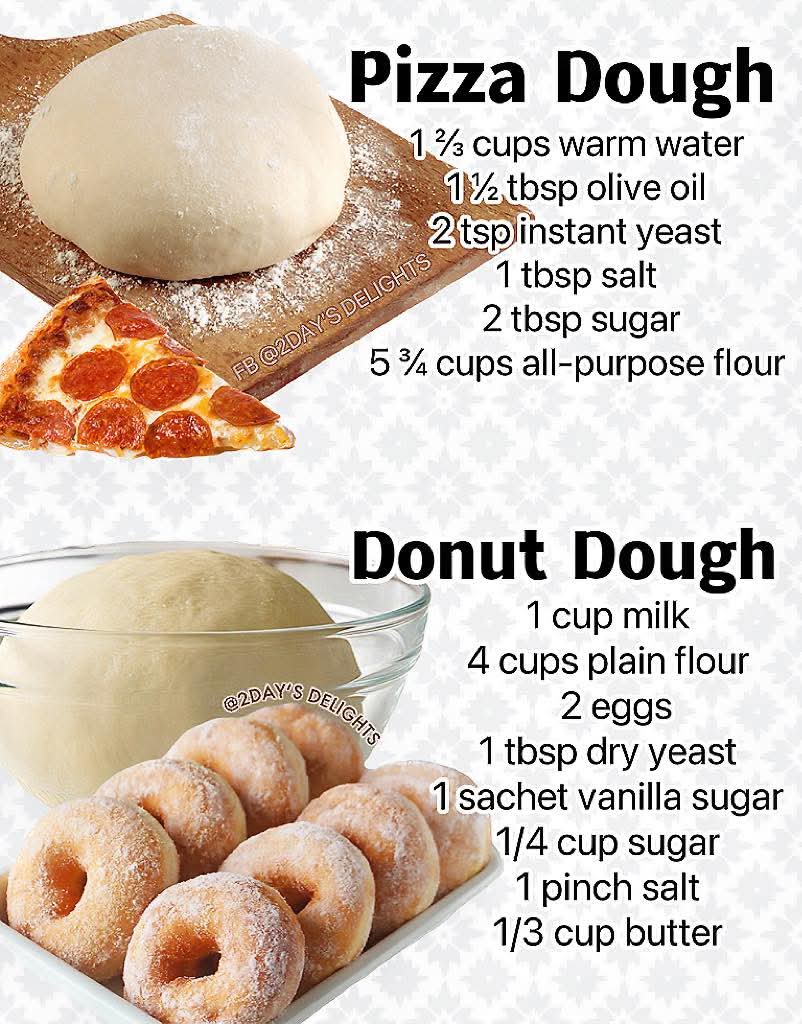
Absolutely! Let’s craft a comprehensive, rich, and story-filled recipe guide for both pizza and donuts, merging your details with history, methods, and even a nod to lovers of these treats. I’ll break it into sections for clarity.
Artisan Pizza & Donut Dough — From Oven to Heart
There’s something magical about dough. Flour, water, yeast, a touch of sugar and fat—ingredients that seem simple on paper, but when treated with care, transform into something comforting, indulgent, and unforgettable. Pizza and donuts are two of the most beloved dough creations, each with a rich history, a unique method, and a way of bringing people together. Whether you’re gathering family, delighting friends, or making a late-night treat just for yourself, understanding the dough is the first step to culinary magic.
Section 1: Classic Pizza Dough
History & Formation
Pizza traces its roots to Naples, Italy, where humble bakers created flatbreads topped with tomatoes and cheese. Over centuries, it evolved from a street food into a canvas for flavors worldwide. The key to perfect pizza lies in a dough that is both elastic and airy—a result of proper hydration, kneading, resting, and folding.
Ingredients
- 400 ml warm water (approx. 105°F / 40°C)
- 20 g extra virgin olive oil
- 7 g instant yeast
- 15 g salt
- 20 g granulated sugar
- 680 g all-purpose flour
Instructions
- Activate & Mix: In a large bowl, combine warm water, olive oil, yeast, salt, and sugar. Let sit 2–3 minutes until yeast begins to bloom. Gradually add flour, mixing until a sticky dough forms.
- Knead: Using wet hands, knead the dough for 8–10 minutes until smooth, elastic, and slightly tacky.
- First Rest: Cover the dough with a damp cloth or plastic wrap. Let it rest at room temperature for 30 minutes to allow gluten to relax.
- Folding: Using wet hands, fold the dough over itself 3–4 times to strengthen its structure and create air pockets.
- Second Rise: Shape into a ball, seam-side down, cover, and rest for 60 minutes until slightly puffed.
- Divide & Shape: Divide dough into 4 equal pieces (~280 g each). Form balls and place on a lightly oiled tray. Cover and rest 15 minutes.
- Shape Pizza: Flatten each ball, pressing outward to leave a ½-inch crust. Stretch to 10–12 inches in diameter.
- Top & Bake: Add your favorite sauce, cheese, and toppings. Bake in a preheated oven at 550°F (285°C) for 10–12 minutes or until crust is golden and crisp.
Methods
- Hydration: Proper water-to-flour ratio creates elasticity.
- Kneading: Develops gluten for a chewy texture.
- Folding: Traps air, giving a light, airy crumb.
- High-heat Baking: Mimics traditional pizza ovens for a crispy crust.
Conclusion
A pizza dough made with patience rewards you with a golden crust, soft interior, and endless topping possibilities. Each slice tells the story of time, temperature, and care.
Section 2: Fluffy Donut Dough
History & Formation
Donuts, in their modern ring form, became popular in the 19th and 20th centuries in America, but their origins trace to Dutch settlers’ fried “olykoeks.” A perfectly balanced yeast donut is soft, tender, and slightly sweet—a comforting indulgence that calls for attention to temperature, kneading, and proofing.
Ingredients
- 250 g milk (warm, ~37°C)
- 500 g plain flour
- 2 eggs
- 10 g dry yeast
- 1 sachet vanilla sugar (or 1 tsp vanilla extract)
- 50 g caster sugar
- 1 pinch salt
- 80 g unsalted butter (softened)
Instructions
- Activate Yeast: Mix warm milk, yeast, and 1 tsp sugar. Let sit 2 minutes until frothy.
- Mix Dough: Combine flour, sugar, salt, vanilla sugar, and eggs. Add milk mixture and knead for 5 minutes.
- Incorporate Butter: Gradually knead in softened butter, piece by piece, for another 5 minutes. Dough should be smooth and elastic.
- First Rise: Place dough in an oiled bowl, cover, and rest until doubled in size (60–90 min).
- Shape Donuts: On a floured surface, divide dough into 12 balls. Flatten slightly (2 cm thick). Cut centers with a cookie cutter to form rings. Place on parchment paper and rest 30 minutes.
- Fry: Heat oil to 175°C (350°F). Fry donuts until golden brown on both sides. Drain on paper towels.
- Finish: Coat in sugar or glaze while still warm.
Methods
- Yeast Activation: Ensures light, airy donuts.
- Kneading with Butter: Creates tender, rich texture.
- Proofing: Dough must rise for soft, fluffy interiors.
- Frying: Hot oil seals the exterior, keeping the inside soft.
Conclusion
A homemade donut is a labor of love: delicate, golden, and slightly sweet. It’s the kind of treat that invites smiles, shared over coffee or tea, bringing warmth to any morning or afternoon.
For Lovers of Dough
Whether pizza or donuts, the method is a meditation, a form of connection. Lovers of dough know the joy of folding, kneading, and waiting for the perfect rise. They know that patience is flavor, that attention is texture, and that love is best served warm.
- Pizza Lovers: Savor each slice, layer flavors carefully, and fold each bite with friends.
- Donut Lovers: Dip, glaze, or fill, and share generously. A donut is best enjoyed with laughter and a hot cup of your favorite drink.
Would you like me to combine these into one ultra-detailed “dough lovers’ guide” PDF-style recipe with tips, tricks, and visuals for folding, shaping, and proofing? It would be perfect as a keepsake or gift for dough enthusiasts.