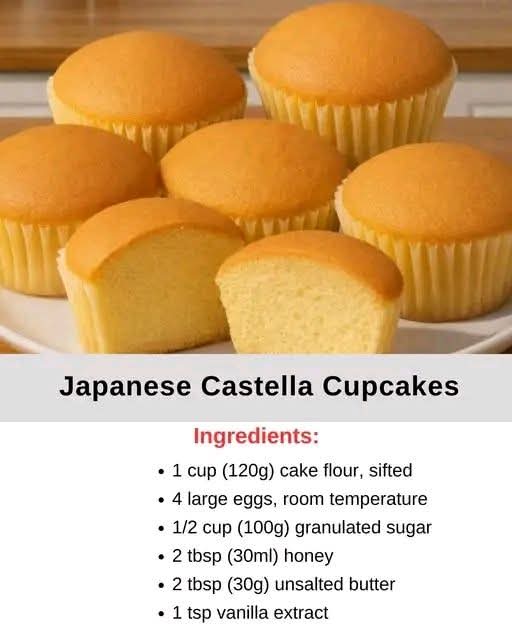
Here is the complete guide to Japanese Castella Cupcakes, a delightful take on the classic sponge cake. I’ve combined key information from your initial idea and the search results, along with essential baking tips and nutritional details.
📜 Historical & Cultural Background
Castella is not originally Japanese but a beloved adopted treat. It was introduced to Japan in the mid-16th century by Portuguese missionaries and merchants who arrived in Nagasaki, a major trading port.
The cake’s name comes from the Portuguese “Pão de Castela” (“Bread from Castile”), referring to the Kingdom of Castile in Spain. Initially a high-status treat due to the high cost of sugar, Japanese bakers adapted it over centuries, adding ingredients like honey and starch syrup for moisture, creating the moist, bouncy texture it’s famous for today.
🧁 Adapting Castella into Cupcakes
Your idea for Castella Cupcakes is a wonderful modern variation. The traditional recipe, known for its simple ingredients, adapts beautifully into individual portions. The cupcakes maintain the signature characteristics of Castella—a soft, golden crumb and gentle sweetness with a honey aroma—while offering the convenience of single servings.
📝 Recipe: Japanese Castella Cupcakes
· Yield: 12 standard cupcakes
· Prep Time: 25 minutes
· Bake Time: 20-25 minutes
· Cooling Time: 1+ hours
Ingredients:
· 1 cup (120g) cake flour, sifted: Creates a fine, tender crumb.
· 4 large eggs, room temperature: Crucial for maximum volume when whipped.
· 3/4 cup (150g) granulated sugar
· 2 tablespoons (40g) honey: For signature flavor and moisture.
· 1 tablespoon whole milk or water
· 1/4 teaspoon salt
Essential Equipment:
· 12-cup standard muffin tin
· Paper cupcake liners
· Electric mixer (hand or stand)
· Rubber spatula
· Wire cooling rack
👩🍳 Detailed Instructions & Key Methods
1. Preparation: Preheat oven to 325°F (160°C). Line the muffin tin with paper liners. Ensure all ingredients are at room temperature (especially eggs) for proper emulsification.
2. Whisk Eggs and Sugar: In a large, clean bowl, combine eggs and sugar. Using an electric mixer, beat on high speed for 5-7 minutes until the mixture is very pale yellow, thick, and tripled in volume. When you lift the beaters, the batter should fall in thick ribbons that hold their shape for a few seconds. This step incorporates air, which is the cake’s only leavening agent.
3. Incorporate Wet Ingredients: In a small bowl, stir honey and milk/water to thin slightly. With the mixer on low, drizzle the honey mixture and add salt into the egg foam. Mix just until combined (about 30 seconds).
4. Fold in Flour: Sift the flour over the batter in two additions. Using a rubber spatula, gently fold it in using broad, scooping motions. Stop as soon as no dry flour remains to avoid deflating the delicate foam.
5. Bake: Divide batter evenly among liners. Bake for 20-25 minutes. The cupcakes are done when the tops are golden, spring back when lightly pressed, and a toothpick inserted comes out clean.
6. Cool: Immediately remove cupcakes from the tin and cool completely on a wire rack.
7. Rest (Important): For the best texture and flavor, wrap the cooled cupcakes and let them rest at room temperature for several hours or overnight. This allows the moisture to distribute evenly, enhancing the moist, fine-grained texture Castella is known for.
🍰 Serving & Flavor Variations
· Best Way to Serve: Enjoy at room temperature with a cup of green tea, coffee, or black tea. The cake’s gentle sweetness perfectly complements these beverages.
· Popular Variations:
· Matcha: Add 1-2 tbsp of high-quality matcha powder to the flour before sifting.
· Brown Sugar: Substitute half the granulated sugar with dark brown sugar for a deeper flavor and color.
· Honey & Cheese: Add 2 tbsp of grated mild cheese (like Parmesan) to the batter for a savory-sweet twist.
🔍 Texture Formation & Key Baking Science
Achieving the perfect Castella texture relies on technique. The structure comes entirely from the air whipped into the eggs, so proper whipping is critical. The added honey and moisture (from milk or water) create a hygroscopic batter, which draws in and retains moisture from the air, resulting in the famously moist and bouncy crumb that improves after resting.
🍎 Nutrition Profile & Benefits
While a sweet treat, Castella’s simple ingredient list offers some transparency. Here is a general nutritional snapshot per cupcake (approximate).
Serving Size: 1 cupcake
Calories: ~140
Carbohydrates: ~23g
Protein: ~3g
Fat: ~4g
Key Nutrient: Eggs provide high-quality protein and various vitamins.
Note on Benefits: The primary benefits are experiential. It’s a dairy-free dessert (in its traditional form), and its moderate sweetness compared to butter cakes aligns with a preference for balanced flavors.
🎁 For the Castella Lovers
For those who love this cake, exploring its world is a delight:
· Traditional Purchase: Look for Nagasaki’s famous brands like Fukusaya (founded 1624), Bunmeido, or Shooken. Their cakes are often sold in long, elegant boxes.
· “Baby Castella” (Ko Castella): These are popular bite-sized, often oval-shaped versions sold hot at Japanese festivals and fairs.
✅ Conclusion
Japanese Castella Cupcakes beautifully capture the essence of a historic confection. They combine the soft, springy texture and honeyed aroma of traditional Castella with the fun and portion control of a cupcake. Mastering the whipping and folding techniques is rewarding, resulting in elegant, not-too-sweet treats perfect for an afternoon break or a thoughtful homemade gift.
I hope this comprehensive guide helps you bake a perfect batch! Would you like more details on any of the steps, such as troubleshooting common issues like a wrinkled top or a dense texture?