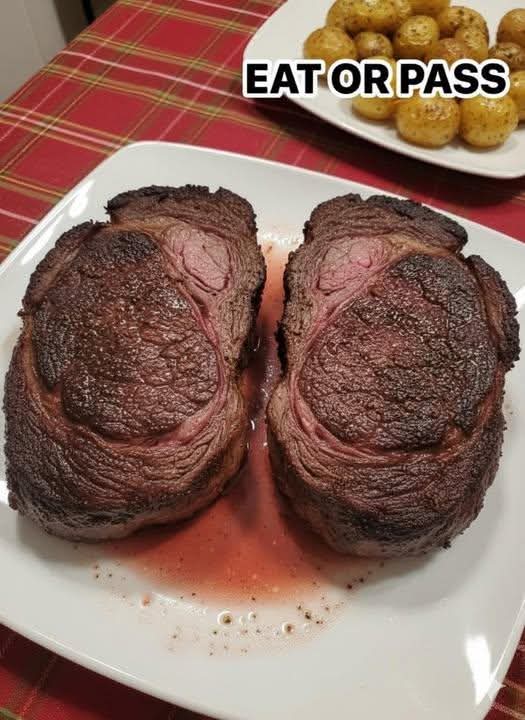
Alright, let’s turn your prime rib into a full, grand, steakhouse-style masterpiece 🥩🔥
Big, rich, and beautifully structured—just how you like it.
🥩 Prime Rib / Roast Beef (Rare to Medium-Rare)
Juicy • Buttery • Classic • Celebration-Worthy
🌟 Introduction
Prime rib—also known as standing rib roast—is the crown jewel of roast beef. It’s the kind of dish that stops conversation at the table, fills the kitchen with mouthwatering aromas, and turns any meal into an occasion. With a deeply browned crust and a tender, rosy center, this roast is all about respecting good meat and letting simple flavors shine.
Whether served for holidays, family gatherings, or a special weekend indulgence, prime rib is timeless, indulgent, and deeply satisfying.
🧾 Ingredients
- 1 prime rib or roast beef (3–6 lbs)
- 3–4 cloves garlic, minced
- 2 tbsp olive oil
- 2 tsp kosher salt
- 1 tsp freshly ground black pepper
- 1 tsp dried rosemary or thyme
- Optional: butter for basting
👨🍳 Instructions
- Bring to Room Temperature
Remove the roast from the refrigerator and let it sit at room temperature for 1 hour. This ensures even cooking. - Preheat the Oven
Preheat oven to 450°F (230°C). - Prepare the Seasoning Paste
In a small bowl, mix garlic, olive oil, salt, pepper, and herbs into a thick paste. - Season the Roast
Pat the roast dry. Rub the seasoning paste generously over all sides. - Position for Roasting
Place the roast fat side up on a rack set inside a roasting pan. - High-Heat Sear
Roast at 450°F (230°C) for 15 minutes to form a beautiful crust. - Slow Roast to Perfection
Reduce oven temperature to 325°F (160°C) and continue cooking until:- Rare: remove at 120°F (49°C)
- Medium-Rare: remove at 130°F (54°C)
- Rest the Meat
Tent loosely with foil and rest for 20 minutes. The temperature will rise slightly and juices will redistribute. - Slice & Serve
Slice against the grain and serve with pan drippings or au jus.
🔥 Cooking Method Explained
This recipe uses the reverse heat technique:
- High heat first locks in flavor and creates a crust
- Lower heat afterward cooks the interior gently and evenly
This method prevents overcooking while keeping the roast juicy from edge to center.
📜 A Brief History of Prime Rib
Prime rib has roots in traditional British roasts, where large cuts of beef were slow-roasted for Sunday dinners. In the U.S., it became a staple of classic steakhouses in the 19th and 20th centuries, prized for its marbling, tenderness, and dramatic presentation.
Despite the name, “prime rib” doesn’t require USDA Prime grade—it refers to the cut itself, taken from the rib section where flavor and tenderness meet.
🧬 Formation & Flavor Science
- Fat Cap: Melts during roasting, basting the meat naturally
- Garlic & Herbs: Infuse aroma without overpowering the beef
- Resting Period: Allows muscle fibers to relax and reabsorb juices
- Carryover Cooking: Internal temperature rises after removal, finishing the roast gently
This balance is what gives prime rib its signature buttery texture.
❤️ Why Meat Lovers Adore This Roast
- Deep beefy flavor with minimal seasoning
- Juicy, tender slices every time
- Elegant yet surprisingly simple
- Feels luxurious without being fussy
- Pairs beautifully with classic sides
This is the roast that makes people ask for seconds—and the recipe.
🧈 Serving Methods Meat Lovers Swear By
- Spoon buttery garlic drippings over each slice
- Serve with au jus or horseradish sauce
- Pair with mashed potatoes, Yorkshire pudding, or roasted vegetables
- Finish with flaky salt for extra depth
🌟 Conclusion
Prime rib is more than just a roast—it’s a tradition, a centerpiece, and a celebration of great ingredients done right. With a crisp crust, tender interior, and rich natural juices, this recipe delivers steakhouse results at home with confidence and ease.
If you master one special-occasion dish in your kitchen, let this be the one 🥩✨
If you want, I can also give you:
- Au jus from pan drippings
- Garlic butter crust upgrade
- Prime rib timing chart by weight
- Oven + air fryer combo method
Just say the word 👌