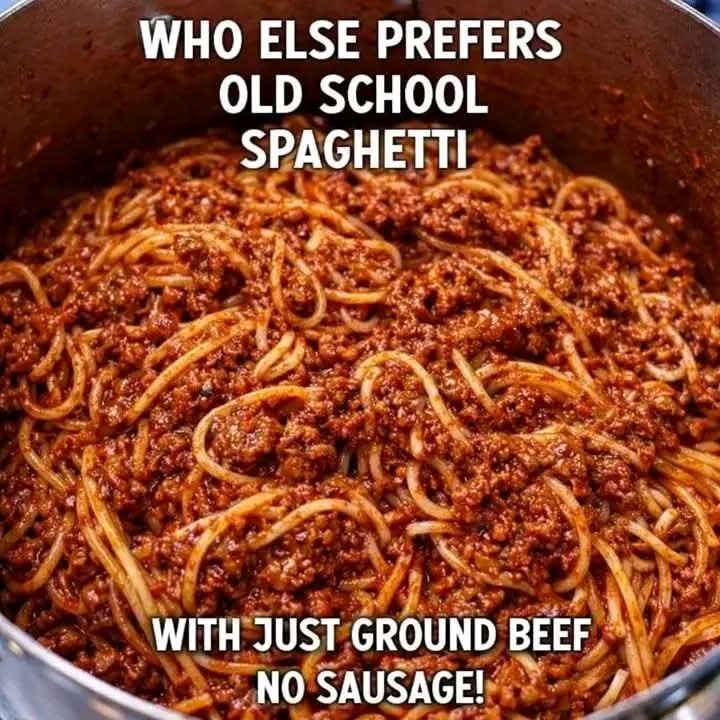
Old-School Spaghetti: A Timeless Comfort Food Journey
Introduction
There’s a reason old-school spaghetti has graced family dinner tables for generations. It’s more than just a meal; it’s a warm embrace, a taste of childhood, and a testament to the power of simple, hearty ingredients coming together in perfect harmony. This isn’t about fancy, slow-simmered Sunday gravy (though that has its place), but the quick, satisfying, and deeply flavorful weeknight spaghetti that many of us grew up loving. It’s a recipe built on memory, convenience, and undeniable deliciousness.
—
A Brief History: From Italy to the American Dinner Table
While pasta hails from Italy, the specific dish of “old-school spaghetti” with ground beef and a tomato-based sauce is largely an Italian-American creation. It emerged in the early to mid-20th century as Italian immigrants adapted their culinary traditions to New World ingredients and faster-paced lifestyles. Canned tomatoes and affordable ground beef became staples, leading to the robust, meaty, and generously portioned dish that became a cornerstone of American home cooking and classic “red sauce” joints.
—
Ingredients
· 12 oz (340g) dried spaghetti
· 1 lb (450g) ground beef (80/20 blend for best flavor)
· 1 small onion, finely chopped
· 3 cloves garlic, minced
· 1 (28 oz) can crushed tomatoes
· 1 (6 oz) can tomato paste
· 2 cups water or beef broth
· 2 tablespoons olive oil
· 2 teaspoons dried oregano
· 1 teaspoon dried basil
· 1 bay leaf
· 1 teaspoon sugar (to balance acidity)
· Salt and freshly ground black pepper, to taste
· For Serving:
· Freshly grated Parmesan or Pecorino Romano cheese
· Chopped fresh parsley or basil
· Garlic bread or a simple green salad
—
Instructions & Methods
Method 1: The All-In-One Pot (Efficient & Flavorful)
1. Brown the Beef: In a large pot or Dutch oven, heat the olive oil over medium-high heat. Add the ground beef, breaking it up with a spoon. Cook until no longer pink. Drain excess fat if desired, leaving about 1 tablespoon for flavor.
2. Sauté Aromatics: Add the chopped onion to the beef and cook for 4-5 minutes until softened. Add the minced garlic and cook for 1 more minute until fragrant.
3. Build the Sauce: Stir in the tomato paste and cook for 1-2 minutes to deepen its flavor. Add the crushed tomatoes, water or broth, oregano, basil, bay leaf, sugar, salt, and pepper. Stir well to combine.
4. Simmer: Bring the sauce to a boil, then reduce heat to low. Cover and let it simmer for at least 20-25 minutes, stirring occasionally. The sauce will thicken and the flavors will meld.
5. Cook Pasta: While the sauce simmers, cook the spaghetti in a large pot of generously salted boiling water according to package directions until al dente. Reserve 1 cup of pasta water before draining.
6. Combine: Add the drained spaghetti directly to the pot with the sauce. Toss to combine thoroughly, adding a splash of reserved pasta water if needed to help the sauce cling to the noodles.
7. Serve: Discard the bay leaf. Serve immediately, topped with plenty of grated cheese and fresh herbs.
Method 2: The Traditional Toss (For Sauce Purists)
This method keeps the sauce and pasta separate until plating. Follow steps 1-4 above to make the sauce. Cook and drain the pasta separately. To serve, plate a mound of spaghetti and ladle the hot meat sauce over the top. This is the classic “diner-style” presentation many lovers of the dish remember.
—
Nutritional Information (Per Serving, serves 4-6)
· Calories: ~550-650
· Protein: 30-35g (Excellent source from beef and pasta)
· Carbohydrates: 70-80g (Energy-providing complex carbs from pasta)
· Fat: 15-20g
· Key Nutrients: Lycopene (from tomatoes), Iron, B-Vitamins, Fiber.
· Note: This is a hearty, balanced meal. You can increase the vegetable content by adding diced bell peppers, mushrooms, or shredded carrots to the sauce with the onions.
—
Benefits: Why We Keep Coming Back
· Comfort & Nostalgia: It triggers positive memories and provides emotional satisfaction.
· Accessible & Affordable: Made with simple, pantry-staple ingredients.
· Feeds a Crowd: Easily scaled up to feed a family or group.
· Balanced Meal: Contains protein, carbs, and vegetables all in one dish.
· Versatile Base: The recipe is a canvas—add herbs, red pepper flakes, or different vegetables to suit your taste.
—
For the Lovers of Old-School Spaghetti
This dish is for the purist who believes in the holy trinity of beef, tomato, and pasta. It’s for those who:
· Crave the classic texture of tender spaghetti coated in a thick, meaty—not overly chunky—sauce.
· Remember the ritual of twisting spaghetti onto a fork against a large spoon.
· Appreciate the final sprinkle of cheese that melts into the hot sauce.
· Believe the best bites are the ones from the edges of the plate, where the sauce pools.
It’s a dish less about culinary precision and more about heart, making it a lifelong favorite for millions.
—
Conclusion
Old-school spaghetti is a culinary icon for a reason. It proves that profound satisfaction doesn’t require complex techniques or exotic ingredients. It’s a celebration of simplicity, a pillar of weeknight cooking, and a dish that continues to connect us to our past while filling our bellies in the present. So, put on a pot of water, brown that beef, and let the unforgettable aroma fill your kitchen. In less than an hour, you’ll have a timeless, comforting feast that feels like home. Now, that’s amore.