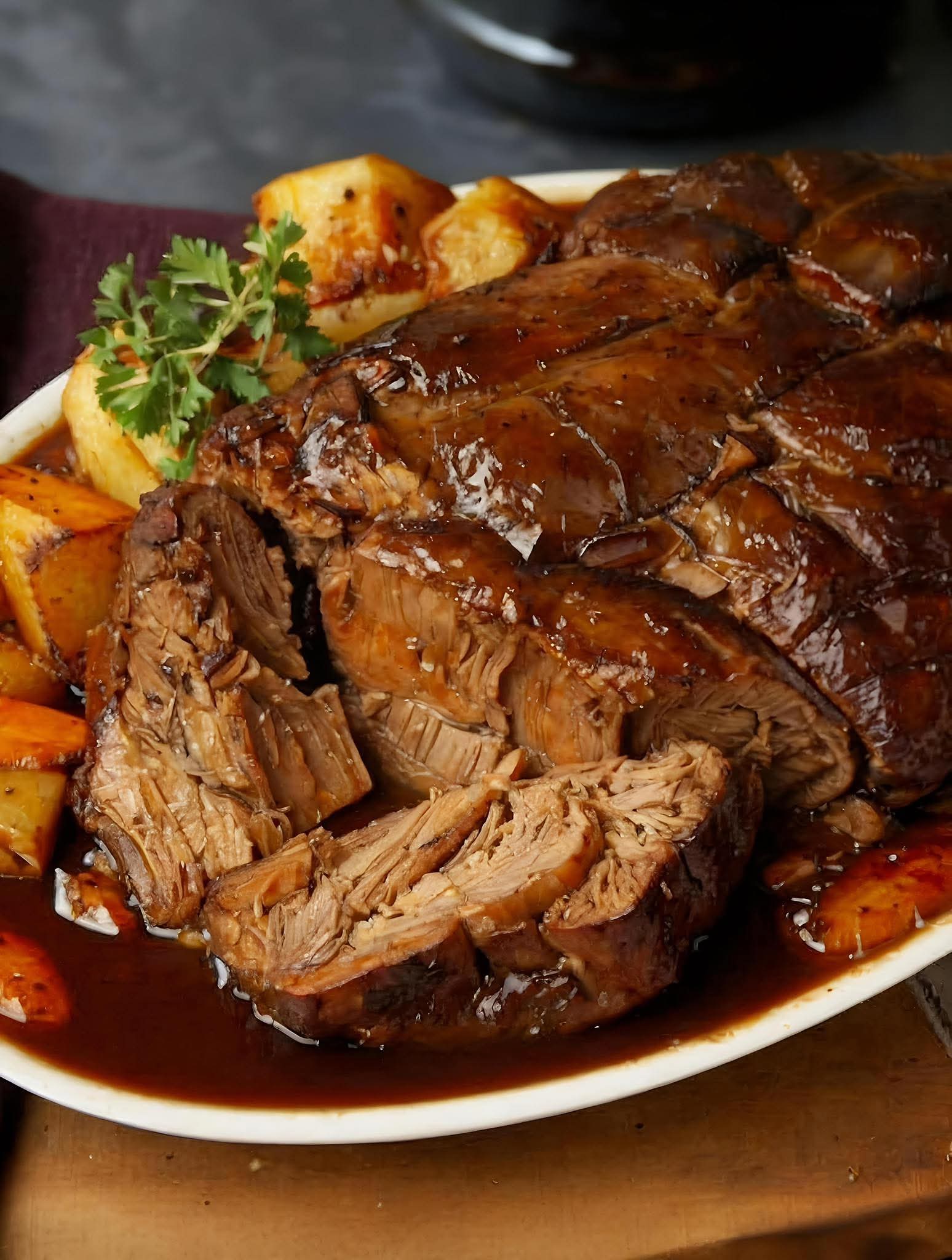
🍖 The Ultimate Sunday Beef Roast: A Family Feast Reborn 🍖
📜 Introduction
For years, I struggled with dry, tough beef roasts that disappointed at the family table. Then I discovered the low-and-slow reverse sear method—a game-changer that transformed my Sunday dinners. This technique delivers a perfectly pink, juicy interior with a glorious crust every single time. Now, my family genuinely anticipates Sunday dinners, and the aroma alone brings everyone to the table. This isn’t just a recipe—it’s a revival of the traditional roast with modern science backing every step.
🧾 Ingredients
For the Roast:
· 1 (4-5 lb) beef roast (ribeye, top loin, or sirloin work best)
· 3 tbsp coarse sea salt
· 2 tbsp freshly cracked black pepper
· 4 cloves garlic, minced
· 2 tbsp fresh rosemary, finely chopped
· 2 tbsp fresh thyme leaves
· 3 tbsp olive oil
· 1 tbsp smoked paprika (optional for extra depth)
For the Pan Vegetables:
· 1 lb baby potatoes, halved
· 4 large carrots, cut into 2-inch chunks
· 2 onions, quartered
· 4 stalks celery, chopped
· 6 cloves garlic, whole
· 3 tbsp olive oil
· Salt and pepper to taste
For the Red Wine Jus:
· 2 cups beef broth
· 1 cup red wine (Cabernet or Merlot)
· 2 tbsp all-purpose flour
· 2 tbsp butter
· 1 sprig fresh rosemary
🕰 Historical Context
The Sunday roast is a tradition dating back to medieval England, when families would attend church on Sunday mornings then return home to a meal cooking slowly in the oven. The practice was reinforced during the Industrial Revolution when households with domestic help would give servants Sunday afternoon off after preparing a morning roast. What began as practical necessity evolved into a cherished weekly ritual celebrating family, gratitude, and culinary craftsmanship.
👩🍳 Method & Instructions
Step 1: Preparation (Saturday Night)
1. Pat the beef roast completely dry with paper towels.
2. Mix salt, pepper, minced garlic, rosemary, thyme, and olive oil into a paste.
3. Rub this mixture thoroughly over the entire surface of the roast.
4. Place the roast on a wire rack over a baking sheet, uncovered, in the refrigerator overnight. This dry-brine step is crucial for flavor penetration and crust formation.
Step 2: Reverse Sear (Sunday, 3 Hours Before Serving)
1. Remove roast from refrigerator 1 hour before cooking.
2. Preheat oven to 250°F (120°C).
3. Place roast on wire rack in middle of oven. Insert meat thermometer into thickest part.
4. Cook until internal temperature reaches 120°F (49°C) for rare or 130°F (54°C) for medium-rare (approximately 2-2.5 hours).
5. Trick Alert: This low-temperature cooking allows proteins to denature gradually without squeezing out moisture.
Step 3: Vegetable Preparation
1. Toss all vegetables with olive oil, salt, and pepper.
2. Spread in a single layer on a baking sheet.
3. Roast at 400°F (200°C) during the final 45 minutes of the beef’s cooking time.
Step 4: The Sear (The Magic Moment)
1. Remove roast from oven once it reaches target temperature.
2. Increase oven temperature to 500°F (260°C) or heat a cast-iron skillet on high stovetop.
3. Sear the roast for 2-3 minutes per side until a dark, crisp crust forms.
4. Resting is non-negotiable: Tent with foil and let rest 20-30 minutes before carving.
Step 5: Jus Preparation
1. While roast rests, melt butter in saucepan over medium heat.
2. Whisk in flour and cook for 2 minutes until nutty brown.
3. Deglaze with red wine, scraping up any browned bits.
4. Add beef broth and rosemary sprig, simmer until reduced by one-third.
5. Strain and season to taste.
🧪 The Science Behind the Method
The reverse sear works because:
1. Low temperature allows collagen to convert to gelatin without surpassing the protein’s shrinkage temperature
2. Even cooking from edge to center eliminates the “gray band” of overcooked meat
3. Drying the surface during slow roast enables superior Maillard reaction during searing
4. Extended resting allows proteins to reabsorb juices that would otherwise run out when sliced
📊 Nutritional Information (Per 6oz Serving)
· Calories: 420
· Protein: 45g
· Fat: 24g (Saturated: 9g)
· Iron: 4.5mg (25% RDA)
· Zinc: 8mg (70% RDA)
· Vitamin B12: 3.5mcg (145% RDA)
Note: Beef provides heme iron (more absorbable than plant sources) and complete protein with all essential amino acids.
💖 For the Lovers of Good Food
This recipe isn’t just about sustenance—it’s about connection. The reverse sear method gives you:
· Confidence through temperature-guided cooking
· Flexibility with precise timing for gatherings
· Theater with a dramatic final sear at the table
· Consistency that turns novice cooks into family legends
Pairing suggestions:
· Wine lovers: Cabernet Sauvignon or Malbec
· Beer enthusiasts: Porter or Brown Ale
· Non-alcoholic: Sparkling grape juice with a rosemary sprig
🌟 Benefits Beyond Taste
1. Family bonding: The anticipation builds over hours, creating shared experience
2. Meal prep advantage: Leftovers make excellent sandwiches, salads, or beef bowls
3. Economic efficiency: Larger cuts often cost less per pound
4. Skill development: Mastering this technique builds fundamental cooking confidence
🎉 Conclusion
This reverse-sear beef roast method rescued my Sunday traditions and can transform yours too. It bridges centuries-old tradition with food science, delivering consistently spectacular results that will have your family gathering in the kitchen, drawn by aromas and anticipation. The prolonged cooking time becomes part of the ritual—a slow unfolding of flavor that mirrors the unfolding of a relaxed Sunday together.
The true magic isn’t just in the perfect pink interior or the crackling crust—it’s in the gathered family, the shared anticipation, and the satisfied silence that falls when everyone takes that first bite. That moment, after nearly giving up on roast beef forever, is why I now cherish every Sunday at the stove.
“A successful roast is measured not by the precision of its cook, but by the emptiness of the platter.”
—
Share your #SundayRoastRevival stories and photos! Did this method transform your family dinners? What variations have you tried? The community of roast lovers grows with every shared tip and triumph! 🔥🍽️