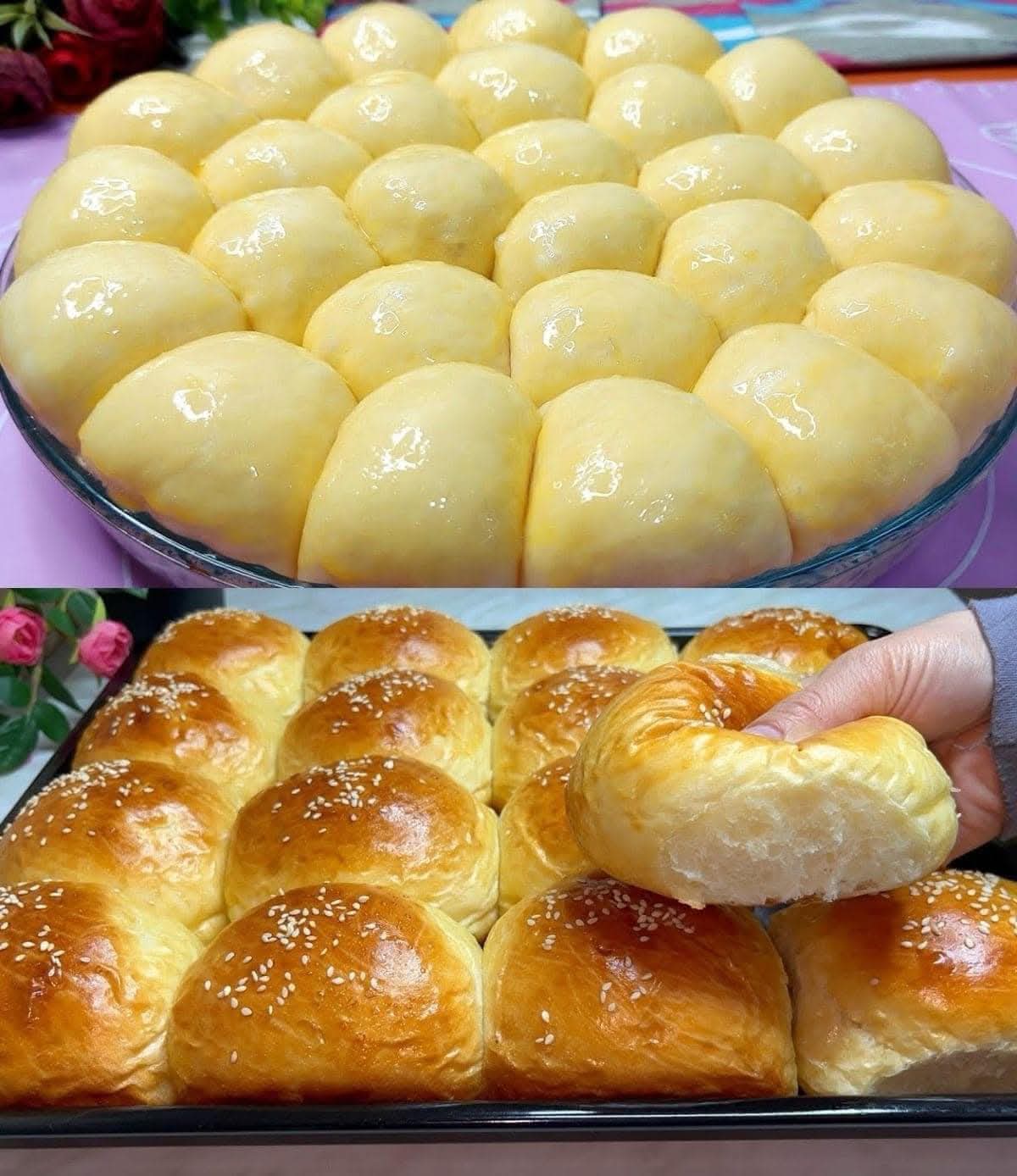
Of course! Here is a comprehensive, detailed recipe and guide for Milk Brioche Rolls, crafted in the style you requested.
—
A Comprehensive Guide to Milk Brioche Rolls: The Buttery Pillars of Baking
Introduction
Milk Brioche Rolls are more than just bread;they are the epitome of culinary alchemy where humble ingredients—flour, eggs, butter, and milk—are transformed into something transcendent. With a crust that gleams like a polished amber shell and an interior as soft, tender, and golden as a cloud at sunrise, these rolls represent the pinnacle of enriched dough baking. This guide will not only walk you through the meticulous process of creating them but will also immerse you in their history, benefits, and the sheer joy they bring to both baker and eater. Mastering brioche is a rite of passage for any serious home baker.
—
Ingredients
· All-Purpose Flour: 4 cups (500g), plus extra for dusting.
· Granulated Sugar: ⅓ cup (67g).
· Fine Sea Salt: 2 teaspoons (12g).
· Active Dry Yeast: 2 ¼ teaspoons (1 packet, 7g).
· Whole Milk: 1 cup (240ml), heated to 110°F (43°C).
· Unsalted Butter: 1 cup (2 sticks, 226g), softened to room temperature, plus extra for greasing.
· Large Eggs: 4 total.
· 3 eggs, at room temperature, for the dough.
· 1 egg, for the egg wash.
· Optional Topping: Pearl sugar or coarse sea salt for sprinkling.
—
Historical Context
Brioche’s origins are deeply rooted in French culinary tradition, dating back to at least the 15th century. Its name is derived from the Old French verb brier, a form of broyer, meaning “to work the dough with a broye (a type of roller).” Historically, the high butter and egg content made it a luxury item, famously (though perhaps apocryphally) associated with the opulent court of Marie Antoinette. The phrase “Let them eat brioche” is a mistranslation that has forever linked the bread to royal extravagance. Today, it is beloved worldwide in forms ranging from the classic brioche à tête (with a top knot) to loaves, rolls, and as the base for decadent French toast and bread puddings.
—
Nutritional Profile & Benefits
As an enriched dough, brioche is an energy-dense food.
· Macronutrients: Provides carbohydrates from flour, protein from eggs and milk, and fats from butter and egg yolks.
· Source of: Choline and vitamins A, D, E from the eggs and butter; calcium and protein from the milk; B-vitamins from the flour.
· Mindful Enjoyment: While not an everyday health food, its richness promotes satisfaction and mindful eating. The process of making it from scratch is an active, rewarding endeavor that connects you to centuries of baking tradition—a benefit for the mind and soul.
—
Equipment & Formation
· Equipment: Stand mixer with dough hook attachment (highly recommended), large bowl, plastic wrap, kitchen scale (for accuracy), baking sheet, parchment paper, pastry brush.
· Formation (Shaping): For classic rolls, portion the dough into 12-16 equal pieces (about 85-100g each). On an unfloured surface, cup your hand around a piece and roll it in a tight circular motion until the top is smooth and round. Place them seam-side down, evenly spaced, on a prepared baking sheet. For a brioche à tête, use fluted brioche molds and shape with a large ball and a smaller topknot.
—
Step-by-Step Instructions & Methods
Method 1: The Classic Stand Mixer Method (Recommended)
1. Activate the Yeast: In the bowl of your stand mixer, whisk the warm milk, sugar, and yeast. Let it sit for 5-10 minutes until frothy and fragrant.
2. Create the Base Dough: Add the 3 eggs and 2 cups of flour. Using the dough hook, mix on low speed until a shaggy batter forms. Add the salt.
3. Incorporate Remaining Flour: With the mixer on low, gradually add the remaining 2 cups of flour until a cohesive, sticky dough forms. Increase speed to medium and knead for 5 minutes.
4. The Crucial Butter Addition: With the mixer running on medium-low, add the softened butter, one tablespoon at a time, allowing each piece to fully incorporate before adding the next. This will take 5-7 minutes. The dough will appear to separate but will come back together.
5. First Rise: Once the butter is fully incorporated, increase speed to medium and knead for 8-10 minutes until the dough is extremely smooth, elastic, and pulls away from the sides of the bowl. It will be very soft and slightly sticky.
· Windowpane Test: To check, take a small piece and gently stretch it. If it can stretch thin enough to be translucent without tearing, it’s ready.
6. Chill & Second Rise: Place the dough in a lightly buttered bowl, turn to coat, cover tightly with plastic wrap, and let rise at room temperature for 1-1.5 hours until slightly puffy. Then, refrigerate for at least 4 hours, or preferably overnight. This cold rise is essential for flavor development and makes the high-butter dough manageable.
7. Shape: Turn the cold dough onto a lightly floured surface. Gently deflate, divide, and shape into rolls as described in the “Formation” section. Place shaped rolls on a parchment-lined baking sheet, leaving about 1 inch of space.
8. Final Proof: Cover loosely with greased plastic wrap and let rise in a warm place for 1.5-2.5 hours, until nearly doubled and puffy.
9. Bake: Preheat oven to 375°F (190°C). Gently brush each roll with the beaten egg wash (do not let it pool). Bake for 18-22 minutes until deeply golden brown and the internal temperature reaches 190°F (88°C).
10. Cool: Transfer to a wire rack immediately. Let cool for at least 20 minutes before serving.
—
For the Lovers of Bread (Serving & Pairing)
Brioche lovers know its versatility is its superpower.
· The Purist: Enjoy slightly warm, with a smear of high-quality butter or artisanal jam.
· The Savory Soul: Use for the ultimate gourmet burger or sandwich, or as the base for eggs Benedict.
· The Sweet Tooth: Transform day-old rolls into legendary French toast, bread pudding, or pain perdu.
· The Entertainer: Serve as part of an elegant breakfast or brunch spread alongside cheeses, charcuterie, and fresh fruit.
—
Conclusion
Creating Milk Brioche Rolls from scratch is a labor of love and patience, a testament to the transformative power of time, temperature, and technique. The journey—from activating the yeast to pulling a pan of gloriously golden, fragrant rolls from the oven—is as rewarding as the first buttery, tender bite. It connects you to a lineage of bakers and offers a profound sense of accomplishment. These rolls are not merely sustenance; they are an edible celebration of craft, meant to be shared and savored. Once you master the rhythm of brioche, you hold the key to a world of extraordinary baking. Happy baking