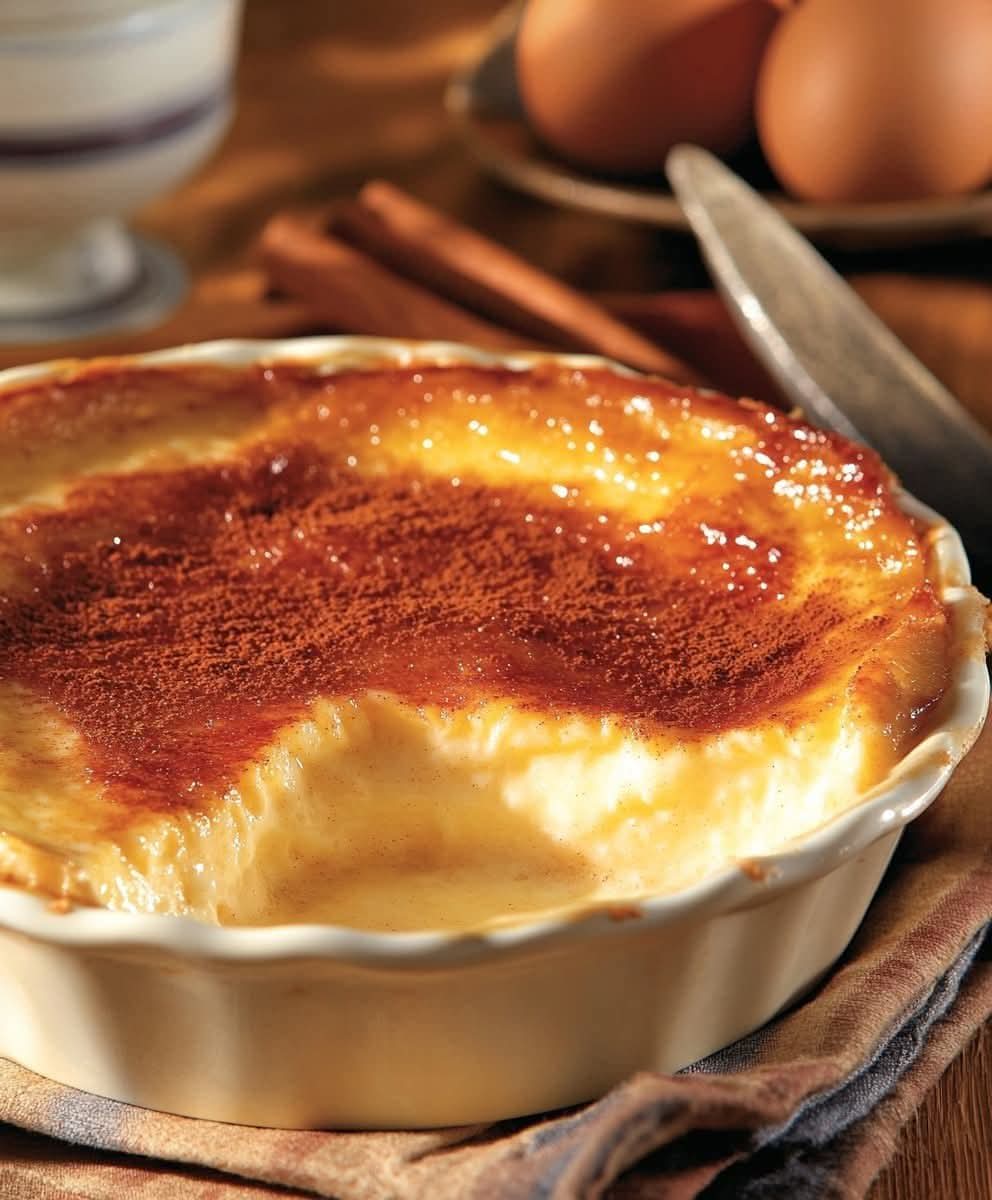
A Wholesome Delight: The Timeless Cinnamon Custard 🍮✨
Introduction
There are few things as comforting as a spoonful of warm, velvety custard. The silky texture, the whisper of vanilla and cinnamon, and that soft sweetness that fills the senses with memories of simpler times. This Cinnamon Custard recipe is not just a dessert—it’s a heartwarming journey into the kitchen that connects generations, weaving a tapestry of love and nostalgia. Whether you’re baking for yourself or sharing it with someone special, this custard brings a touch of sweetness and warmth to any occasion.
Ingredients
- Eggs – 4 large, preferably free-range or organic
- Whole milk – 2 cups (can substitute with cream for a richer texture)
- Heavy cream – 1 cup
- Granulated sugar – 3/4 cup
- Ground cinnamon – 1 tsp (or more for that cinnamon warmth!)
- Vanilla extract – 2 tsp
- Pinch of salt – to balance sweetness
- Ground nutmeg – 1/4 tsp (optional but adds a beautiful layer of flavor)
- Freshly grated zest of one orange – (optional, but adds a zingy twist)
- Butter – 1 tbsp (for greasing the baking dish)
Instructions
- Preheat the oven to 325°F (163°C). Grease a 9-inch baking dish with butter, ensuring the sides are lightly coated. If you’re using ramekins, grease them individually.
- Prepare the Custard Base:
- In a medium saucepan, combine the milk, cream, sugar, and a pinch of salt. Heat gently over medium heat, stirring occasionally, until the sugar dissolves and the mixture is warm (but not boiling).
- Once warm, remove from heat and stir in the vanilla extract and ground cinnamon. If you’re adding nutmeg or orange zest, now’s the time to include them as well. Let this aromatic mixture sit for a few minutes to infuse the flavors.
- Whisk the Eggs:
- In a large mixing bowl, whisk the eggs until they are light and frothy. Slowly pour in a small amount of the warm milk-cream mixture, whisking constantly to temper the eggs. This prevents the eggs from scrambling when mixed with the hot liquid.
- Gradually pour the rest of the warm mixture into the eggs, continuing to whisk. The goal is to combine the ingredients evenly, ensuring a smooth custard.
- Bake the Custard:
- Once the custard mixture is smooth, pour it into your prepared baking dish or ramekins. Place the dish in a larger roasting pan, and add hot water to the pan until it reaches halfway up the sides of the custard dish (this is known as a bain-marie or water bath, which ensures even cooking and prevents curdling).
- Bake for about 45-50 minutes or until the custard is set. You can test for doneness by gently shaking the pan. If the center is slightly jiggly but not liquid, it’s ready.
- Cool and Serve:
- Allow the custard to cool for 10-15 minutes before serving. It can be enjoyed warm or chilled, depending on your preference. Top with a sprinkle of cinnamon or a dollop of whipped cream for an extra indulgence!
History of Custard
Custard has a rich history dating back to the Middle Ages in Europe. Early versions of custard were more akin to a thickened cream, and the first documented recipe for custard dates back to the 14th century. This creamy dessert has evolved over time, with different variations and flavor profiles developing based on local ingredients. While traditionally made with eggs, cream, and sugar, many cultures have put their own twist on custard, from the French crème brûlée to the Italian zabaglione. Cinnamon has been a beloved spice in custard for centuries, lending a touch of warmth and spice that beautifully complements the smooth richness of the custard.
Formation and Evolution
The custard, in its modern form, is an adaptation of a much older English recipe. Early recipes were quite simple, just eggs, sugar, and milk or cream. The addition of flavorings like cinnamon, vanilla, and nutmeg arose over time, influenced by trade routes that brought exotic spices and flavors to Europe. The method of baking the custard in a water bath (bain-marie) ensured a gentle cooking process, resulting in a silky, creamy texture that became beloved worldwide. This dish, through centuries of evolution, has stayed remarkably true to its roots while adapting to the tastes of each generation.
Lovers of Custard
- Families – Custard brings people together around the table. The soft, comforting nature of custard, often paired with a cup of tea, creates a sense of togetherness and tradition.
- Bakers – The precision and artistry in crafting the perfect custard speaks to those who love to experiment in the kitchen. The balance of textures, flavors, and aromas makes it a satisfying challenge.
- Sweet Tooths – For anyone who loves indulging in creamy desserts, custard is the perfect treat. Its versatility allows it to be enjoyed as a standalone dessert or as a topping for pies, cakes, and fruit.
Methods of Enjoyment
While this custard is delicious on its own, it can also be enjoyed in many forms:
- As a base for pies – Pour it into a tart crust for a delightful custard tart. Add fresh berries on top for an added burst of flavor.
- With caramelized fruit – Serve with roasted or grilled peaches, pears, or apples for a sweet, tangy contrast.
- Chilled with whipped cream – Let it set in the fridge overnight, then top with freshly whipped cream for a creamy, light treat.
Conclusion
This Cinnamon Custard recipe is more than just a dessert—it’s a connection to the past, a tradition handed down through generations. It’s a reminder that food is not just about nourishment but also about the memories we create in the kitchen. So, take a moment to stir your custard with love, to fill your home with cinnamon warmth, and to savor the beauty of simple ingredients transformed into something truly extraordinary. Whether shared with loved ones or savored alone, this custard is a reminder that, sometimes, the simplest things are the most comforting.
Stay connected, keep cooking, and remember: a spoonful of this custard can make even the hardest days feel like a warm hug. 💖