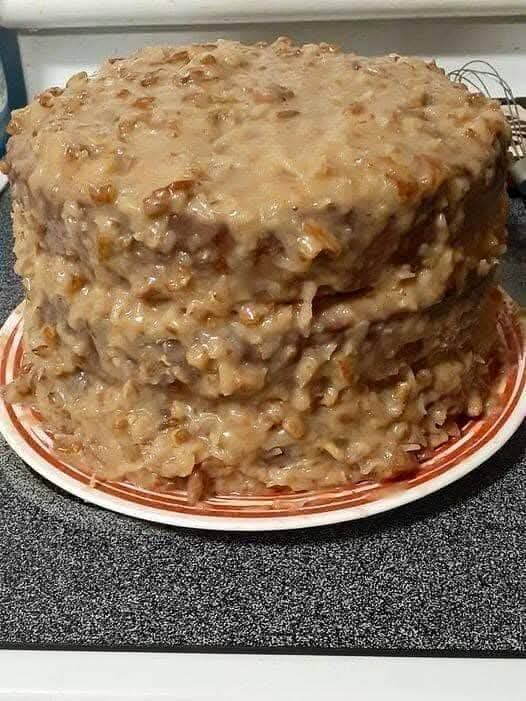
Of course! Here is a comprehensive, grand recipe for Homemade German Chocolate Cake, complete with history, detailed instructions, nutritional insights, and more.
—
The Grand Homemade German Chocolate Cake: A Southern Icon
Introduction:
German Chocolate Cake is a masterpiece of American baking,a celebratory cake that is deceptively named—it’s not from Germany. Its hallmark is a three-layer decadent chocolate cake embraced by a uniquely rich, caramel-like frosting studded with toasted coconut and pecans. This is not a mere dessert; it’s an experience. The contrast between the tender, cocoa-kissed crumb and the gooey, nutty frosting creates a symphony of textures and flavors that has secured its place as a classic. This recipe guides you through crafting this icon from scratch, ensuring every component shines.
—
Part 1: The Foundation – Ingredients
For the Chocolate Cake:
· 2 cups (250g) all-purpose flour
· 1 3/4 cups (350g) granulated sugar
· 3/4 cup (75g) unsweetened cocoa powder (Dutch-process or natural)
· 2 teaspoons baking soda
· 1 teaspoon baking powder
· 1 teaspoon fine sea salt
· 2 large eggs, at room temperature
· 1 cup (240ml) buttermilk, at room temperature
· 1 cup (240ml) strong black coffee (or hot water)
· 1/2 cup (120ml) vegetable or canola oil
· 2 teaspoons pure vanilla extract
For the German Chocolate Coconut-Pecan Frosting:
· 1 cup (200g) evaporated milk
· 1 cup (200g) granulated sugar
· 3 large egg yolks, lightly beaten
· 1/2 cup (115g | 1 stick) unsalted butter
· 1 teaspoon pure vanilla extract
· 1 1/2 cups (130g) sweetened shredded coconut
· 1 1/2 cups (170g) chopped pecans, toasted
For the Chocolate Ganache Drip (Optional but recommended):
· 4 oz (115g) semi-sweet chocolate, finely chopped
· 1/4 cup (60ml) heavy cream
—
Part 2: The History & Formation
History:
Contrary to popular belief,German Chocolate Cake is named after a person, Samuel German, not the country. In 1852, Samuel German developed a type of dark baking chocolate for the Baker’s Chocolate Company. This product was named “Baker’s German’s Sweet Chocolate” in his honor. The cake as we know it originated in 1957 when a Texas homemaker, Mrs. George Clay, submitted her recipe using this specific chocolate to a local newspaper. The recipe was published and quickly became a national sensation via other newspapers. The “’s” was eventually dropped, leading to the geographical misconception. Its formation—a layered cake with a distinct cooked frosting—is a hallmark of mid-century American baking ingenuity.
Formation (The Science of the Cake & Frosting):
· The Cake: This is a classic “dump” or “whisk” cake, leveraging chemical leavening (baking soda/powder) for rise. The use of hot coffee or water “blooms” the cocoa powder, intensifying its flavor. The buttermilk’s acidity tenderizes the gluten and activates the baking soda, resulting in a moist, tender, and deeply chocolatey crumb with a slightly open structure perfect for holding the hefty frosting.
· The Frosting: This is a custard-based frosting, unique in the cake world. The egg yolks, sugar, and evaporated milk are cooked together until they reach a pudding-like consistency (around 160°F/71°C), which thickens the mixture. The butter and vanilla are then stirred in off the heat for richness and flavor. Finally, the toasted coconut and pecans are folded in. As it cools, it sets into a fudgy, chewy, and incredibly flavorful topping.
—
Part 3: The Methods & Step-by-Step Instructions
Method 1: Preparing the Chocolate Cake Layers
1. Prep: Preheat oven to 350°F (175°C). Grease and line the bottoms of three 8-inch round cake pans with parchment paper.
2. Combine Dry Ingredients: In the bowl of a stand mixer or a large bowl, sift together flour, sugar, cocoa powder, baking soda, baking powder, and salt. Whisk to combine thoroughly.
3. Combine Wet Ingredients: In a separate bowl or large jug, whisk the eggs, buttermilk, oil, and vanilla until smooth.
4. Mix: With the mixer on low speed (or by hand), gradually add the wet ingredients to the dry ingredients. Mix until just combined.
5. Add Coffee: Carefully pour in the hot coffee (or water) and mix on low until the batter is smooth and thin. The batter will be quite liquid—this is correct.
6. Bake: Divide the batter evenly among the prepared pans. Bake for 22-28 minutes, or until a toothpick inserted into the center comes out clean.
7. Cool: Let cakes cool in pans for 10 minutes, then turn out onto a wire rack to cool completely. Wrap in plastic wrap if frosting later.
Method 2: Making the Coconut-Pecan Frosting
1. Toast Nuts: Spread chopped pecans on a baking sheet and toast at 350°F for 5-8 minutes until fragrant. Set aside.
2. Cook Custard: In a medium saucepan over medium heat, combine evaporated milk, sugar, egg yolks, and butter. Cook, stirring constantly and scraping the bottom of the pan, until the mixture thickens and turns a light caramel color (about 10-12 minutes). It should be thick enough to coat the back of a spoon.
3. Finish: Remove from heat. Stir in vanilla, toasted coconut, and toasted pecans. Transfer to a bowl and let cool completely, stirring occasionally, until it is spreadable (it will thicken significantly as it cools).
Method 3: Assembly & Optional Ganache
1. Level Cakes: If cake layers have domed tops, use a serrated knife to level them.
2. Frost: Place one cake layer on a serving plate. Spread a generous layer of the coconut-pecan frosting evenly over the top. Repeat with the second and third layers, frosting only the tops of each layer, leaving the sides exposed.
3. Ganache (Optional): Place chopped chocolate in a heatproof bowl. Heat heavy cream until just simmering, then pour over chocolate. Let sit for 2 minutes, then whisk until smooth. Let cool slightly until it thickens but is still pourable. Carefully spoon around the edges of the top layer to create a drip effect, then fill in the center. Allow to set for 15 minutes.
4. Serve: For best texture and flavor, let the cake set for at least 1-2 hours before slicing.
—
Part 4: Benefits & Nutrition
Benefits:
· Homemade Integrity: You control the quality of ingredients, avoiding unnecessary preservatives and artificial flavors.
· Celebratory Centerpiece: The act of making and sharing this cake fosters connection and celebration.
· Textural Therapy: The process of baking can be a mindful, rewarding activity.
Nutritional Profile (Per Serving, Approx. 1/12th of cake):
· Calories: ~650-750 kcal
· Fat: ~35-45g (Saturated: ~15-20g)
· Carbohydrates: ~80-90g (Sugars: ~60-70g)
· Protein: ~8-10g
· Key Nutrients: Provides energy (from carbs and fats), small amounts of protein, iron (from cocoa), and fiber (from coconut and pecans).
· Note: This is a rich, indulgent dessert best enjoyed in moderation as part of a balanced diet.
—
Part 5: For the Lovers of This Cake
This cake is for the lover of texture—the tender crumb against the chewy, nutty frosting. It’s for the history buff who appreciates a recipe with a story. It’s for the home baker who finds joy in creating something spectacular from pantry staples. It’s for anyone who believes that a dessert should be an event, not just a sweet finish. It’s a cake that demands to be shared, making it perfect for birthdays, holidays, potlucks, or any gathering where creating a “wow” moment is the goal.
—
Conclusion
The Homemade German Chocolate Cake is more than the sum of its parts. It is a testament to the beauty of American baking tradition—a little misunderstood, richly textured, and unapologetically decadent. By toasting your own pecans, patiently stirring the custard frosting, and assembling the layers with care, you are not just baking; you are preserving and sharing a delicious piece of culinary history. Each slice offers a perfect balance of deep chocolate, buttery caramel, and crunchy-toasty notes, proving why this cake has remained a beloved favorite for generations. Serve it with a glass of cold milk or a cup of black coffee, and savor the masterpiece you’ve created.