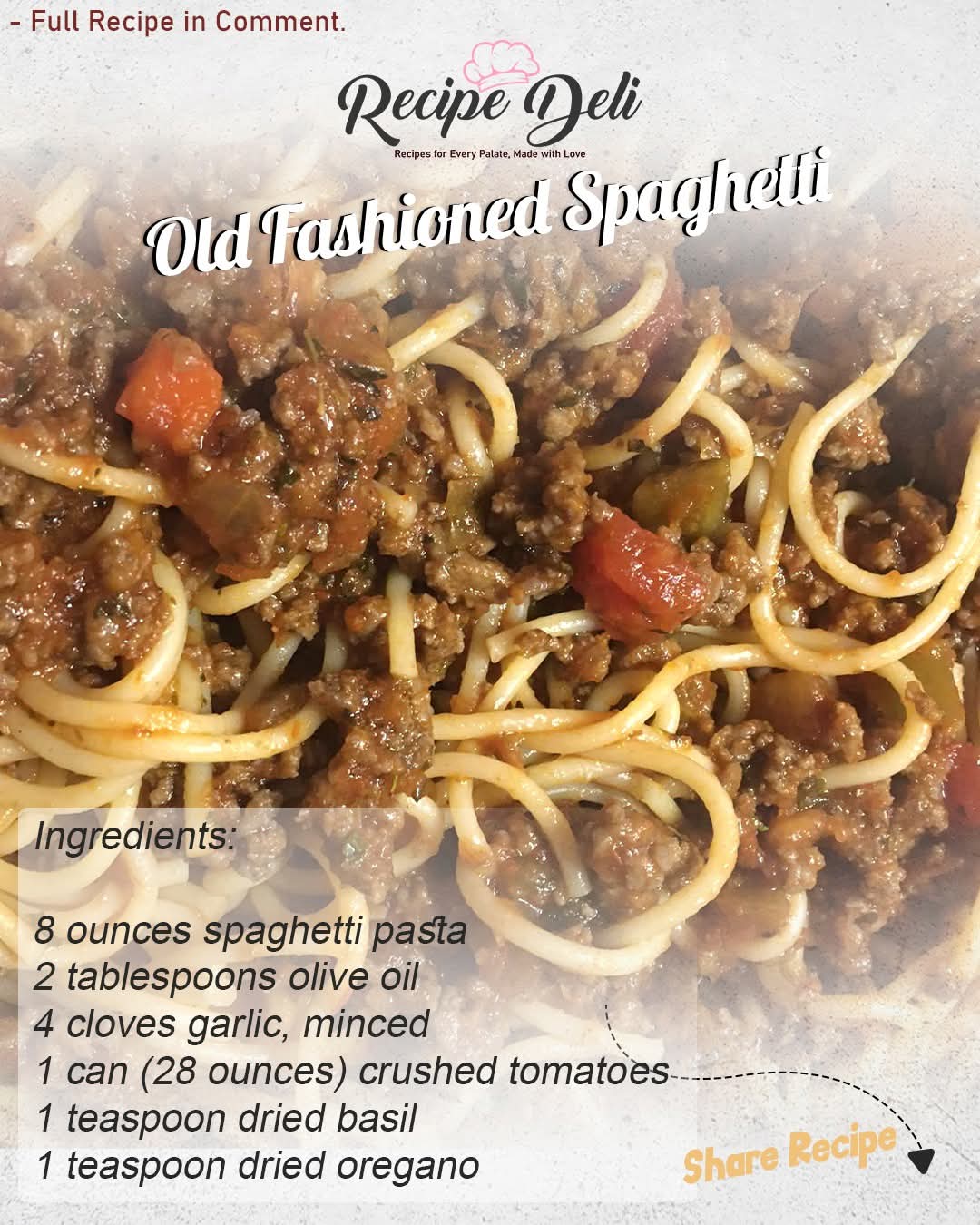
Sure! Here’s an expanded version of your Old-Fashioned Spaghetti recipe, complete with an introduction, detailed ingredients, methods, a bit of history, and more.
Old-Fashioned Spaghetti Recipe: A Classic Comfort Dish
Introduction
Spaghetti has long been one of the most beloved and iconic dishes in Italian cuisine, beloved across the globe for its simplicity and heartwarming flavors. This Old-Fashioned Spaghetti recipe takes us back to the basics, focusing on a rich and savory tomato sauce seasoned with aromatic garlic, dried herbs, and a touch of heat from red pepper flakes. It’s the kind of dish that feels both comforting and sophisticated, whether you’re cooking for a crowd or enjoying a quiet dinner at home.
This recipe is timeless, capturing the essence of traditional Italian pasta-making with a touch of nostalgia. It’s the perfect dish to serve up on a cozy evening or to share with loved ones. The ingredients are simple, but the results are rich and delicious.
Ingredients
For the Pasta:
- 8 ounces spaghetti pasta (about half a standard box)
- Salt (for pasta water)
For the Sauce:
- 2 tablespoons olive oil
- 4 cloves garlic, minced
- 1 can (28 ounces) crushed tomatoes
- 1 teaspoon dried basil
- 1 teaspoon dried oregano
- 1/2 teaspoon red pepper flakes (optional, but adds a nice kick)
- Salt and black pepper to taste
- 1 tablespoon sugar (optional, to balance acidity)
- 1/2 cup reserved pasta water (adjust for desired sauce thickness)
For Garnish:
- Freshly grated Parmesan cheese (generous amount)
- Chopped fresh basil or parsley (for color and freshness)
Instructions
Step 1: Cook the Spaghetti
- Bring a large pot of salted water to a boil. Add the spaghetti and cook according to the package instructions until al dente (usually around 9-11 minutes). Stir occasionally to prevent sticking.
- Once cooked, drain the pasta, reserving about 1 cup of pasta water for the sauce later.
Step 2: Make the Sauce
- While the pasta is cooking, heat the olive oil in a large skillet over medium heat.
- Add the minced garlic and sauté for about 1-2 minutes until fragrant and golden brown (be careful not to burn it).
- Pour in the crushed tomatoes and stir in the dried basil, oregano, red pepper flakes (if using), salt, and pepper. Stir well to combine and bring to a gentle simmer.
- Allow the sauce to cook for about 10-15 minutes, stirring occasionally. If the sauce gets too thick, add a little of the reserved pasta water, a tablespoon at a time, until it reaches your desired consistency.
- Taste and adjust the seasoning, adding a pinch of sugar if the sauce is too acidic or more salt and pepper if needed.
Step 3: Combine Pasta and Sauce
- Add the cooked spaghetti directly to the skillet with the tomato sauce. Toss well to coat the pasta evenly with the sauce. Add more reserved pasta water if needed to help the sauce coat the noodles evenly.
- Continue to cook for 2-3 minutes, allowing the flavors to meld together and the pasta to soak up some of the sauce.
Step 4: Serve and Garnish
- Divide the spaghetti into individual bowls.
- Generously top with freshly grated Parmesan cheese and garnish with freshly chopped basil or parsley for a burst of color and freshness.
- Serve immediately, ideally with a side of garlic bread or a simple green salad for a complete meal.
Methods for Extra Flavor
- Infuse Your Oil: For a deeper garlic flavor, try infusing your olive oil with a few extra crushed garlic cloves before cooking. Simply heat the oil with the garlic over low heat, being careful not to burn it, and remove the garlic before adding the rest of the ingredients.
- Use Fresh Tomatoes: If you’re feeling adventurous and want a more authentic taste, swap the canned crushed tomatoes for fresh ones. Blanch, peel, and crush them yourself for a fresher, more vibrant sauce. Just be sure to cook them down for longer to achieve that rich flavor.
- Add Meat for Variation: For those who prefer a heartier meal, you can easily turn this into a meat sauce by adding ground beef, pork, or turkey. Brown the meat in the skillet before adding the garlic and tomatoes for a more substantial dish.
- Fresh Herbs: If you have fresh herbs like basil or oregano on hand, feel free to use them instead of dried ones. Add them toward the end of the cooking process to preserve their vibrant flavor.
A Brief History of Spaghetti
Spaghetti, as we know it today, originated in Italy, though similar pasta shapes have been made since ancient times. The word spaghetti itself comes from the Italian word spaghi, meaning “little strings.” While the concept of long, thin pasta can be traced back to ancient Mediterranean cultures, it wasn’t until the late Middle Ages that pasta began to resemble the spaghetti we recognize today.
Historically, pasta was a food of the common people in Italy, made simply from durum wheat and water. Tomato sauce, which is the base of this recipe, didn’t make its appearance in Italian dishes until the 18th century when tomatoes were introduced to Europe from the Americas. Over time, the combination of pasta and tomato sauce became a staple, symbolizing the simplicity and versatility of Italian cuisine.
In many ways, Old-Fashioned Spaghetti is a reflection of these humble origins—simple, hearty, and incredibly satisfying.
Conclusion: A Dish for Lovers
Whether you’re cooking for yourself, your family, or a special someone, this Old-Fashioned Spaghetti recipe brings people together over a plate of nostalgia. The rich, tomato-based sauce, the smooth olive oil, and the robust garlic all create a perfect balance of flavors. It’s a dish that can be made in under 30 minutes but feels like something much more significant, perfect for any occasion.
This recipe is truly a comfort food classic, a timeless meal that can be enjoyed by lovers, friends, or anyone who appreciates the beauty of Italian cuisine. With a simple yet unforgettable taste, this dish embodies the spirit of food made with love—something that always tastes better when shared.
I hope you enjoy making and eating this recipe! Let me know if you’d like any more variations or tips to make it your own!