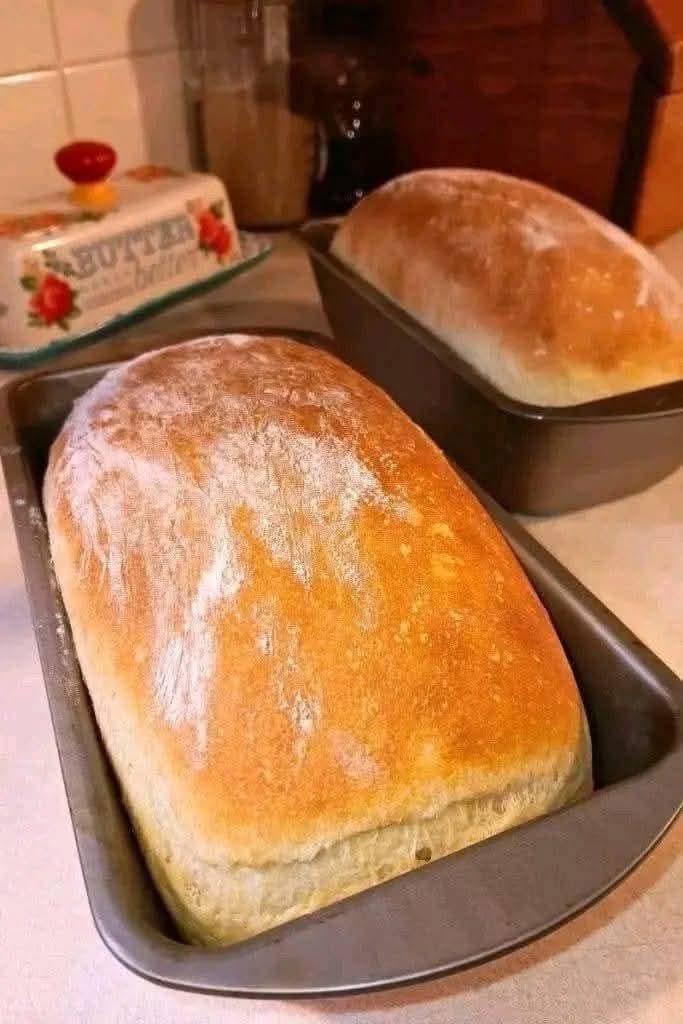
The Humble No-Knead Revolution: Reclaiming Bread
Introduction
Forget everything you think you know about bread making. This recipe is a quiet revolution in your kitchen—a return to the most ancient, simple, and satisfying form of baking. No specialized equipment, no expensive ingredients, no strenuous kneading. This is bread in its purest, most accessible form. It’s the recipe that made me fall in love with baking again and broke my dependence on store-bought loaves. Once you try it, you’ll understand why so many have abandoned commercial bread for this fragrant, crackly-crusted, chewy-centered miracle.
A Brief History
No-knead bread gained modern fame in 2006 when Jim Lahey of Sullivan Street Bakery shared his method with the world. But its roots are ancient. For millennia, before commercial yeast and electric mixers, bread was made with wild yeasts and long, slow fermentation. This recipe is a conscious return to that tradition—a patient, almost meditative process where time, not muscle, develops the gluten and deep, complex flavor. It’s bread as our ancestors knew it: elemental and nourishing.
The Benefits: Why This Method Wins
· Cost-Effective: A loaf costs mere pennies compared to artisanal bakery prices.
· Effortless: No kneading means no physical labor. The yeast does the work.
· Accessible: Uses pantry staples—no eggs, butter, or specialty flours required.
· Healthier: Long fermentation increases digestibility and may enhance nutrient availability.
· Deeply Satisfying: The process connects you to a timeless culinary tradition.
· Versatile: The basic formula can be endlessly adapted with herbs, seeds, or whole grains.
The Formation: Understanding the Science
The magic lies in autolyse and slow fermentation. Combining flour and water first allows enzymes to break down starches and proteins, naturally forming a gluten network without kneading. A tiny amount of yeast, given 12-18 hours, produces gases and organic acids that give the bread its open, airy crumb, crisp crust, and tangy, nuanced flavor. It’s a lesson in patience and trust.
—
The Recipe: Your New Daily Bread
Ingredients
· 500g (about 4 cups) Bread Flour or All-Purpose Flour (Note: For a chewier crumb, use bread flour. All-purpose works beautifully.)
· 8g (1¼ tsp) Fine Sea Salt or Kosher Salt
· 3g (¼ tsp) Instant or Active Dry Yeast (Yes, that’s all!)
· 430g (1¾ cups + 2 tbsp) Cool Water (about 60-70°F / 15-21°C)
Equipment: A medium/large mixing bowl, a clean kitchen towel, parchment paper, and a heavy lidded pot (Dutch oven, cast iron combo cooker, or any heavy oven-safe pot with a lid).
Instructions & Method
Day 1: The Mix (5 Minutes)
1. In a large mixing bowl, whisk together the flour, salt, and yeast.
2. Add the cool water. Using a wooden spoon or your hands, mix until you have a shaggy, sticky dough with no dry flour bits. It will look rough and messy—that’s perfect.
3. DO NOT KNEAD. Cover the bowl tightly with plastic wrap or a damp kitchen towel.
4. Let it rest at room temperature (ideally 70°F/21°C) for 12 to 18 hours. The longer the ferment, the deeper the flavor. Let it sit undisturbed.
Day 2: The Shape & Bake (45 Minutes Hands-Off, 45 Minutes Bake)
1. Preheat & Prepare: At least 30 minutes before baking, place your empty lidded pot (with the lid on) into your oven. Preheat to 450°F (230°C).
2. Turn & Shape: The dough will be bubbly, wet, and jiggly. Generously flour a work surface. Using a bowl scraper or wet hands, gently pour/scrape the dough onto the floured surface. With floured hands, gently pull the edges of the dough toward the center, turning it to form a loose, round ball (a “boule”). This isn’t a tight knead—it’s a gentle tuck.
3. Second Rise: Place the shaped dough, seam-side down, on a piece of parchment paper. Cover loosely with the towel and let it rest while the oven finishes preheating (about 30 minutes).
4. Score & Bake: Carefully remove the blazing-hot pot from the oven. Remove the lid. Using the parchment as a sling, lift the dough and lower it into the hot pot. Replace the lid.
5. Bake Covered: Bake with the lid on for 30 minutes. This creates a steamy environment for a spectacular oven spring and crackling crust.
6. Bake Uncovered: Remove the lid and bake for another 15-20 minutes until the crust is a deep, glorious golden brown.
7. Cool: This is crucial! Transfer the loaf to a wire rack and let it cool completely (at least 1 hour) before slicing. The interior is still setting.
—
Nutritional Profile (Per Slice, approx.)
· Calories: ~120
· Carbohydrates: 25g
· Protein: 4g
· Fat: <1g
· Fiber: 1g (increase with whole-grain blends)
· Key Notes: Naturally vegan, no cholesterol, low in sugar and fat. The slow fermentation can help pre-digest starches and may be easier on the gut for some.
For The Lovers & Adaptations
This recipe is a canvas. For the Lovers of:
· Whole Grains: Substitute up to 50% of the flour with whole wheat, rye, or spelt.
· Savory Bites: Fold in fresh rosemary, grated cheese, or chopped olives during the initial mix.
· Seeded Loaves: Coat the shaped dough in a mix of sesame, flax, and sunflower seeds before the final rise.
· Sourdough Tang: Replace the commercial yeast with 100g of active sourdough starter and reduce water by 50g.
Conclusion: More Than Just Bread
This is more than a recipe; it’s an invitation to slow down. In a world of instant gratification, this bread teaches patience. The satisfaction of pulling a steaming, crackling loaf from your own oven—crafted with your own hands and the simple alchemy of flour, water, salt, and time—is profound. It reconnects us to a fundamental, nourishing craft. It’s cheap, it’s easy, and it is, without a doubt, real bread.
So to all the bread lovers, the curious bakers, and the weary buyers of bland, packaged loaves: welcome home. Your kitchen is now a bakery.
Must express something to keep getting my recipes? Here it is: Express your creativity, share a loaf with a neighbor, and savor the timeless ritual of breaking real bread. The secret is out. Now, go bake.
—
Keep this recipe. Share it. Bake it often. And thank you for embracing the beautiful, simple art of homemade bread. The journey of a thousand loaves begins with a single, sticky, no-knead mix. Happy baking